


What Is Sallie Mae Refinancing
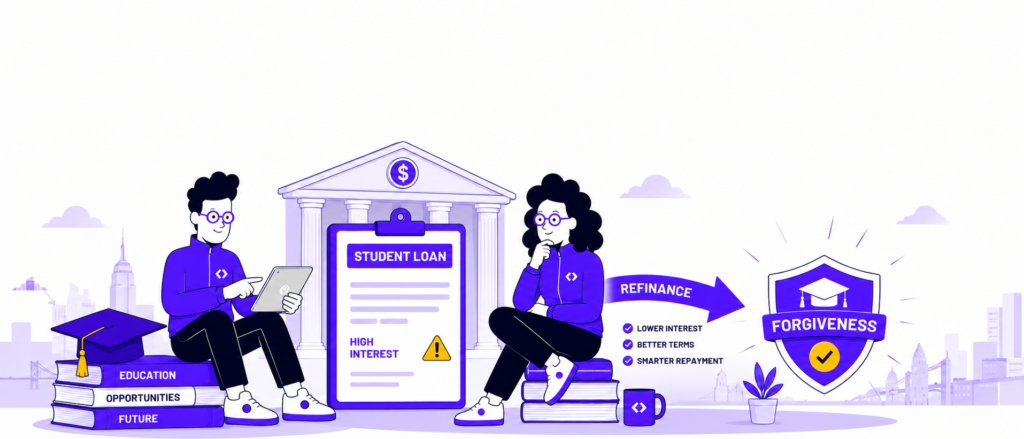
Sallie Mae doesn’t currently offer refinancing. Instead you can refinance your existing Sallie Mae loan with a new loan from a new private lender. The new lender pays off your existing loan and you repay the new loan under its interest rates and repayment terms.
Most borrowers refinance to lower interest rates, get new repayment terms or add/remove a cosigner. However, the approval of the loan depends on the lender’s requirements and your financial profile including strong credit score, stable income, and low debt-to-income ratio.
How does Sallie Mae loan refinancing work?
Let’s consider a hypothetical situation where you borrowed $50,000 from Sallie Mae and after two years of repayment you still owe $43,000. Your current loan carries a 10% interest rate.
Paying a high EMI on your education loan?
See how much you could save by refinancing.
Built for your financial profile
And say another lender approves you for a $43,000 refinancing loan at a 7%, pays off your existing Sallie Mae balance. And you repay the new loan under its repayment terms.
Over a 10-year term, the lower rate makes a clear difference:
| Current loan (10%) | Refinanced loan (7%) | |
| Monthly payment | about $568 | about $499 |
| Total interest | about $25,200 | about $16,900 |
That’s roughly $69 less per month and about $8,300 saved in interest.
These figures are for illustration only. Actual rates and terms depend on the lender and your financial profile.
Eligibility for Refinancing a Sallie Mae Loan
To refinance a Sallie Mae loan you should meet the lender’s requirements including good credit score, income, education, low debt-to-income ratio, and residency. Some lenders may require a cosigner while others may approve eligible borrowers independently.
Common eligibility requirements:
- Good credit score: A strong credit profile with a good credit score can increase your chances of approval and enable you to qualify for a competitive interest rate.
- Stable Income: Lenders assess whether you can afford the new monthly payments.
- Education: Most lenders require you to have graduated from an eligible degree program.
- Low Debt-to-Income Ratio (DTI): A lower DTI indicates that your monthly debt payments make up a smaller share of your gross monthly income, which may improve your chances of loan approval.
- Residency: You must satisfy the lender’s citizenship, immigration, and residency requirements.
- Cosigner: If your credit score or income is limited, a creditworthy cosigner may strengthen your application. Requirements vary by lender.
Can Indian Students Refinance Sallie Mae Loans?
Yes, Indian students may be able to refinance their Sallie Mae loans, but eligibility depends on the lender’s requirements. Lenders generally assess factors such as credit history, income, employment status, residency, and whether the applicant has an eligible cosigner.
For example, Citizens Bank has specific residency requirements for international applicants and may require eligible non-permanent resident applicants to apply with a US citizen or permanent-resident cosigner.
If you’re an Indian student working in the US after graduation, check whether your current immigration status and financial profile meet the lender’s requirements. If you’re living in India, don’t assume you qualify simply because your original loan came from Sallie Mae.
Before applying: Confirm the lender’s current eligibility criteria, including residency requirements and whether a US-based cosigner is necessary. Having a cosigner does not guarantee approval.
How to Refinance a Sallie Mae Student Loan: Step-by-step process
- Check your current loan & compare lenders: Review your loan balance, interest rate, monthly payment and repayment term. Compare options from lenders like Citizens, or use Credible to explore offers.
- Check the total cost: Compare APRs, fees, repayment terms, and total interest. A longer term may lower monthly payments but increase the overall cost.
- Apply for refinancing: Submit the required documents, including proof of income and current loan details. International applicants may need extra immigration or residency documents.
- Review and accept: Check the final rate, term, and monthly payment before signing. Once finalized, the new lender typically pays off your Sallie Mae balance.
- Confirm the payoff: Continue paying Sallie Mae until the balance reaches zero, then begin repayments with your new lender.
Tip: Compare multiple lenders and choose a loan that fits your budget and repayment goals, not just one with a lower monthly payment.
Also Read: 5 Mistakes to Avoid When Refinancing Your Education Loan
Best Lenders to Refinance Sallie Mae Loans: Citizens vs. Credible
You can apply with a lender directly, or shop around using a marketplace to compare your options.
| Provider | What it offers | Key consideration |
| Citizens | Direct student loan refinancing | Some applicants need a qualifying US cosigner |
| Credible | Compares offers from partner lenders | A marketplace, not a direct lender |
Pros and Cons of Refinancing a Sallie Mae Loan
Pros:
- Lower Interest Rate: If you qualify, refinancing could lower your interest rate which could save you money in the long term.
- Lower monthly payments: Lower rate and longer repayment terms can make monthly payments easier to pay and manage.
Cons:
- Loss of Federal Benefits: Sallie Mae loans are private, so refinancing them on their own does not cost you federal protections. If you include any federal loans in the refinance, you give up protections such as income-driven repayment plans and loan forgiveness options.
- Credit Score Requirements: To refinance you usually need a good credit score. If your credit score is not good you might fail to get a low interest rate.
- Additional considerations for international students: Indian students may have fewer eligible lenders, depending on their residency status and financial profile.
Also Read: 6 Expert Tips to Get the Best Student Loan Refinance Offer
Related Articles
- Earnest Student Loan Refinancing Review: Rates, Fees and Is It Worth It?
- Does Refinancing Student Loans Hurt Your Credit Score?
- Fixed vs Variable Rate Student Loan Refinancing
- Building Your US Credit History with Refinanced Education Loans
Compare refinancing options with GradRight
Refinancing a Sallie Mae loan only makes sense if the new rate, term and eligibility work for you. Comparing lenders side by side helps you avoid paying more than you need to.
The GradRight platform helps you compare student loan and refinancing options, check your eligibility and get expert support. You can also chat with Graddie, GradRight’s AI counsellor, to get personalized recommendations based on your profile and concerns.
Still unsure which option is right for you? Discuss your choices with Graddie, compare offers side by side, and keep your research in one place.
Explore your options with GradRight before you decide.







 Australia
 Canada
 France
 Germany
 India
 Ireland
 UAE
 United Kingdom
 United States

