




Quick Answer
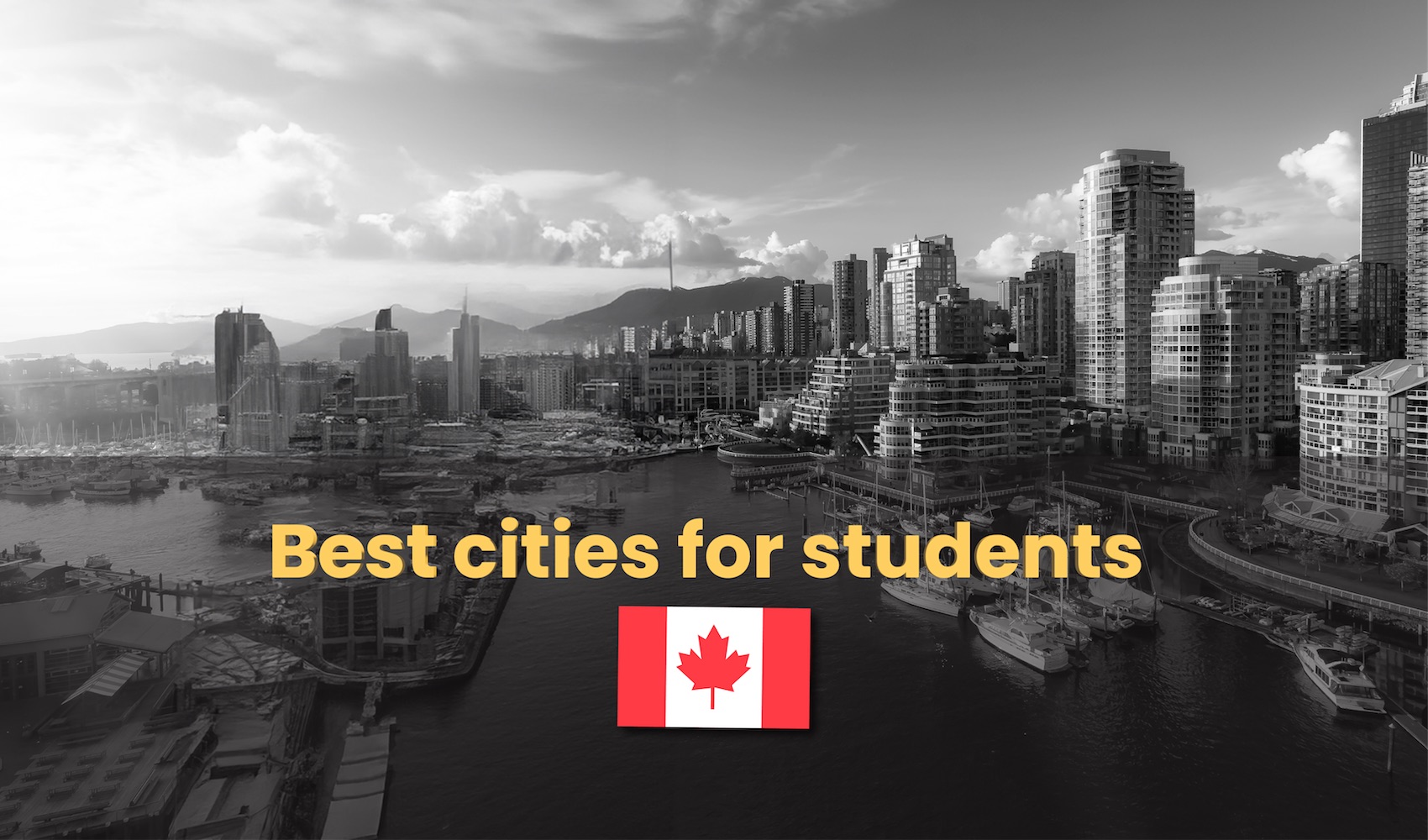
Toronto, Vancouver, Montreal, Quebec City, and Ottawa are consistently ranked among the best Canadian cities for international students, per the QS Best Student Cities index. Montreal offers the lowest cost of living among the five; Toronto and Vancouver are pricier but offer the largest job markets. Whichever city you pick, budget roughly CAD 1,500-3,500 a month for accommodation, food, and transport combined, on top of tuition.
Canada continues to be one of the top destinations for Indian students, drawing tens of thousands of study permit applications every year – helped by strong post-study work rights, relatively safe cities, and globally ranked universities.
Three reasons consistently come up when students explain why they chose Canada:
- Multiple Canadian universities – including the University of Toronto, McGill University, and the University of Montreal – rank among the world’s best in the QS World University Rankings.
- International students can generally work up to 20 hours a week during term time to support their studies, subject to current IRCC rules.
- Canada is widely regarded as one of the safer countries to live and study in.
But which city should you actually live in? This guide covers five of the best options, what each one is known for, and what it really costs to live there.
What It Costs to Study in Canada
Tuition and living costs vary significantly by program, city, and university, and shift from year to year – treat the ranges below as a starting point, and confirm current figures on universitystudy.ca or your target university’s own site before budgeting.
- Undergraduate tuition commonly runs well into the tens of thousands of Canadian dollars per year for international students, with graduate programs often costing more.
- Living expenses – accommodation, food, and other essentials – typically add several thousand dollars more per year, varying widely by city.
- Students in provinces like Ontario, Quebec, and Nova Scotia generally need to arrange private health insurance, which adds to the overall cost.
This is exactly the kind of cost gap GradRight helps close – more on that further down. For now, let’s get into the cities themselves.
Toronto
Toronto is Canada’s largest city and home to more students than any other city in the country – international students make up a meaningful share of enrollment at its universities. It’s known for its arts scene, food festivals, and historic landmarks.
QS Best Student City Ranking: consistently top-15 globally in recent years.
Top universities:
- University of Toronto
- Toronto Metropolitan University (formerly Ryerson)
- York University
- OCAD University
| Expense | Typical Monthly Cost |
|---|---|
| 1-bedroom apartment rent | CAD 2,000+ |
| 3-course meal | CAD ~75 |
| Transportation | CAD ~100 |
| Total (with other living expenses) | CAD 2,200-3,000 |
Why choose Toronto: it houses multiple globally top-ranked universities, is regularly cited among the world’s most livable cities, and its multicultural population (140+ languages spoken) makes it an easy transition for international students. It also scores well on safety indices relative to other major global cities.
Also read: Cost of Studying in Canada for Indian Students
Vancouver
Vancouver is a multicultural coastal city with strong transportation infrastructure, including rapid trains and SeaBuses, and a well-established international student community.
QS Best Student City Ranking: consistently top-20 globally in recent years.
Top universities:
- University of British Columbia
- University of Canada West
- Vancouver Island University
- Simon Fraser University
| Expense | Typical Monthly Cost |
|---|---|
| 1-bedroom apartment rent | CAD 1,900-3,000 |
| 3-course meal | CAD ~80 |
| Transportation | CAD ~110 |
| Total (with other living expenses) | CAD 2,500-3,500 |
Why choose Vancouver: British Columbia’s tech sector is one of the province’s fastest-growing industries, giving graduates a real shot at local jobs. The city also has comparatively low crime rates and provincial healthcare coverage available to eligible international students.
Montreal
Tens of thousands of students choose Montreal every year – it’s known for its festivals, comedy scene, and strong bilingual (English/French) culture.
QS Best Student City Ranking: consistently top-10 globally in recent years.
Top universities:
- McGill University
- University of Montreal
- Polytechnique Montréal
- Concordia University
| Expense | Typical Monthly Cost |
|---|---|
| 1-bedroom apartment rent | CAD 700-1,050 |
| 3-course meal | CAD ~60 |
| Transportation | CAD ~85 |
| Total (with other living expenses) | CAD 2,000-2,500 |
Why choose Montreal: it’s home to a large concentration of universities and colleges, has a meaningfully lower cost of living than Toronto or Vancouver, and has a growing job market in industries like visual effects, aerospace, and virtual reality.
Also read: Education Loans to Study in Canada
Quebec City
Quebec City is the second-largest metropolitan area in the province after Montreal, and is well known for its Winter Carnival.
QS Best Student City Ranking: typically outside the global top 100, but still a strong regional option.
Top universities:
- Université du Québec
- Université Laval
- National Institute of Scientific Research (INRS)
| Expense | Typical Monthly Cost |
|---|---|
| 1-bedroom apartment rent | CAD 525-700 |
| 3-course meal | CAD ~60 |
| Transportation | CAD ~85 |
| Total (with other living expenses) | CAD 1,500-1,800 |
Why choose Quebec City: it has historically had one of the lowest unemployment rates among Canadian cities, ranks among the more affordable cities to live in nationally, and its universities offer strong lab and research facilities.
Ottawa
Canada’s capital, Ottawa is known for its high average income levels and winter sports culture, including skating and skiing.
QS Best Student City Ranking: typically ranked in the global top 60-70 range.
Top universities:
- University of Ottawa
- Dominican University College
- Carleton University
| Expense | Typical Monthly Cost |
|---|---|
| 1-bedroom apartment rent | CAD ~1,100 |
| 3-course meal | CAD ~70 |
| Transportation | CAD ~100 |
| Total (with other living expenses) | CAD 2,000-2,500 |
Why choose Ottawa: it’s home to Canada’s largest federal employment hub, offers reliable public transit including light rail, and the University of Ottawa runs one of the country’s top-ranked co-op programs.
Funding Your Studies in Canada
Whichever of these cities you choose, tuition and living costs add up fast, and most Indian students end up needing an education loan to cover the gap. Going bank to bank on your own often means high interest rates, slow processing, and demands for collateral.
GradRight simplifies this by reversing the process: create one profile, and 18 lending partners – public and private banks, NBFCs, and international lenders – respond with competitive offers instead of you chasing each one individually. You can compare terms with support from independent financial experts, with some students saving up to ₹23 lakh through better rate comparison alone, and approval possible in as little as 2 days for an initial offer.
Related Articles
Cost of Studying in Canada for Indian Students
Education Loans to Study in Canada
Why Study in Canada: Top Reasons to Pursue Higher Studies
Canada Student Visa Guide: Documents, Requirements, Eligibility
Student Life in Canada: How International Students Live
Pick Your City, Then Sort Your Financing
Once you’ve picked a city and a program, the next real decision is how you’ll fund it. GradRight lets you compare education loan offers from 18 lending partners in one place, so you’re not overpaying on interest. Start your free profile at https://gradright.com/financing/.









 Australia
  Canada
  France
  Germany
  India
India  Ireland
  UAE
UAE  United Kingdom
  United States