




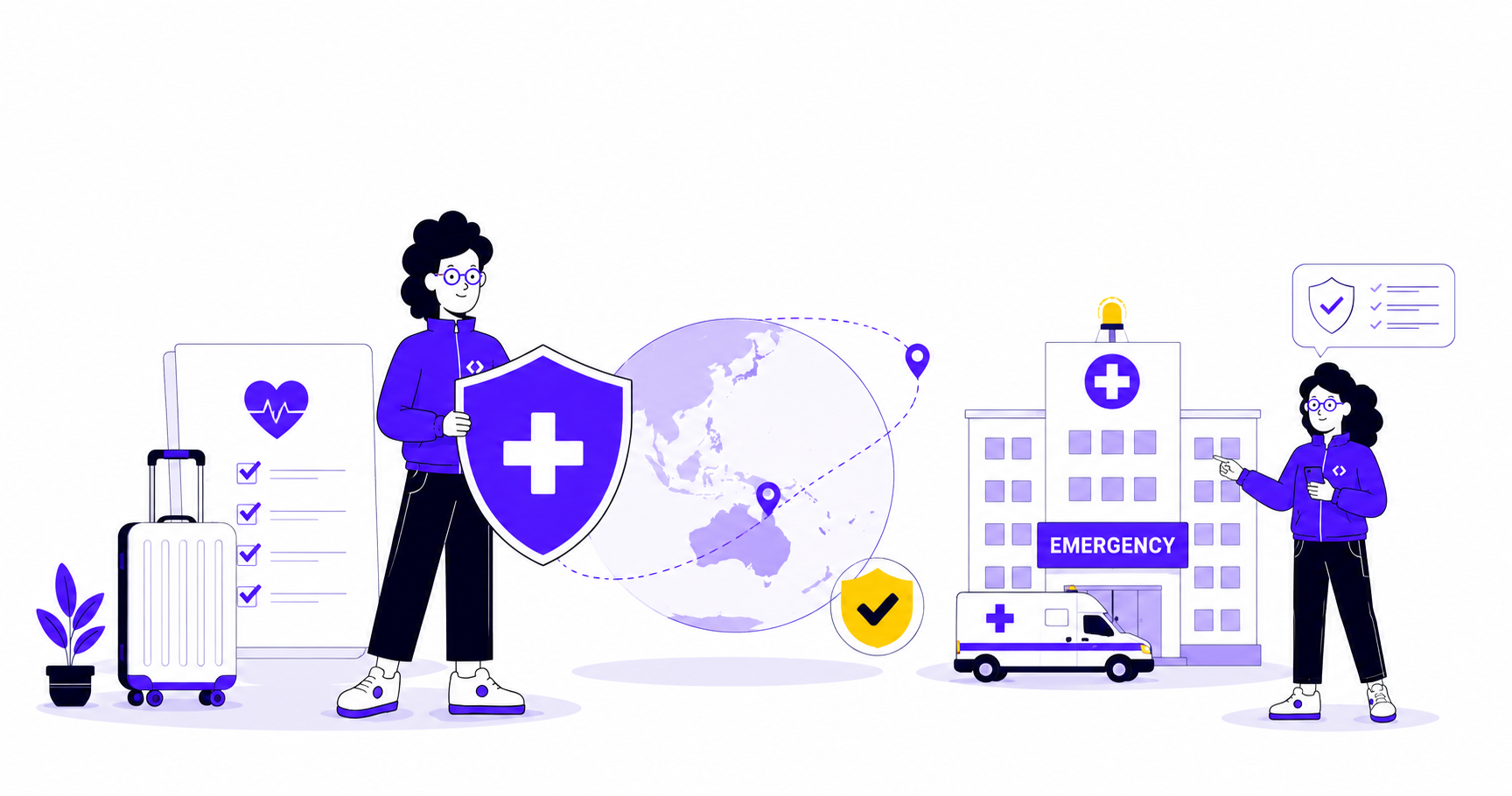
Most Indian students planning to study abroad buy international health insurance coverage because their university requires it.
They check the box, pay the premium, and assume they are protected. But when a real emergency happens, many students realize that the medical insurance plan they trusted covers far less than they expected.
This article breaks down what a good worldwide student health insurance plan should include, where many such plans fall short in emergencies, and how you can get the right level of medical cover (including all emergency medical situations).
Note: Getting a comprehensive plan does not mean overpaying, and GradRight’s insurance comparison platform, explained later in this guide, can help you find the right balance.
What international health insurance coverage includes for students
Before you evaluate whether your insurance can handle emergencies, you need to know what the typical international health insurance coverage is designed to provide.
What Standard Plans Cover for Routine Healthcare
For non-emergency situations, most international health insurance coverage plans cover routine and ongoing medical needs:
| Category | Expenses covered in a standard plan |
| Preventive care | Check-ups, screenings, vaccinations |
| Outpatient visits | GP consultations, specialist referrals, diagnostic imaging |
| Mental health | Outpatient counseling, psychiatric consultations |
| Chronic condition management | Ongoing care for conditions such as diabetes, asthma, hypertension |
| Telehealth | 24/7 virtual consultations for non-urgent concerns |
| Vision and dental | Routine exams (as optional add-ons) |
What Standard Plans Cover for Emergency Healthcare
Emergency benefits in international health insurance plans address sudden, life-threatening situations that require:
- ER visits
- hospitalization
- ICU admission
- surgery
- emergency medical evacuation
- medical repatriation
- air and ground ambulance transport
- emergency dental care
Most plans list these benefits clearly. However, every benefit comes with limits, sub-limits, and conditions that determine how much your insurer will actually pay. Whether those limits can cover the real cost of an emergency abroad is the question that matters most.
Also read: Best International Student Health Insurance Guide for 2026
Why emergency costs abroad can outgrow the coverage under standard overseas insurance plans
Most students with international health insurance coverage underestimate how quickly medical bills escalate outside India.
-
Hospital and ICU Costs
| Destination | Hospital Room (Per Night) | ICU (Per Day) | Example Procedure Cost |
| USA | $5,000 | $10,000 | Appendectomy: $45,000 to $60,000 |
| Australia | $1,660 to $3,118 | $4,124 to $7,198 | ER visit (uninsured): $519 to $2,470 |
| Switzerland | ~$5,500 | Varies | One-month stay: 40,000 CHF |
| Canada | $3,000+ | $3,048 to $5,785 | Pneumonia treatment: $20,000+ |
-
Medical Evacuation
Many global medical insurance coverage plans cap emergency evacuation at $50,000 to $100,000. In practice, a private air ambulance from most major study destinations to India costs several times that amount. The table below shows what an evacuation flight typically costs:
| Route | Typical Evacuation Cost |
| US to India | $150,000 to $225,000 |
| Canada to India | $88,000 to $220,000 |
| Australia to India | $165,000 to $225,000 |
| Within Europe | $10,000 to $35,000 |
If your plan caps evacuation at $100,000 and the flight home costs $200,000, you pay the remaining $100,000 yourself.
-
Medical Repatriation
Even after initial treatment, returning to India for long-term recovery requires a medically escorted flight. Many plans cover transport only to the nearest adequate facility, not a flight to your home country. If your plan does not explicitly include repatriation to India, you bear that cost yourself.
Also read: International Student Health Insurance in the USA in 2026
Problems students face during insurance claims for emergencies
An international health insurance coverage plan may list emergency coverage among its benefits, but the claims process can significantly reduce or eliminate what you actually receive
Pre-existing Condition Exclusions
Many medical insurance plans do not cover any condition for which you received treatment in the two to three years before enrollment. If you manage asthma, diabetes, or a mental health condition, your insurer can deny a related emergency claim during your first year abroad, even if the emergency is genuine and life-threatening.
Pre-authorization Requirements
Several medical insurance plans require you to obtain insurer approval before certain procedures. If you do not complete this step, your benefit payout can drop by 50% or the claim can be denied entirely. Some insurers also review emergency admissions after the fact and dispute whether the treatment qualifies as emergency-level care.
Coverage Sub-limits
Your overseas health insurance benefits may advertise $500,000 in total coverage but cap hospital room reimbursement at $500 per night. In the US, where rooms cost $5,000 per night, you pay the $4,500 difference out of pocket for every night of your stay.
Upfront Payment Before Reimbursement
In some countries, student insurance operates on a reimbursement model. You pay the full hospital bill first and then submit a claim for repayment. Without sufficient savings or credit, this creates immediate financial pressure during a medical crisis.
Claim-filing Deadlines
Most insurers require you to submit claims within 90 days of treatment. If you miss this window while recovering from a serious illness or navigating a foreign healthcare system, the insurer can permanently deny your claim regardless of its validity.
Also read: International Student Health Insurance Mistakes to Avoid
How to close the gaps in your overseas health insurance benefits before you leave
Once you understand the possible emergency medical expense coverage gaps in most insurance plans, you can take steps to close them before you travel abroad.
Cover the Gap Between Arrival and University Insurance Activation
Purchase short-term travel medical insurance that activates the day you leave India and continues until your university-mandated insurance plan begins. Confirm that it covers emergency evacuation at actual cost, not a low fixed sub-limit.
Set Your Insurance Coverage Limits To Match Possible Medical Costs
When reviewing your global medical insurance coverage, confirm that your total limit is at least $500,000 for high-cost countries like the US. To provide for medical evacuation, look for a limit of at least $150,000 to $250,000 if you are studying outside Asia or Europe.
Declare Pre-Existing Conditions
If you do not disclose a condition, your insurer has grounds to deny any related claim. Some expat medical coverage plans offer coverage for declared pre-existing conditions after a waiting period, but only if you disclose them at enrollment.
Confirm Direct Billing And Pre-Authorization Rules
Direct billing means the hospital charges your insurer directly, so you do not need to fund a large bill upfront and wait for reimbursement. Check with your international insurance plan’s provider which procedures require pre-authorization so you can avoid benefit reductions during an emergency.
Plan your finances and insurance smarter with GradRight
Choosing the right insurance plan is not just a task in a checklist for international students. It is a financial decision that determines whether a medical emergency abroad turns out to be manageable, or one that derails your education plans.
GradRight’s student health insurance comparison tool helps you compare university-approved plans side by side, so you can identify coverage gaps before they cost you.
Over 2.5 lakh Indian students have used GradRight to find plans that fit their destination, their budget, and their actual healthcare needs, with students saving over $1 million collectively.
You can check plans, compare benefits, and buy coverage online in minutes, at zero cost to you. No paperwork pile-ups, no hidden fees.
If you are serious about studying abroad, start by making sure your insurance can actually protect you when it matters. Compare student health insurance plans on GradRight.








 Australia
  Canada
  France
  Germany
  India
India  Ireland
  UAE
UAE  United Kingdom
  United States