




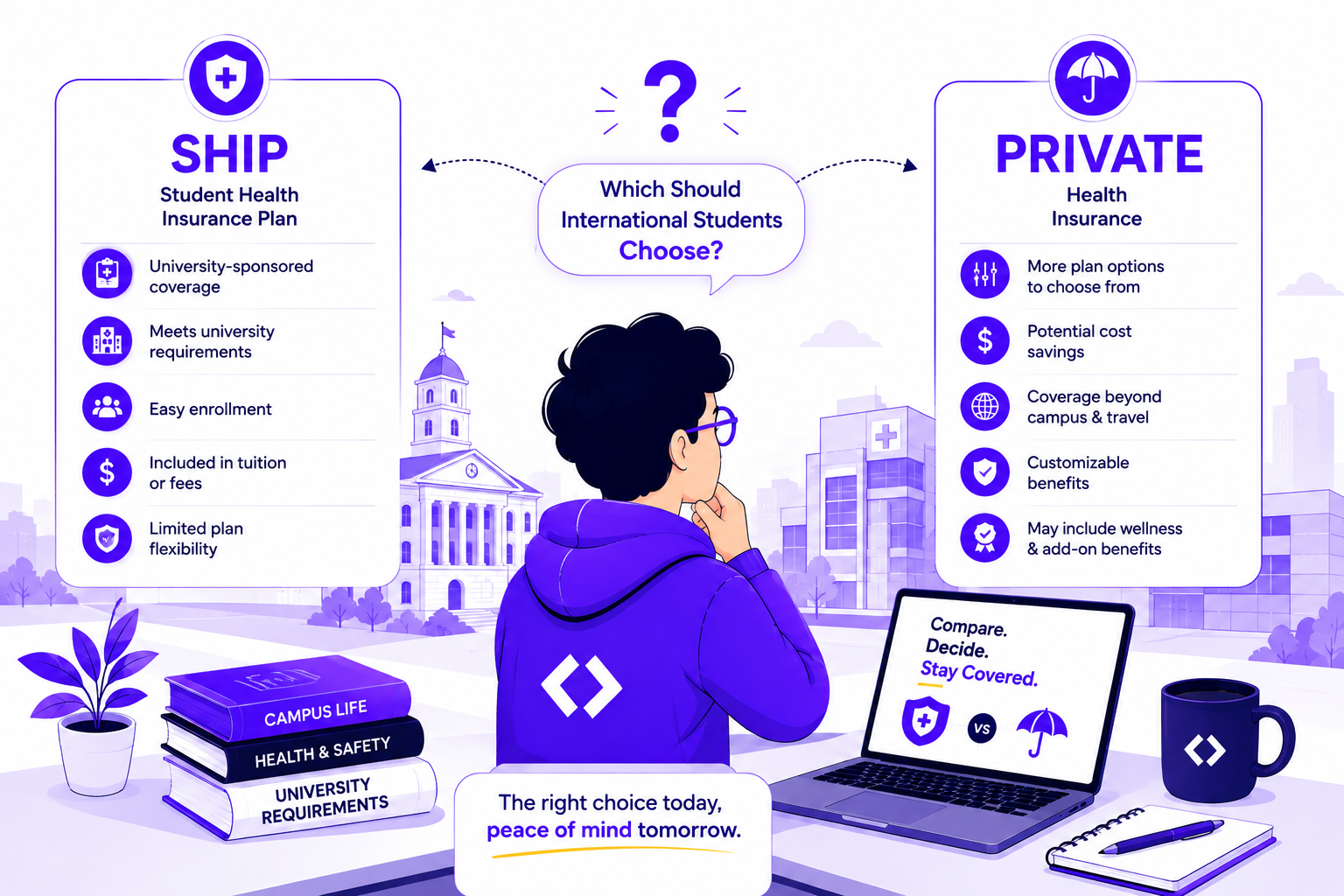
Every international student eventually hits this decision point: stick with the university’s default plan, or shop for something else. The SHIP vs private health insurance for students debate isn’t just about price; it’s about waiver eligibility, network access, and what actually happens the day you need to see a doctor. This guide walks through how SHIP and private plans really compare, and how to opt out of SHIP the right way if a private plan makes more sense for you.
Whichever side of the SHIP vs private health insurance for students question you land on, the goal is the same: real coverage that your university will actually recognize, at a price that doesn’t strain your budget.
What is SHIP, and how does it work?
SHIP stands for Student Health Insurance Plan – the institution-wide policy that most U.S. universities offer, and in many cases require, for their international student population. Under a SHIP model, your coverage is typically pre-negotiated by the school, billed directly to your student account, and automatically renewed each semester or academic year unless you actively cancel it. Because it’s built for the whole student body, SHIP tends to be broad but not always the cheapest option on the table.
Universities generally run one of three SHIP structures:
- Mandatory group plan, no waiver allowed: every international student is enrolled in SHIP with no opt-out
- Mandatory group plan with a waiver option: you’re auto-enrolled, but can switch out if your alternative plan meets the university’s requirements
- Optional plan: the university offers SHIP but doesn’t require you to take it
SHIP vs private health insurance: The core trade-offs
When comparing SHIP vs private health insurance, students actually have to weigh, and the differences usually come down to five factors. Getting these five right is the fastest way to settle the SHIP vs private health insurance for students question for your own situation, rather than relying on what a friend on a different campus decided.
Cost
SHIP plans commonly run $1,500 to $6,000 per year depending on the university, with several examples landing between roughly $1,678 and $3,538 for standard tiers. Private, waiver-eligible plans built for international students can often be found for less, sometimes in the $800 to $2,400 per year range, though pricing depends heavily on age, deductible, and plan depth. In the SHIP vs private health insurance comparison, private plans usually, though not always, come out cheaper, but the cost gap narrows once you factor in deductibles and coinsurance.
Network Access
SHIP plans are often tied to the university’s own health center plus a regional network, which is convenient if you rarely leave campus but can be limiting if you need a specialist or you’re doing an internship in another city. Private plans built on a large national PPO network can offer broader access, which matters more than students expect once real medical needs come up.
Waiver Eligibility
This is the single most important factor in the SHIP vs private health insurance decision, because a private plan is only useful if your university will actually accept it in place of SHIP.
Coverage Depth
University SHIP plans are frequently ACA-aligned with unlimited or very high policy maximums, strong mental health benefits, and campus-integrated care. Private plans vary widely; some match or exceed SHIP’s depth, others are stripped-down and cheaper for a reason. Read the policy schedule of benefits line by line before assuming a private plan is “just as good”; this single step resolves most disputes in the SHIP vs private health insurance comparison.
Compliance With Visa Rules
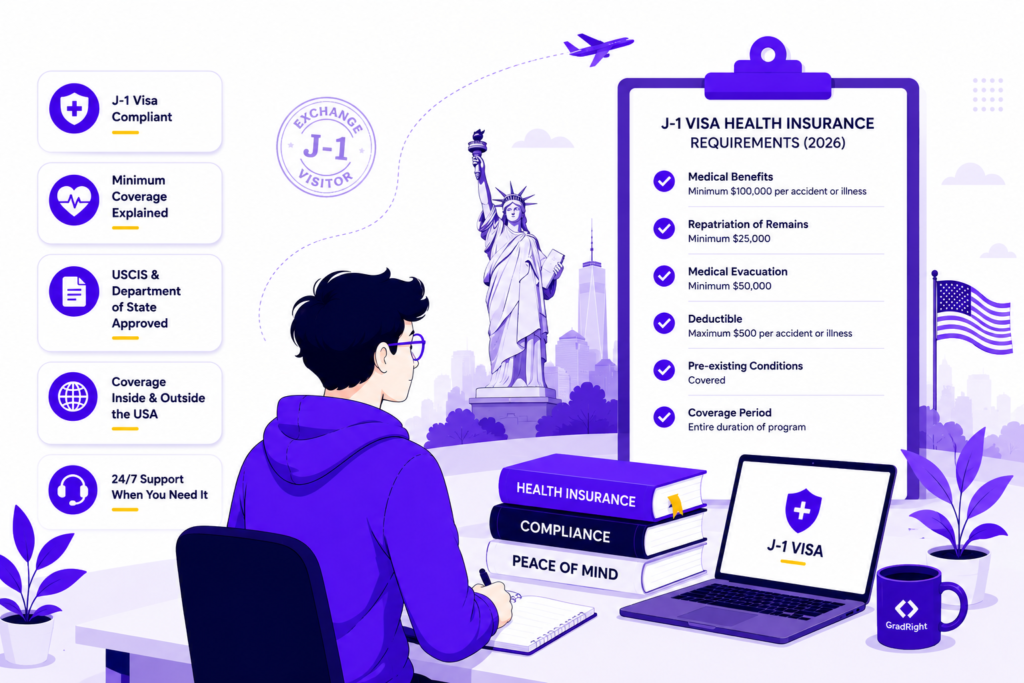
If you’re on a J-1 visa, your options narrow considerably: you generally cannot waive SHIP unless your private plan independently meets the U.S. Department of State’s federal minimums for J-1 coverage. F-1 students typically have more flexibility, since there’s no federal insurance floor for F-1 status, only your university’s own requirement.
Also Read: University Health Insurance Cost Comparison (2026): SHIP vs Private Insurance
How to opt out of SHIP (The waiver process)
If you’ve decided a private plan is the better fit, you’ll need to formally opt out of SHIP through your university’s waiver process rather than simply not paying the SHIP bill. Here’s how it typically works:
Step 1: Get Your University’s Exact Waiver Requirements
Every school publishes its own minimum standards for an accepted alternative plan – things like a minimum coverage cap (often $100,000 to $500,000 or unlimited), a maximum deductible (commonly $500), inpatient and outpatient mental health coverage, prescription coverage, and sometimes worldwide coverage. You need this checklist before you buy anything.
Step 2: Purchase A Compliant Private Plan
Buy your alternative coverage first, matching every item on your university’s waiver checklist. Submitting a waiver application without a policy that already meets the requirements is the most common reason waivers get rejected.
Step 3: Submit The Waiver Form Before The Deadline
Most schools set a narrow window, often two to four weeks into the semester, to submit your waiver form along with proof of insurance. Miss the deadline, and you’ll typically be auto-enrolled and billed for SHIP regardless of what you already purchased.
Step 4: Reapply Each Term If Required
Many universities do not grant permanent waivers. You may need to opt out of SHIP again every semester or academic year, so mark your calendar well ahead of each renewal deadline.
A Note For J-1 Visa Holders
If you’re a J-1 exchange visitor, check with your program sponsor before assuming you can waive out of SHIP at all; since your alternative plan must satisfy strict federal minimums on top of your university’s own requirements, many sponsors keep the waiver process tighter for J-1 status than for F-1.
When SHIP makes more sense than private insurance
Private isn’t automatically the smarter move for everyone. SHIP can be the better call if:
- You have a chronic condition and want the continuity of campus-integrated care
- Your school’s SHIP is unusually competitively priced or subsidized
- You’d rather not manage a separate waiver application and renewal cycle every year
- You’re on a J-1 visa and your sponsor’s waiver process is restrictive
When opting out of SHIP For private insurance makes sense
On the other hand, choosing to opt out of SHIP tends to pay off if:
- Your university’s SHIP premium is on the higher end of the $1,500–$6,000 range and a compliant private plan is meaningfully cheaper
- You need a broader nationwide network because of travel, internships, or family circumstances
- You’ve compared the actual schedule of benefits and confirmed the private plan matches or beats SHIP on the coverage that matters to you
Ultimately, the SHIP vs private health insurance for students decision comes down to your own numbers: your university’s exact SHIP premium, your visa category, and the specific waiver checklist your school publishes. Run those three inputs through the checklist above before you commit either way.
Also Read: J-1 Visa Health Insurance Requirements in the USA (2026)
Making the SHIP vs private call with confidence
There’s no universal right answer in the SHIP vs private health insurance for students debate; the better choice depends on your university’s specific waiver rules, your visa category, and how you weigh cost against network access. GradRight’s platform is built specifically to simplify this decision: it checks which insurance plans your university actually pre-approves, walks you through the waiver process step by step, and compares real costs side by side so you’re not opting out of SHIP based on guesswork.
If you’re weighing your options, GradRight can help you see exactly what you’d save and whether your university will accept the switch.







 Australia
  Canada
  France
  Germany
  India
India  Ireland
  UAE
UAE  United Kingdom
  United States