





When it comes to studying abroad, the study visa is often the first real hurdle Indian students face after securing admission in Germany. With the country emerging as one of the most preferred destinations for higher education among students from India, the Germany study visa process has become more structured, but also more detail-heavy in 2026.
From APS certification to blocked accounts and digital applications, every step needs precision and timing. This guide breaks down everything you need to know so you don’t lose time, money, or opportunity while preparing to study in Germany.
Find the right German university for your profile – AI-powered shortlisting across 40,000+ programs. Explore on GradRight
What Is a Germany Student Visa?
A Germany study visa is a National Visa (Type D) that allows Indian students to travel to Germany for higher education. It is valid for 3 to 6 months on entry and must be converted into a student residence permit (Aufenthaltserlaubnis) at the local immigration office (Ausländerbehörde) after you arrive. This residence permit then covers you for the full duration of your studies.
There are two types relevant to Indian students:
- Student Visa (Studienvisum): For students who already have an unconditional admission letter from a recognized German university. This is what most Indian students apply for.
- Student Applicant Visa (Visum zur Studienbewerbung): For students who need to travel to Germany before receiving a final admission, such as for entrance exams or interviews. This cannot be converted into a residence permit unless you secure admission after arrival.
Germany Study Visa Document Checklist for 2026 Applicants
Missing even one document is the most common reason for delays and rejections. Prepare every item below before booking your VFS appointment.
- Passport: Valid for at least 12 months from your travel date, issued within the last 10 years, with at least two blank pages.
- University Admission Letter (Zulassungsbescheid): Official offer of admission from a recognized German university, clearly stating your course name, start date, and duration.
- APS Certificate: Mandatory for almost all Indian students. The APS verifies the authenticity of your Indian academic qualifications. In 2026, most German consulates will not allow you to book a visa appointment without your APS number. Processing takes 4 to 8 weeks – apply 3 to 4 months before your intended appointment.
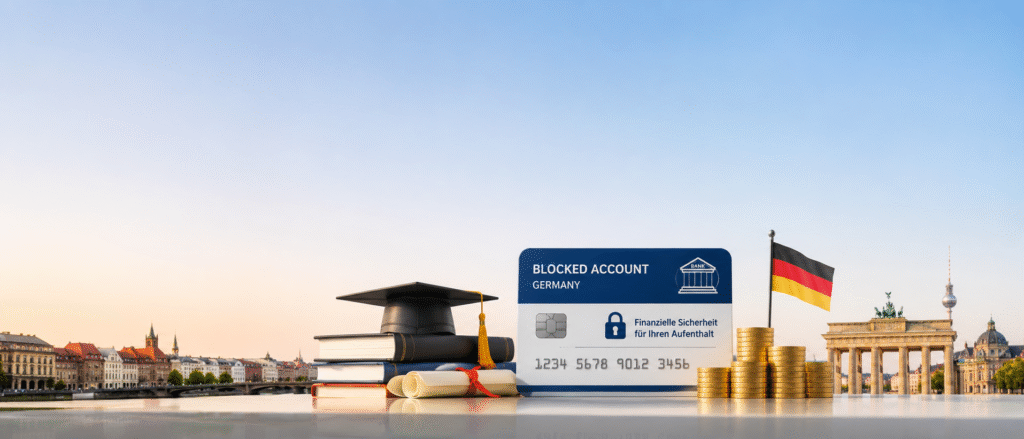
- Blocked Account Confirmation: You must prove financial self-sufficiency of €11,904 for one year (€992 per month) by opening a blocked account with providers such as Fintiba, Expatrio, or Deutsche Bank. Scholarship letters or a notarized sponsor declaration (Verpflichtungserklärung) are also accepted.
- Health Insurance: Valid international travel health insurance for initial entry. After arrival, you must enroll in German statutory health insurance.
- Language Scores: IELTS (6.0 to 6.5), TOEFL, or PTE for English-taught programs. TestDaF or DSH at B2 level or above for German-taught programs.
- Academic Documents: Class 10 and Class 12 mark sheets and certificates; bachelor’s degree transcripts for Master’s applicants. Documents not in English or German must be certified and translated.
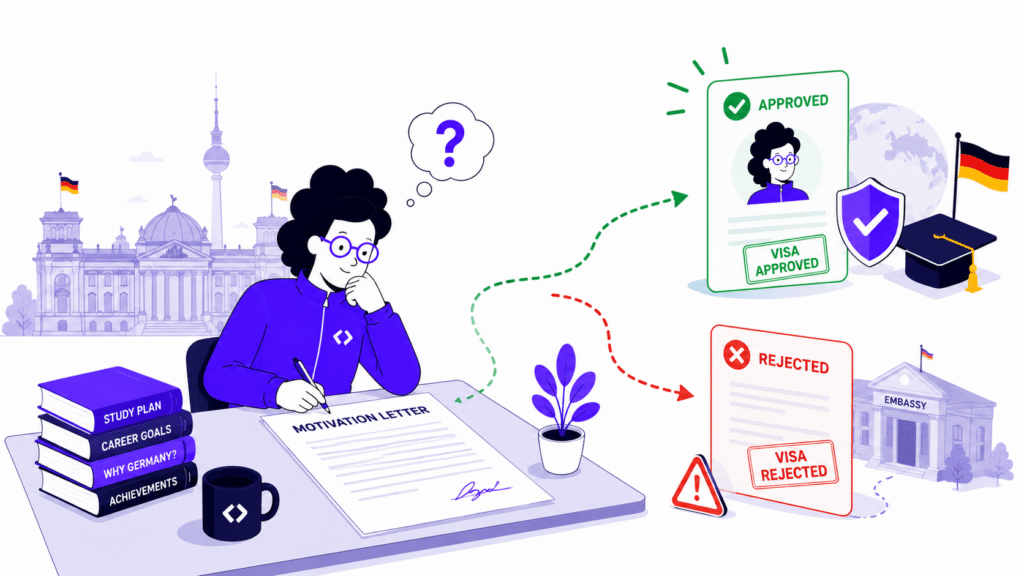
- Statement of Purpose (SOP): A specific, honest explanation of why you chose this program, this university, and Germany, and how it connects to your career goals.
- Completed Visa Application Form: Filled out through the Consular Services Portal (CSP) at digital.diplo.de – mandatory since January 2025.
- Two recent biometric passport photographs and an updated CV.
Also Read: Top Public Universities in Germany for Indian Students 2026
Germany Student Visa Application Process for Indian Students
Here is the step-by-step process that students must follow to obtain a Germany study visa.
- Secure Your Admission Letter: Apply to German universities and wait for your Zulassungsbescheid. Your visa process cannot move forward without it.
- Apply for Your APS Certificate: Start this immediately after, or even before, receiving your admission letter. Submit your Indian academic documents to the APS office at the German Embassy in New Delhi. This is a prerequisite for booking your visa appointment in 2026.
- Open a Blocked Account: Once APS is underway, open a blocked account and deposit €11,904. You will receive a confirmation certificate to submit with your application.
- Complete Your CSP Application: Create an account on digital.diplo.de, fill in the online application form, and upload your key documents. Embassy staff review your digital file before your in-person appointment.
- Book Your VFS Appointment: After CSP pre-screening, book an appointment at a VFS Global center. Options include New Delhi, Mumbai, Bengaluru, Chennai, Kolkata, Hyderabad, Pune, Ahmedabad, Chandigarh, Jalandhar, Goa, and Kochi. During peak season (May to August), slots fill within hours.
- Attend Your VFS Appointment: Arrive 15 minutes early with originals and organized copies of all documents. A VFS agent verifies your file and collects biometrics. The appointment takes 15 to 30 minutes.
- Pay the Visa Fee and Wait: The Germany study visa fee is €75 (~₹8,000 to 8,300), paid at VFS. VFS also charges a service fee of ₹1,800 to 2,500. Processing takes 8 to 12 weeks after your appointment.
- Arrive and Complete Formalities: Register your address (Anmeldung) within 14 days, activate your blocked account, enroll in statutory health insurance, and apply for your student residence permit before your initial visa expires.
Germany Study Visa Cost for Indian Students
| Item | Approximate Cost |
| Visa application fee | €75 (~₹8,000 to 8,200) |
| VFS service fee | ₹1,800 to 2,500 |
| APS certificate fee | ₹18,000 to 20,000 |
| Blocked account setup fee | €49 to 99 (varies by provider) |
| Blocked account deposit | €11,904 (returned monthly in Germany at €992/month) |
| Document translation (if needed) | ₹500 to 1,500 per page |
The blocked account deposit is the largest outgoing, but this money is returned to you in monthly installments of €992 once you are in Germany. It is your own money held securely until you need it.
Germany Study Visa Processing Time from India
After your VFS appointment, the standard processing time for Indian applicants is 8 to 12 weeks. During peak season (May to August for winter semester intake), it can stretch beyond 12 weeks.
| VFS Location | Processing Time |
| New Delhi (German Embassy) | 6-10 weeks for complete applications |
| Mumbai, Chennai, Bengaluru (Consulates) | 6-10 weeks. Heavy demand in peak season |
| Kolkata, Hyderabad, Pune, Ahmedabad | 8-12 weeks. Better appointment availability |
Recommended planning timeline:
| When (Before Course Start) | Action |
| 5-6 months before | Begin APS application |
| 4 months before | Open blocked account; gather all documents |
| 3 months before | Submit CSP application and book VFS appointment |
| 1-2 months before | Receive visa |
| On arrival | Anmeldung (address registration), health insurance, residence permit |
Do not book non-refundable flights until your visa is confirmed.
Common Germany Study Visa Rejection Reasons and How to Fix Them
The approval rate for complete, well-prepared applications is approximately 90 to 95%. Most rejections are avoidable.
- Missing or incomplete APS certificate: The single most common cause of delay. Begin at least 3 to 4 months before you plan to apply.
- Insufficient financial proof: The blocked account must reflect €11,904 and the certificate must be recent and clearly in your name.
- Inconsistent documents: Differences in name spellings, dates, or course details across your SOP, CV, form, and admission letter are immediate red flags.
- Weak Statement of Purpose: A generic SOP with no clear connection between your background and your chosen program. Make it specific and goal-oriented.
- Expired or low-validity passport: Your passport needs at least 12 months of validity from your intended travel date.
- Missing certified translations: Any document in a regional Indian language must be translated by a certified translator and notarized.
Post-Study Work Options After a Germany Student Visa
Germany’s post-study work framework is one of the strongest reasons Indian students choose it over other destinations.
- 18-Month Job Seeker Visa: After graduating from a recognized German university, you are entitled to an 18-month residence permit to find employment (Section 20 AufenthG). During this period, you can work any job, full-time or part-time, while looking for a qualified role in your field.
- EU Blue Card: Once you secure a qualified job, the EU Blue Card is your next step. Salary thresholds are reviewed periodically – verify the current figures at the time of your application on the official German immigration website (bamf.de). As a reference, 2026 indicative thresholds are approximately €45,300-50,700/year for regular occupations and €41,000-45,900 for STEM, IT, healthcare, and engineering roles. Always confirm the exact current threshold before applying, as these are revised annually.
- Path to Permanent Residency: With an EU Blue Card and B1-level German, you can apply for a settlement permit after 21 months of employment. With lower German proficiency, the timeline extends to 27 months.
While studying, you can work up to 120 full days or 240 half days per year without any additional work permit.
Planning Your Germany Study Visa Journey the Right Way
If you’re planning to study in Germany, your visa journey doesn’t really start at the embassy – it starts with how prepared your finances and documents are. From blocked accounts to APS timelines, even a small delay can push your intake by months.
At GradRight, we can help you compare lenders, improve approval chances, and align disbursal with visa requirements.
Compare education loans from 18+ lenders – align disbursal with your blocked account timeline. Explore Loans on GradRight
Also Read: Cost of Studying in Germany 2026: Blocked Account, Fees and Living Costs
Also Read: Top Public Universities in Germany for Indian Students 2026
Also Read: Universities in Germany for Masters 2026: Complete Guide
Also Read: Highest Paying Jobs in Germany 2026






 Australia
  Canada
  France
  Germany
  India
India  Ireland
  UAE
UAE  United Kingdom
  United States