





Picture this: you’ve just received your German university admission letter. You’re excited, maybe a little overwhelmed, and then someone tells you that before you can even apply for a student visa, you need to park a significant chunk of money in something called a “blocked account” (Sperrkonto). This guide walks through what it is, exactly how much you need in 2026, how the main providers compare, and the step-by-step process from India.
What is a blocked account, and when do you need one?
A blocked account in Germany is a specialized bank account, and one of the accepted ways to demonstrate financial sufficiency (Finanzierungsnachweis) for certain German visa categories, including most student visas. The German Federal Foreign Office treats it as one accepted method, not the only one, for a student visa applicant to show they can cover their baseline cost of living without relying on local public funds; in practice, it’s the option most Indian students end up using.
What makes this account “blocked” is its withdrawal mechanism: you deposit a lump sum from India before you leave, but once you arrive in Germany, you cannot withdraw the full amount at once. Instead, the account releases a fixed, capped allowance every month, so your funds are distributed evenly across the year.
One alternative to a blocked account is a formal declaration of commitment (Verpflichtungserklärung) from a permanent resident in Germany who legally guarantees to cover your expenses; other recognized forms of proof, such as a scholarship certificate, may also be accepted depending on your situation.
How much money do you actually need in 2026?
For the 2026 academic year, the German government requires international students to show a minimum deposit of EUR 11,904 in their blocked account to qualify for a standard 12-month student visa.
These monthly funds are designated to cover:
- Rent and utilities
- Food and groceries
- Compulsory student health insurance
- Public transportation passes
- Core study materials
You are not required to hold tuition funds in this account. Because most of Germany’s public universities charge no tuition, you generally only need to account for living costs and a nominal semester contribution (typically EUR 150-350).
Chancenkarte (Opportunity Card) applicants: if you’re applying for Germany’s Chancenkarte visa rather than a standard student visa, the required deposit is higher, at EUR 13,092 (EUR 1,091/month for 12 months). Confirm which visa category applies to you before opening your account.
In Indian Rupees: at current exchange rates (roughly Rs 110 per EUR as of early September 2026), the standard EUR 11,904 deposit works out to approximately Rs 13.0-13.1 lakh. Exchange rates move daily, so check the live rate before you transfer, and budget slightly higher to absorb wire transfer fees and rate fluctuations. Also read: Cost of Studying in Germany for Indian Students
Comparing the main providers: Expatrio vs. Fintiba
Both approved providers issue the same legally binding blocking confirmation certificate (Sperrkonto-Bescheinigung); processing speeds, interfaces, and fee structures are what actually differ.
| Provider | Platform Type | Account Setup Fee | Monthly Maintenance | Processing Model |
| Expatrio | Digital fintech | EUR 119 | EUR 9/month | Fully online/app-based |
| Fintiba | Digital fintech | EUR 159 (current pricing introduced 3 November 2025) | EUR 9.90/month | Fully online/web portal |
A note on Deutsche Bank: older guides sometimes list Deutsche Bank as a blocked-account option. Deutsche Bank has not offered new blocked accounts for international students since 2022; it’s no longer a practical option to consider.
Coracle, previously a popular third fintech option, paused new applications in August 2025 and is not currently accepting new customers; Expatrio and Fintiba remain the two main digital options for Indian students.
Expatrio
A popular choice for Indian applicants; a digital fintech platform built specifically for international students.
- Pros: fully digital onboarding, streamlined identity verification, bundled services (such as health insurance) that can simplify visa preparation.
- Cons: bundled packages can increase overall costs if you only need the blocked account and prefer arranging other services separately.
Fintiba
One of the longer-standing digital providers in the German student market.
- Pros: established customer support, a smooth digital workflow, and application status tracking through its platform.
- Cons: service fees and optional add-ons can increase total costs depending on the package selected; confirm the current monthly fee directly, since published figures vary across sources.
Step-by-step: opening your account from India
- 1. Choose your provider: a digital provider (Expatrio or Fintiba) generally gives the fastest processing.
- 2. Register online: complete the registration profile on the provider’s portal with your basic details.
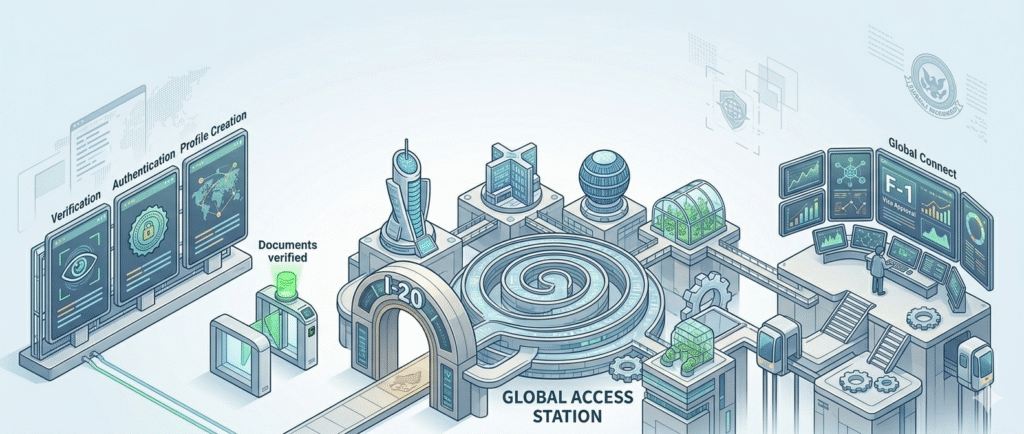
- 3. Identity verification (KYC): scan and upload your valid passport; digital platforms typically use remote video-identification tools to verify you.
- 4. Sign the agreement: digitally sign your account-opening contract to generate your IBAN.
- 5. Transfer the funds: send an international wire transfer of EUR 11,904 (or the current required amount) from your Indian bank.
- 6. Download your certificate: once funds clear, the platform generates your blocking confirmation certificate; keep this for your visa interview.
How early should you start?
For digital providers, the end-to-end timeline from registration to certificate issuance generally takes 5 to 10 business days. International wire transfers from India are subject to the RBI’s Liberalized Remittance Scheme (LRS) and SWIFT intermediary checks, which can add delays.
As a buffer, consider transferring somewhat more than the strict minimum to absorb intermediary bank fees; the Federal Foreign Office confirms banking fees may apply during transfer, though it doesn’t prescribe a specific buffer amount. If your received balance falls even slightly short of the required minimum, the provider generally cannot issue your certificate. Start the process 3-4 weeks before your visa appointment.
Can an education loan cover your blocked account deposit?
Yes. Many Indian banks and NBFCs can include your blocked account deposit as part of your overall education loan amount, so the funds don’t necessarily need to come entirely from personal savings.
- Confirm your loan sanction letter explicitly includes living expenses or the blocked-account amount as part of the approved funding.
- Share your blocked account details, including the German IBAN and deposit instructions, with your lender.
- Your lender then transfers the amount internationally, directly to your blocked account provider.
GradRight helps you compare offers from 18+ lending partners for your Germany study journey. Explore Loans on GradRight
Accessing your money after you arrive
For most providers, funds aren’t accessible as ordinary spending money until you activate the account in Germany, though the exact process varies; some providers, including Expatrio, now offer a connected German bank account that can simplify the payout step. A few setup steps generally activate your monthly release:
- Complete your Anmeldung: register your residential address at the local citizen’s office within your first few weeks; you’ll receive a Meldebescheinigung (registration certificate).
- Open a local bank account: set up a German current account (Girokonto) with a bank such as N26, Sparkasse, or Commerzbank.
- Link your accounts: upload your Meldebescheinigung and German bank details to your blocked account provider’s portal or app.
- Start receiving payments: once activated, your provider releases your approved monthly amount into your German bank account automatically.
Sources
- Blocked account deposit amounts (EUR 11,904 standard, EUR 13,092 Chancenkarte): cross-checked against multiple current 2025/26 sources referencing German Federal Foreign Office requirements.
- Current Expatrio pricing (EUR 119 setup, EUR 9/month) and Coracle pausing new applications (August 2025): per Expatrio’s own pricing page and multiple current provider-comparison sources.
- Fintiba’s current pricing (EUR 159 setup, EUR 9.90/month, introduced 3 November 2025): per multiple current provider-comparison sources referencing Fintiba’s own pricing update.
- Deutsche Bank discontinuing blocked accounts for international students since 2022: confirmed via multiple independent, current sources.
- EUR to INR exchange rate: live market rates as of early September 2026 clustered around Rs 110 per EUR across multiple forex data providers; exchange rates fluctuate daily.
Disclaimer: Deposit amounts, provider fees, and exchange rates referenced in this guide change over time. This article is for general information only and is not financial or immigration advice. Verify current figures directly with the German Federal Foreign Office, your chosen provider, and current market exchange rates before transferring funds.






 Australia
  Canada
  France
  Germany
  India
India  Ireland
  UAE
UAE  United Kingdom
  United States