




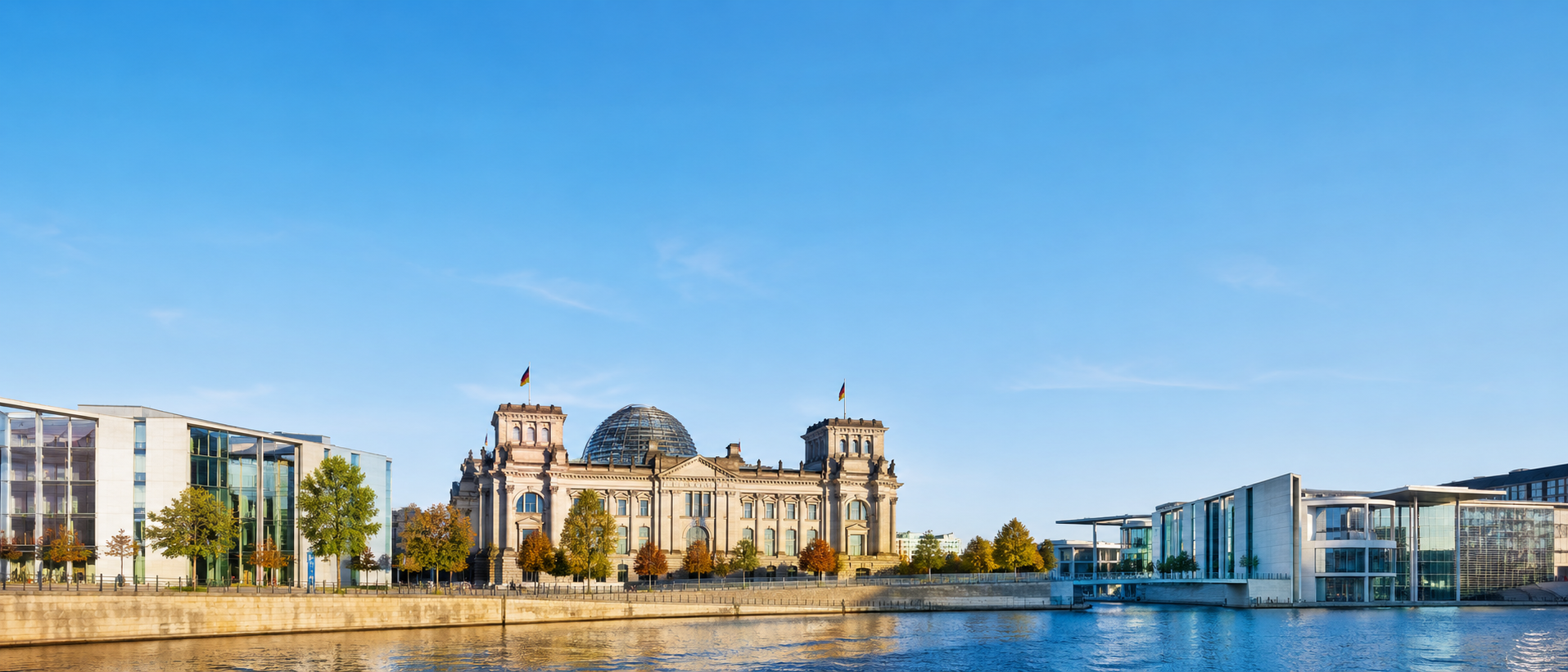
If you have been thinking about doing your Master’s abroad without spending a fortune, Germany might just be the best decision you ever make. With world-class universities, low to zero tuition fees, and a thriving job market, over 140,000 international students are enrolled in universities in Germany for masters. And that number keeps growing every year.
This guide covers everything you need to know about universities in Germany for masters, from the best-ranked options and fees to admission requirements and timelines.
Why Germany Is One of the Best Countries for a Master’s Degree
- Minimal tuition costs: Most public universities charge no tuition fees for master’s programs. Non-EU students in Baden-Württemberg usually pay about €1,500 per semester.
- Globally recognized degrees: Universities in Germany for masters consistently rank among the world’s top institutions.
- 1,500+ English-taught master’s programs available across Germany (updated 2026).
- Strong job market: Global employers such as BMW, Siemens, SAP, and Bosch are based in Germany.
- 18-month post-study work visa: Graduates get additional time to secure a job after completing their degree.
- Long-term career and settlement pathways: Germany has become increasingly attractive for international students planning to build a career abroad.
Find master’s programs in Germany that match your profile – AI-powered, free. Explore on GradRight
Top Universities in Germany for Masters: Rankings and Fees at a Glance
QS World University Rankings 2026 (corrected from previous version – all ranks verified):
| University | QS 2026 | Semester Fee | Tuition for Non-EU Students |
| Technical University of Munich (TUM) | 29 | €97 | FREE for most Master’s programs. Some MBA/Executive programs: €4,000-6,000/semester. Verify per program. |
| Ludwig Maximilian University (LMU) Munich | 63 | €85 | Free |
| Heidelberg University | 87 | ~€161 | €1,500/semester (Baden-Württemberg) |
| Freie Universität Berlin | 127 | ~€360 | Free |
| RWTH Aachen University | 100 | €300 | Free |
| Humboldt University of Berlin | 132 | ~€355 | Free |
| TU Berlin | 154 | ~€350 | Free |
| Karlsruhe Institute of Technology (KIT) | 106 | ~€150 | €1,500/semester (Baden-Württemberg) |
| University of Freiburg | 214 | €190 | €1,500/semester (Baden-Württemberg) |
Note: Universities in Baden-Württemberg (Heidelberg, KIT, Freiburg) charge €1,500/semester for non-EU students. All other public universities charge only a small semester contribution (€80-400) covering student services and public transport.
TUM tuition clarification: TUM charges NO tuition for standard Master’s programs for all students. The €4,000-6,000/semester figure applies only to specific MBA and Executive Education programs. Most STEM and technical Master’s programs at TUM are completely free.
MS Admission Requirements for Universities in Germany for Masters
APS Certificate (Indian Students – Mandatory First Step)
Before submitting any university application, Indian students must obtain the APS certificate verifying academic credentials. Processing: 6-8 weeks. Cost: ~₹18,000. Apply via APS Germany India at least 2 months before university deadlines.
Academic Requirements
You will need a completed Bachelor’s degree equivalent to a German undergraduate qualification. Check the Anabin database (the official German tool for verifying foreign qualifications). Most universities in Germany for masters expect a minimum GPA equivalent to a German grade of 2.5 or better.
Language Requirements
For English-taught programs: IELTS 6.5+, TOEFL iBT 88+, or Duolingo 110+. For German-taught programs: TestDaF Level 4 or DSH Level 2 (B2 equivalent).
Other Documents Usually Required
Statement of purpose or motivation letter, two to three letters of recommendation, a curriculum vitae, academic transcripts and certificates, and a copy of your passport. Some competitive or business-related programs may also ask for GRE or GMAT scores (often optional).
Application Timeline and Deadlines: When Should You Apply?
Getting your application timing right is crucial. Universities in Germany for masters generally follow two intake cycles:
- Winter Semester (October start): The main intake. Application deadlines typically fall between May 1 and July 15. Some programs close as early as April.
- Summer Semester (April start): Smaller intake; not all programs available. Applications close around January 15.
Updated timeline for Indian students (add APS to your planning):
| Months Before Start | Action |
| 14-12 months | Research programs and universities |
| 12 months | Apply for APS certificate (~₹18,000, 6-8 weeks processing) |
| 10-8 months | Take language tests (IELTS, TOEFL, TestDaF) |
| 8-6 months | Gather all documents; receive APS certificate |
| 5-3 months | Submit applications via university portal or Uni-Assist |
| 3-2 months | Receive admission offer (Zulassungsbescheid) |
| 2 months | Open Sperrkonto (€11,904/year); apply for student visa |
| 1 month | Arrange accommodation, book flights |
Uni-Assist note: €75 for first university application + €30 for each additional university. Submit documents at least 4-6 weeks before the deadline for processing.
Cost of Doing a Master’s in Germany: What Should You Budget For?
Tuition Fees
Public Universities: Tuition is free or negligible. The only cost is the semester contribution, which ranges from roughly €80 to €400 per semester and usually includes a public transport pass.
Private Universities: Master’s programs range from €10,000 to €40,000 per year. MBA programs at top private schools can go even higher.
Also Read: Cost of Studying in Germany for Indian Students: Complete Guide
Living Costs
Germany requires international students to show proof of funds before issuing a visa. As of 2026, this is set at €992 per month (€11,904 per year). Monthly living costs for students typically fall between €850 and €1,200, depending on the city.
Munich and Frankfurt tend to be the most expensive cities. Smaller cities like Aachen, Dresden, or Leipzig are noticeably more affordable while still offering excellent options.
Total Cost for a 2-Year Master’s
At a public university, you can realistically complete your master’s degree for between €25,000 and €45,000 in total, with most of that going toward living expenses, not tuition. Compare that to a USA university where tuition alone can be $80,000 to $100,000 for two years.
Compare education loans from 18+ lenders for your Germany master’s journey. Explore Loans on GradRight
Best Master’s Programs in Germany by Subject Area
- Engineering and Technology: RWTH Aachen, TU Munich, and KIT consistently rank among the top engineering universities in the world.
- Computer Science and Data Science: TU Munich, TU Berlin, and Saarland University. Germany is projected to see millions of data-related job openings, and CS graduates are in heavy demand.
- Business and Management: Frankfurt School of Finance, WHU Business School, and Mannheim Business School offer strong MBA and management programs.
- Natural Sciences and Life Sciences: Heidelberg University and LMU Munich are top picks for biology, chemistry, neuroscience, and medicine-adjacent research.
- Social Sciences and Humanities: Freie Universität Berlin and Humboldt University for political science, sociology, history, and international relations.
- Environmental Sciences: University of Freiburg and Leuphana University Lüneburg for sustainability, ecology, and environmental policy.
Also Read: Top Public Universities in Germany for Indian Students 2026
Also Read: Best Universities in Germany for Computer Science (MS CS)
MS in Germany vs MS in the USA: An Honest Comparison
| Factor | Germany | USA |
| Tuition (public unis) | Free or negligible (semester fee €80-400) | $20,000-$60,000+/year at most public universities |
| Tuition (private/top) | €10,000-40,000/year | $50,000-$100,000+/year |
| Living costs | €850-1,200/month | $1,500-3,000+/month (varies widely) |
| Post-study work | 18-month job-seeking visa | OPT (12 months) + STEM extension (24 months) |
| Graduate salary (STEM) | €45,000-70,000 starting | $80,000-120,000 starting (tech hubs) |
| Language | Many English programs; German helps for jobs | English throughout |
| Health insurance | Public scheme ~€120-180/month (students) | Expensive; employer-dependent |
The right option depends on individual priorities. Students focused on lower education costs may prefer Germany, while those prioritizing a wider university ecosystem or specific industries like Silicon Valley tech may consider the USA.
Also Read: Highest Paying Jobs in Germany 2026: Salaries and Career Guide
Also Read: Germany Study Visa for Indian Students 2026
Final Thoughts
Choosing among universities in Germany for masters is not only about selecting a university with a strong reputation. The right decision depends on your academic interests, budget, career plans, and the opportunities you want after graduation. Germany offers a mix of quality education, relatively lower costs, and strong industry exposure, but finding the right fit still takes research and planning.
At GradRight, we help students make smarter study-abroad decisions by comparing universities, understanding costs, and exploring funding options.
Find master’s programs in Germany that match your goals – 40,000+ programs, AI-powered. Start on GradRight
Related Topics:
- Why an MBA in Germany is a Game-Changer for Your Career
- Top Reasons to Pursue Higher Studies in Germany
- Germany Study Visa for Indian Students
- Education Loan for Germany
- Cost of Studying in Germany
- Top Public Universities in Germany for Indian Students
- Highest Paying Jobs in Germany
- Top Exams Required to Study in Germany






 Australia
  Canada
  France
  Germany
  India
India  Ireland
  UAE
UAE  United Kingdom
  United States