




Quick Answer
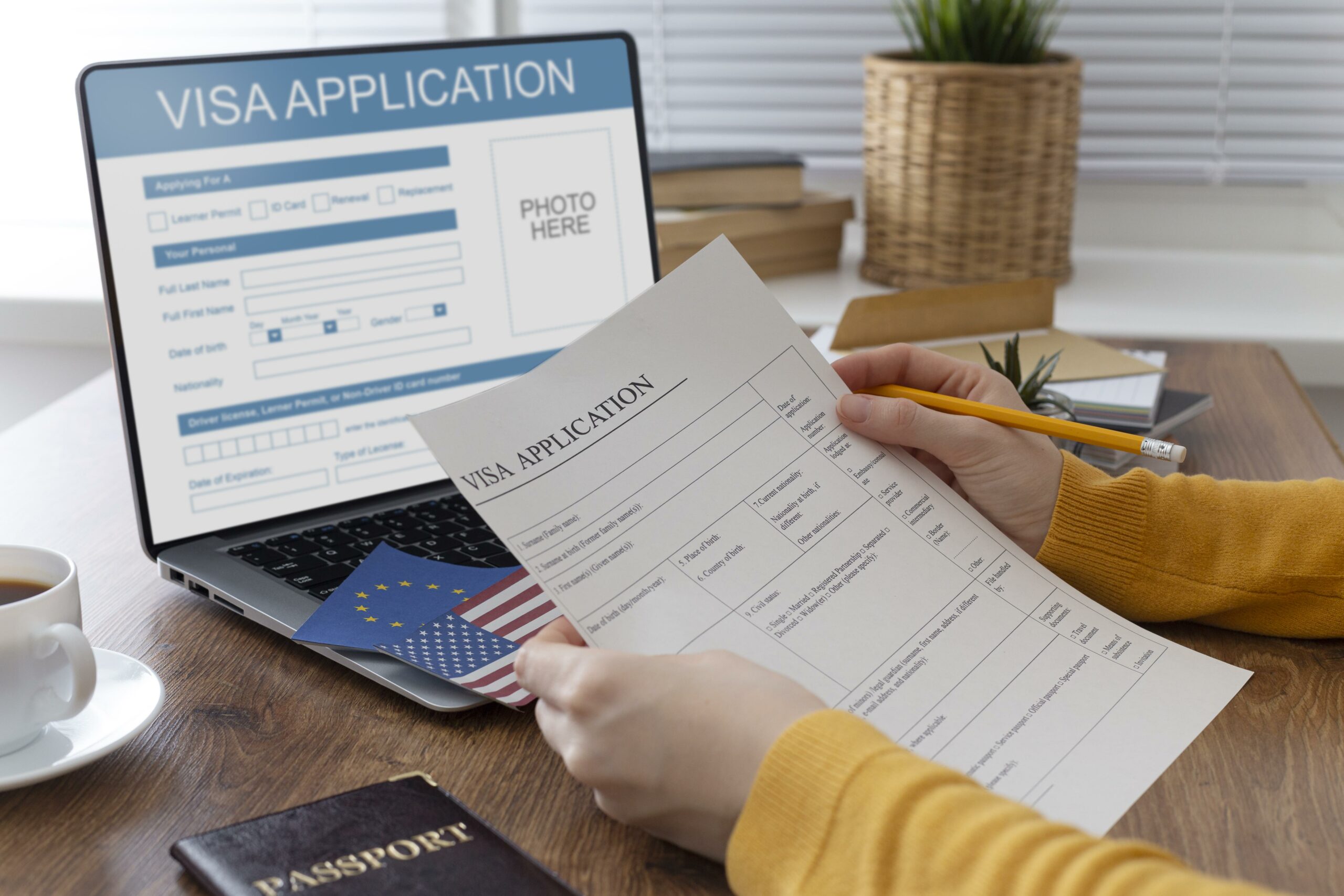
Proof of funds for a student visa means showing you can cover tuition and living costs without unauthorized work — accepted documents include bank statements, sanctioned loan letters, scholarship letters, and sponsor affidavits. For a US F-1 visa, funds must cover at least 12 months plus a viable plan for future years; M-1 visas need the full course term covered upfront. Most delays come from documentation errors, not actual lack of funds.
Planning to study abroad is exciting, but the visa process can feel overwhelming — especially the proof of funds requirement. How much money do you really need to show? Which documents count? Do savings, loans, or scholarships all work equally well?
This guide covers exactly what qualifies as proof of funds, how much you need, and the mistakes that most commonly delay applications.
Proof of Funds for I-20 vs F-1 Visa (University vs Embassy)
A lot of students assume proof of funds is handled the same way everywhere — it isn’t. Universities and visa officers look at your finances differently, and understanding this distinction early can save you from delays and last-minute document scrambles.
|
Aspect |
I-20 (University) |
F-1 Visa (Embassy) |
|---|---|---|
|
Purpose |
Confirms funds before issuing the I-20 |
Checks acceptable proof of funds for the visa |
|
Timeframe |
Covers one academic year |
Reviews first year plus future funding plan |
|
Main focus |
Liquidity and clarity of documentation |
Financial logic and genuine intent |
|
Documents |
Bank savings, loans, scholarships |
Same documents, deeper questioning |
|
Education loan |
Can be used to show I-20 proof of funds |
Assessed as part of overall F-1 funding proof |
In short: universities need confidence before issuing the I-20, and embassies need confidence before granting the visa. Preparing your documents with both audiences in mind keeps your financial story clear and credible throughout.
How Much Bank Balance Is Required for a Student Visa?
Yes — before traveling to the USA, you must show proof of financial resources for a student visa. When applying for an F-1 or M-1 visa, you need to demonstrate you can support yourself and cover tuition and living expenses, including for a spouse or children accompanying you.
US student visas don’t let you rely on employment in the country to meet expenses, though on-campus work up to 20 hours/week is allowed while school is in session.
- F-1 visa: funds must cover at least a 12-month academic term, plus evidence of a viable plan for subsequent years — you don’t need the full course cost immediately available.
- M-1 visa (vocational students): funds must cover the entire 12-month study term upfront.
Also read: Study Abroad Guide for Indian Students
What Qualifies as Proof of Funds
Every country has different requirements, and there’s no single universal list — but these documents are broadly common across most countries’ visa processes.
Bank Statements
You’ll need account statements for a set recent period — for a Canada Study Permit, typically the past 4 months; for a US Study Visa, typically the past 3 years.
- Some countries require the student’s own savings account statements; others accept a supporting sponsor’s statements — confirm which applies to your destination.
- Current Account statements are usually not accepted — check whether Savings or Current Account statements are required.
- Scanned copies must be duly signed and stamped by the bank — not an email attachment or a digital net-banking printout.
Scholarship Letters
If you’ve been awarded a scholarship — institutional or government — attach the official award document with your visa application as proof of financial capacity.
Sponsorship / Affidavit of Financial Support
Not strictly proof of funds on its own, but useful if someone is sponsoring your education. This notarized document affirms another person will cover your tuition and living costs — some universities in the USA and Australia specifically request it alongside other financial documents.
- You may need to attach the sponsor’s proof of income or bank letters.
- Direct blood relatives (parents, spouse, grandparents, aunts/uncles) can typically provide this; distant relatives usually cannot.
- If an aunt or uncle is sponsoring, the affidavit should clarify their reason for doing so alongside proof of sufficient funds.
Loan Approval Letter
If you’ve taken an education loan, a Loan Approval Letter from your bank can serve as proof of funds. It must be:
- Duly signed and stamped by the bank
- Clear about the loan amount and your name
- Dated with a specified disbursement date
- Explicit that the loan is fully sanctioned, with all conditions met
Bank Letters, Property Evaluation Reports & Loan Capability Certificates
Bank letters state your account’s nature and balance, converted to your destination country’s currency with the exchange rate shown (e.g., ₹12,00,000 = $25,875.02 at $1 = ₹77.29) — all duly signed and stamped. Some countries don’t accept Fixed Deposit balances, so check with official authorities first.
A Property Evaluation Report may be needed if you’re studying in New Zealand or Australia and have taken a loan against property — prepared by a bank or financial institution, requiring property images, size, specifications, and ownership documents.
A Loan Capability Certificate, requested by many US universities for Form I-20, is different from a Loan Approval Letter — it confirms you’re capable of securing an education loan, including your name and eligible loan amount, and must be duly signed and stamped. EPF/GPF statements confirming withdrawal availability or a CA Certificate can also support your application.
Also read: New F-1 Visa Rules for USA: All You Need to Know
Tips for Preparing Your US Student Visa Application
- Start early and stay informed — begin as soon as you receive your acceptance letter, and regularly check the official embassy/consulate website for current rules.
- Organize your documents — Form I-20, DS-160, visa fee receipts, passport, proof of financial resources, and academic records should all be ready before your interview.
- Prepare for the interview — be truthful about your study plans, career goals, and intent to return home afterward.
- Show financial stability — present clear, well-organized bank statements, loan proof, and scholarship documentation.
- Be ready for follow-up questions — the consular officer may probe further into your plans, motivations, and ties to your home country.
Also read: Student Visa for USA for Indian Students in 2026 (Guide)
Recent Updates in US Visa Regulations
- Since February 2023, consular officers can issue F and M student visas up to 365 days before a program starts (up from 120 days previously) — though students can only enter the US 30 days before the program begins.
- Since May 2023, the non-immigrant visa application fee for student visas is $185 (up from $160).
- Your I-901 SEVIS Fee payment must stay active, your I-20’s school name must match your visa, and your SEVIS financial information must remain current.
Confirm current fees and rules directly on the official US Department of State site, since these are reviewed periodically.
Also read: Your Guide to the US Student Visa
Common Proof of Funds Mistakes That Delay I-20 or Visa
Many students assume arranging funds is enough — but delays often stem from avoidable documentation errors, not actual lack of money.
- Submitting in-principle loan letters — provisional approvals aren’t accepted; universities require fully sanctioned funding. Submit a final loan sanction letter stating the approved amount, your name, and confirmation all conditions are met.
- Incomplete or unclear loan documentation — missing disbursement timelines or bank stamps cause delays — verify your loan letter includes sanction status, disbursement date, bank seal, and authorized signatures.
- Showing savings without transaction history — large balances with no financial trail, especially sudden deposits, raise concerns — maintain clean statements over the required period and be ready to explain any large recent deposits.
- Over-relying on fixed deposits — acceptance of FDs depends on liquidity and institutional policy — confirm your university accepts them, and support with liquid funds (savings or sanctioned loans) wherever possible.
- Using different financial documents for I-20 and visa — inconsistencies between university and embassy submissions create doubt even when funds are sufficient — use the same financial structure and documents for both.
Most proof of funds delays stem from presentation, not affordability. Complete, consistent, and easy-to-explain documents keep both universities and visa officers satisfied without unnecessary follow-ups.
Finding the Right University Before You Apply for a Visa
Before applying for a student visa, you need admission to a university — and with postgraduate options across science, engineering, technology, law, medicine, and management, narrowing it down can be difficult.
GradRight’s AI-powered university search platform transforms this into a data-driven process instead of guesswork, analyzing 8 million+ data points to match you with universities and programs suited to your profile. Once you’ve shortlisted high-ROI universities, GradRight’s loan comparison tool connects you with 18 lending partners — banks and NBFCs — who compete to offer you favorable loan terms, with a dedicated financial expert guiding you through the process and approval often taking just 10 days.
Related Articles
Study Abroad Guide for Indian Students
New F-1 Visa Rules for USA
Student Visa for USA for Indian Students
Your Guide to the US Student Visa
Best Education Loan Providers in India
Get Your Documents Right the First Time
Most proof of funds delays are avoidable with the right preparation. GradRight can help you shortlist universities and compare education loan offers from 18 lending partners in one place, so your financial documentation is consistent from the start. Start your free profile at https://gradright.com/selection/.




 Australia
  Canada
  France
  Germany
  India
India  Ireland
  UAE
UAE  United Kingdom
  United States