





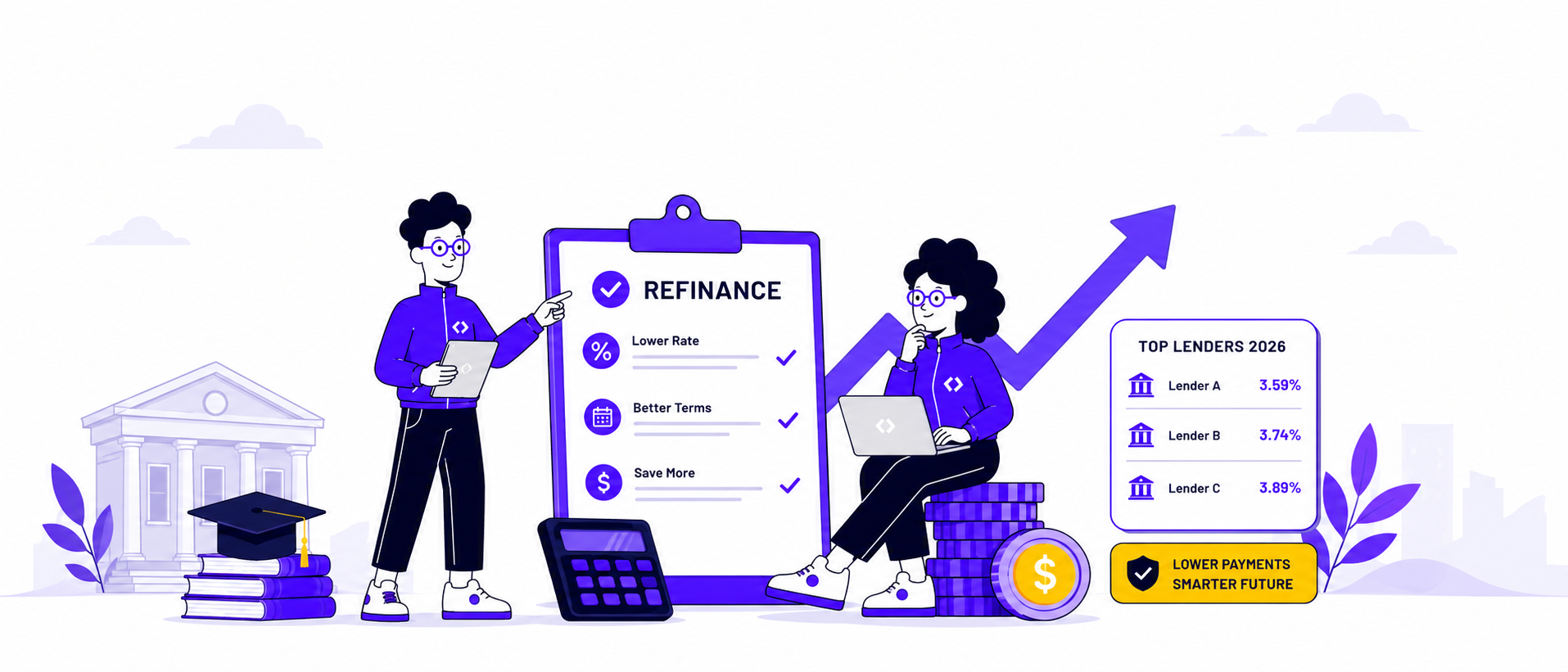
If you’re carrying a private student loan with a high interest rate, you’ve probably already searched for a way out. Refinancing private student loans is the most common answer, and for good reason: it can lower your monthly payment, shorten your payoff timeline, or free up cash flow when you need it most. But the process has real rules, real eligibility hurdles, and real trade-offs, especially if you’re an international student or a recent graduate working in the US on OPT or H-1B status.
This guide breaks down exactly how refinancing private student loans works in 2026, which lenders are worth comparing, what rates to expect, and how to avoid the mistakes that cost borrowers money.
What does refinancing private student loans actually mean?
Refinancing private student loans means taking out a brand-new loan from a private lender and using it to pay off one or more existing private (or federal) student loans. The new lender pays off your old balance, and you’re left with a single loan, ideally with a lower interest rate, a different repayment term, or both.
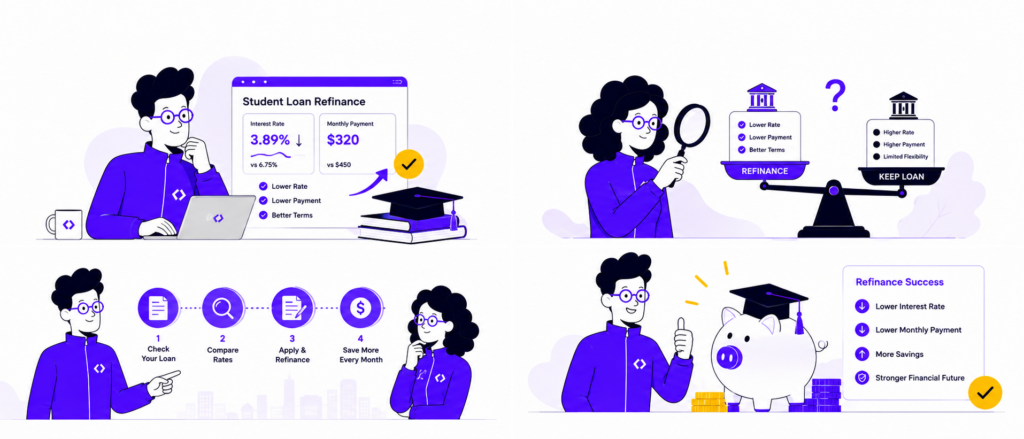
Student loan refinance is the process of taking a new loan to pay off your existing education loan, with the new loan typically coming with better terms.
This is different from federal loan consolidation, which only combines federal loans and keeps them within the federal system. When you refinance, you’re moving to a private contract, which changes what protections and options are available to you going forward.
Also Read: How to Get the Lowest Interest Rates for Refinancing Student Loans
Why Borrowers Choose Refinancing Private Student Loans
People pursue refinancing private student loans for a few consistent reasons:
- Their original loan carried a high fixed or variable rate, often because it was taken out with a thin credit file or without a cosigner.
- Their income and credit profile have improved significantly since graduation, especially after landing a stable US job.
- They want to consolidate multiple loans (sometimes across different lenders or currencies) into a single monthly payment.
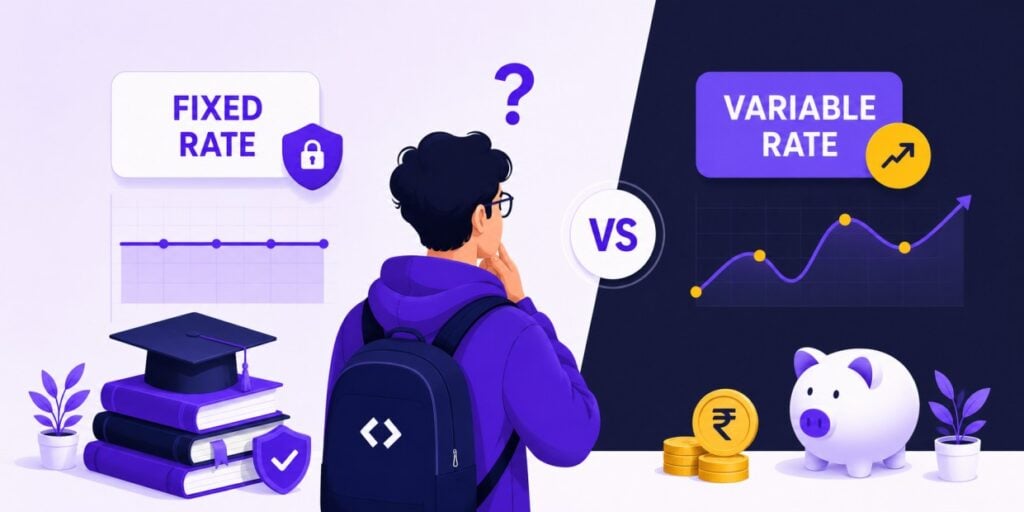
- They want predictability, by locking in a fixed rate instead of riding out a variable one.
How does refinancing private student loans work, step by step?
The mechanics are fairly consistent across lenders, whether you’re refinancing a US-issued private loan or an education loan taken out in India before you moved abroad.
Step 1: Check Your Eligibility
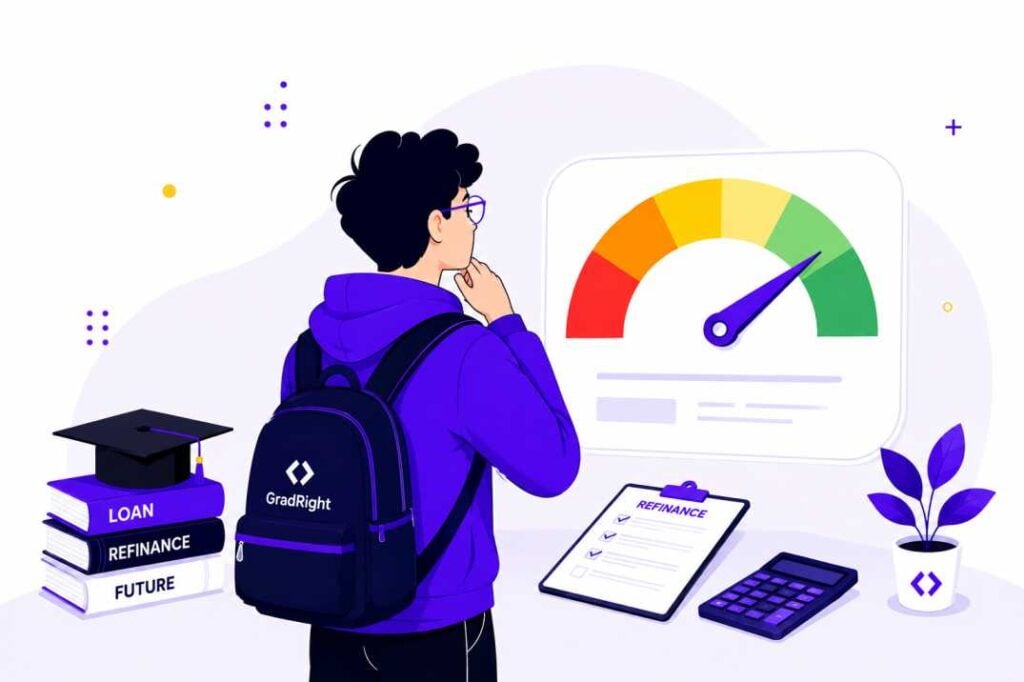
Most lenders look at your credit score, income, employment status, degree completion, and, for non-US citizens, your visa or residency status. To refinance student loans, you’ll generally need solid credit and steady income, since those are the factors lenders use to determine whether you qualify and what rate you’ll get.
Step 2: Prequalify With A Soft Credit Check
Reputable lenders let you check your estimated rate through a soft credit pull, which doesn’t affect your credit score. This lets you compare offers before committing to a full application.
Step 3: Submit A Full Application
Once you pick an offer, the lender runs a hard credit inquiry and requests documentation: proof of income, existing loan statements, identity verification, and, for loans originally issued in India, a payoff or foreclosure letter from your current lender.
Step 4: The New Lender Pays Off Your Old Loan
Once approved, the new lender repays your old one and you start paying the new EMI or monthly payment. Your old account is closed, and your new loan terms take effect immediately.
Step 5: Close Out The Old Loan Properly
If you’re refinancing an Indian education loan into a US loan, this step matters more than people expect. You need to close the Indian loan properly by collecting the No-Objection Certificate, retrieving any collateral documents, and ensuring the lien is removed from CIBIL records.
Best lenders for refinancing private student loans in 2026
Not every lender serves every borrower. Some are built for US citizens with established credit; others specialize in international students, visa holders, or borrowers returning to India. Here’s how the market breaks down.
Lenders For US Citizens And Permanent Residents
- SoFi – competitive rates, no fees, and member benefits like career coaching.
- Earnest – flexible repayment terms and a more holistic underwriting approach (covered in detail in our dedicated Earnest review).
- Citizens Bank – offers loyalty and autopay discounts that can meaningfully reduce your APR.
- Laurel Road and ELFI – strong options for graduate degree holders, including medical and law graduates.
Lenders For International Students And Visa Holders
- MPOWER Financing – one of the only lenders that wires a payoff directly to Indian banks like SBI and Avanse, with a fixed APR and no cosigner required.
- SoFi – considers US citizens, permanent residents, and people who hold a J-1, H-1B, E-2, E-3, O-1, or L-1 visa.
- Prodigy Finance – an option to keep on your radar, though availability can be inconsistent.
Lenders For Borrowers Moving Back To India
If you plan to return to India, refinancing with an Indian bank or NBFC (such as SBI, ICICI, Credila, or Avanse) at a lower domestic rate usually makes more financial sense than holding a dollar-denominated loan against rupee income.
Also Read: Citizens Bank Student Loan Refinancing Review 2026
What rates can you expect in 2026?
Rates for refinancing private student loans vary widely based on your credit profile, loan term, and whether you choose a fixed or variable rate.
- Average fixed APRs in mid-2026 have ranged from roughly 5.34% to 10.85%, while average variable APRs have ranged from about 5.90% to 10.98%.
- Private student loan interest rates overall span from about 3.79% to more than 10%, depending on the borrower’s credit and income.
- Converting a ₹25-lakh, 10-year loan from an 11% INR rate to a 6% USD rate can cut roughly ₹4.1 lakh in total interest.
The takeaway: your actual rate depends entirely on your financial profile, not just the lender you pick. This is why comparing multiple offers side by side matters more than chasing a single advertised “starting rate.”
How Much Can You Actually Save?
Refinancing a $60,000 loan from 7.50% to 5.50% over ten years can save roughly $7,000 in interest. On larger education loans, especially those originally taken out in India at 10–14% interest, the savings from refinancing private student loans into a lower-rate USD or domestic loan can run into the thousands of dollars or several lakhs of rupees over the life of the loan.
Is refinancing private student loans always a good idea?
Not always. Before refinancing, consider these trade-offs:
When It Makes Sense
- Your credit and income have improved substantially since you took out the original loan.
- You have stable US employment and don’t expect to need federal loan protections.
- You want to lock in a fixed rate before rates potentially rise.
When To Pause And Think
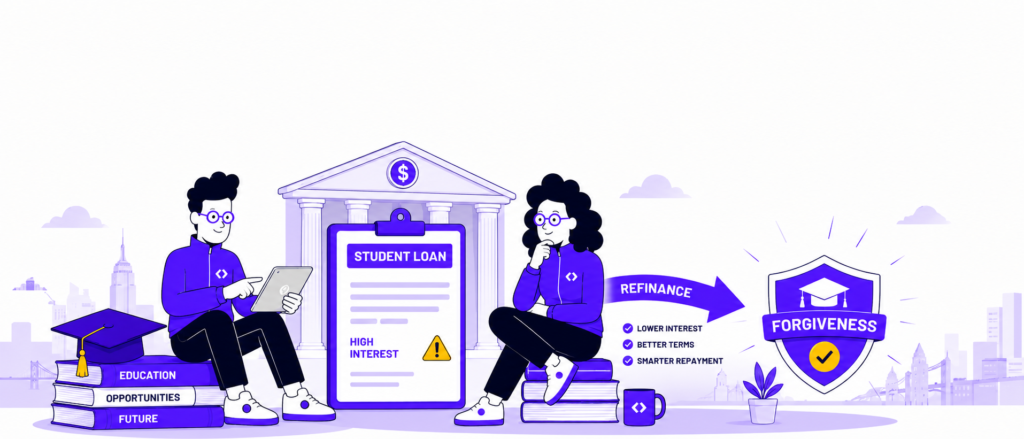
- Refinancing federal loans into a private loan means losing federal protections like income-driven repayment and forgiveness eligibility.
- If your visa status is uncertain, a rigid fixed monthly payment could strain your finances if your income changes.
- Applying to too many lenders in a short window can create multiple hard inquiries if they aren’t grouped within the rate-shopping window.
How GradRight simplifies refinancing private student loans
Comparing lenders manually, tracking rate offers, and managing documentation across Indian and US institutions is genuinely time-consuming. GradRight was built to remove that friction. Instead of applying separately to a dozen lenders, you submit one profile, and lenders bid for your profile, giving you competing offers, for free.
Whether you’re weighing a US-based refinance to build dollar credit or a domestic refinance ahead of a move back to India, GradRight’s platform lays out the real numbers, rates, EMIs, and total savings, so you can make the decision with clarity instead of guesswork. If you’re exploring refinancing private student loans, start with a free eligibility check and let lenders compete for your business instead of the other way around.





 Australia
  Canada
  France
  Germany
  India
India  Ireland
  UAE
UAE  United Kingdom
  United States
