





It’s the coverage most students never think about until they need it, and by then, it’s too late to buy it. Medical evacuation insurance for students covers the cost of transporting you to an adequate medical facility, or home, during a serious illness or injury when local care isn’t sufficient.
This guide explains what it actually covers, whether your existing plan already includes it, and how to decide if you genuinely need a standalone policy.
What is medical evacuation insurance for students
Medical evacuation insurance for students is coverage designed to pay for emergency transportation when a student experiences a life-threatening illness or injury that the local hospital or clinic cannot adequately treat. In practice, this means the cost of an air ambulance, ground ambulance transfer, or scheduled medical flight to a facility, sometimes in a nearby city, sometimes back to the student’s home country, that can actually provide the necessary care.
This is distinct from regular health insurance, which pays for the treatment itself. Medical evacuation insurance for students pays for getting you to the treatment in the first place, which becomes critical in remote locations, during natural disasters, or in any situation where the nearest hospital simply isn’t equipped to handle a specific emergency.
Medical Evacuation Vs. Repatriation Of Remains
These two benefits are often bundled together but cover very different situations:
- Medical evacuation transports a living patient to appropriate care
- Repatriation of remains covers the cost of returning a deceased student’s body to their home country, including embalming, preparation, and international logistics – a process that can run $10,000 to $20,000 or more depending on the country involved
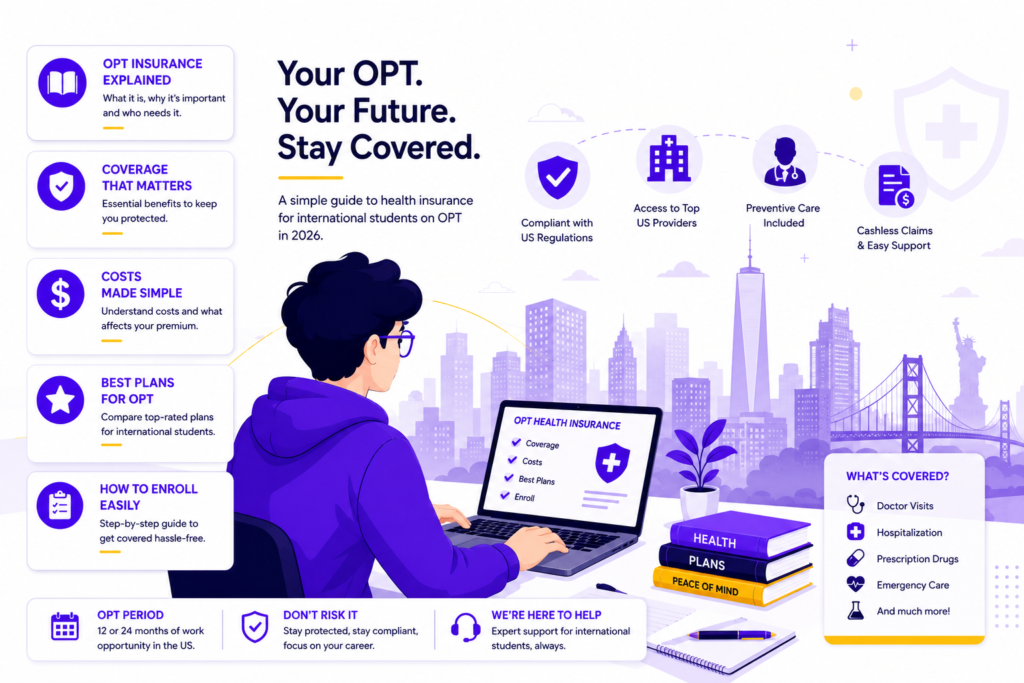
Also Read: OPT Health Insurance Guide for International Students (2026)
Do international students actually need medical evacuation insurance
Whether medical evacuation insurance for students is worth adding depends heavily on your specific circumstances. For most F-1 students on a standard university campus in a major U.S. city, the odds of needing a true medical evacuation are low, since adequate hospitals are usually close by. But there are specific situations where this coverage becomes genuinely important:
- You’re doing fieldwork, research, or an internship in a remote or rural area with limited hospital access
- You travel frequently within the U.S. or internationally during your studies
- Your existing health plan either excludes evacuation coverage entirely or caps it at a low amount, sometimes as low as $25,000
- You’re on a J-1 visa, where the U.S. Department of State specifically requires a minimum evacuation benefit as part of your visa compliance
Is medical evacuation insurance legally required
For F-1 students, there’s no federal requirement to carry a specific medical evacuation benefit; it depends entirely on your university’s insurance policy and whether it already includes this coverage.
For J-1 exchange visitors, it’s a different story: federal regulation requires a minimum medical evacuation benefit of $50,000 as part of any J-1-compliant insurance plan, alongside a $25,000 minimum for repatriation of remains. If you’re on a J-1 visa, this isn’t optional; it’s baked into your visa compliance requirements.
How much does medical evacuation insurance for students cost
The good news is that medical evacuation insurance for students is one of the more affordable types of coverage available to students. Many standalone plans cost less than $1 a day, and some dedicated evacuation-and-repatriation add-ons are available for roughly $5 to $10 per month, making them a low-cost way to close a real gap in your existing health coverage.
Full-featured student health insurance plans with a strong evacuation benefit already built in typically don’t carry much of a premium difference compared to plans that cap this benefit low, so it’s often worth comparing before assuming you need a separate policy.
Why the benefit amount matters more than people realize
Real-world air ambulance costs make it clear why relying on a low-cap plan is risky. Transfers between continents can run into the tens of thousands of dollars, with costs varying significantly by distance and region – some international transfers have been reported to exceed $100,000 depending on the route and urgency involved.
A plan that caps medical evacuation insurance for students at $10,000 or $25,000 may sound like it “has the benefit,” but that cap can fall dramatically short of the real cost in a genuine emergency, leaving the student responsible for the difference.
How To Check If You Already Have Adequate Coverage
Before buying a standalone policy, check your existing student health insurance for these details:
- Does it include a medical evacuation benefit at all, or is it excluded entirely?
- What is the dollar cap on that benefit?
- Does it also include repatriation of remains, and at what amount?
- Is the benefit valid only within the U.S., or does it extend internationally if you travel during your studies?
If your current plan is silent on any of these, or caps the benefit well below $50,000, a standalone evacuation policy is a reasonable and inexpensive way to close that gap.
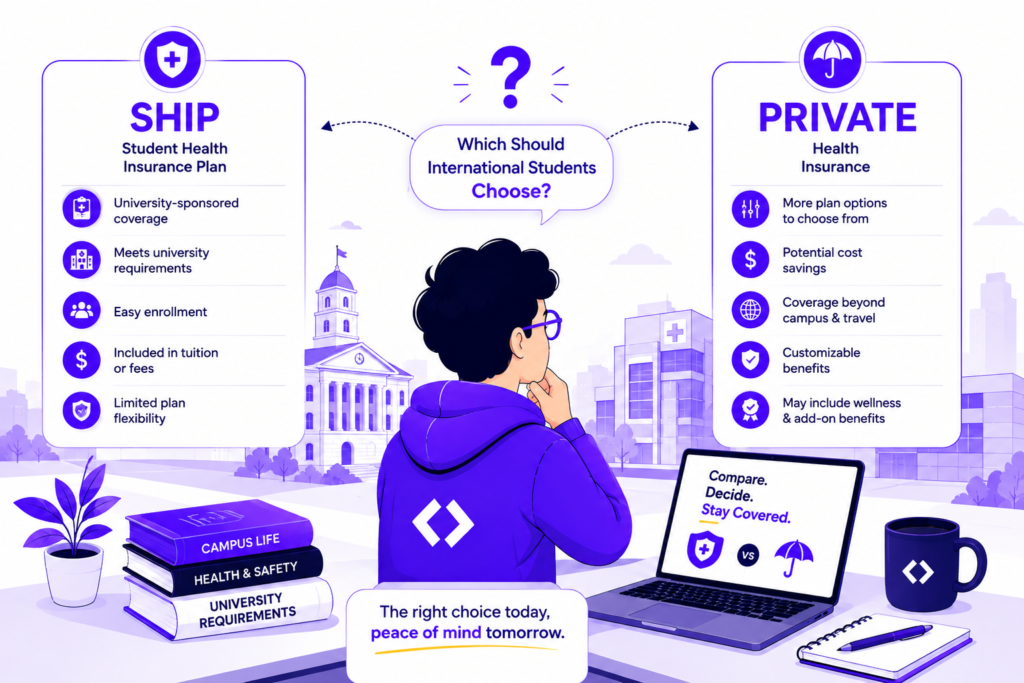
Also Read: SHIP vs Private Health Insurance: Which Should International Students Choose?
Choosing a standalone medical evacuation plan
If you decide dedicated medical evacuation insurance for students is worth adding on top of your existing health plan, look for the following when comparing medical evacuation insurance for students across providers:
- A benefit amount of at least $50,000, matching the federal J-1 standard even if you’re not on a J-1 visa
- Clear language on which facility decisions are made by (you and your treating physician, versus the insurer alone)
- 24/7 multilingual travel assistance, since evacuations are logistically complex and often happen outside normal business hours
- No exclusions tied to your specific program activities, research travel, or fieldwork location
Closing a gap most students overlook
Medical evacuation insurance for students is inexpensive relative to the financial exposure it removes, which is exactly why it’s worth checking rather than assuming your existing plan has you covered.
GradRight’s platform lets you review your university-approved plan’s actual evacuation and repatriation limits alongside private alternatives, so you know exactly where the gaps are before you need to rely on this coverage. If you want to confirm your current plan is genuinely adequate, our advisors can walk you through the comparison.







 Australia
  Canada
  France
  Germany
  India
India  Ireland
  UAE
UAE  United Kingdom
  United States