





Before you land in the U.S. for grad school, one budget line tends to surprise international students more than any other: health insurance. Since the country doesn’t run on universal healthcare, student health insurance cost isn’t a minor administrative fee; it’s a real annual expense that can range anywhere from around $800 to over $6,000 depending on your university, your plan type, and your age.
This guide breaks down what actually drives student health insurance cost, what you get at each price point, and how graduate students specifically can budget for it accurately.
What determines student health insurance cost
It isn’t a flat number set by the federal government; it varies by university, insurer, and individual student profile. The main drivers are:
University Vs. Private Plan
If your school runs a mandatory Student Health Insurance Plan (SHIP), your student health insurance cost is set by the university and billed directly to your account, typically ranging $1,500 to $6,000 per year. If you’re eligible to waive out for a private, ACA-aligned plan, your student health insurance cost can often come in lower, commonly in the $800 to $2,400 per year range, though this depends on the depth of coverage you choose.
Age
Younger applicants generally see lower premiums. Students under 25 often pay in the range of $30 to $200 per month, while older graduate students, particularly those over 40, can see monthly premiums climb toward $300 or more for comparable coverage.
Deductible And Coinsurance
A lower deductible plan raises your monthly premium but lowers what you pay when you actually need care. A $0 deductible plan will always cost more upfront than a $500 or $1,000 deductible plan with otherwise similar benefits.
Dependents
If you’re bringing a spouse or children, factor in a separate dependent premium; many universities publish a distinct rate table for dependents, and this can meaningfully increase your total student health insurance cost.
Network Breadth
A plan tied to a large national PPO network tends to carry a slightly higher premium than a narrow regional HMO-style plan, but it reduces the risk of expensive out-of-network bills if you relocate for an internship or research placement.
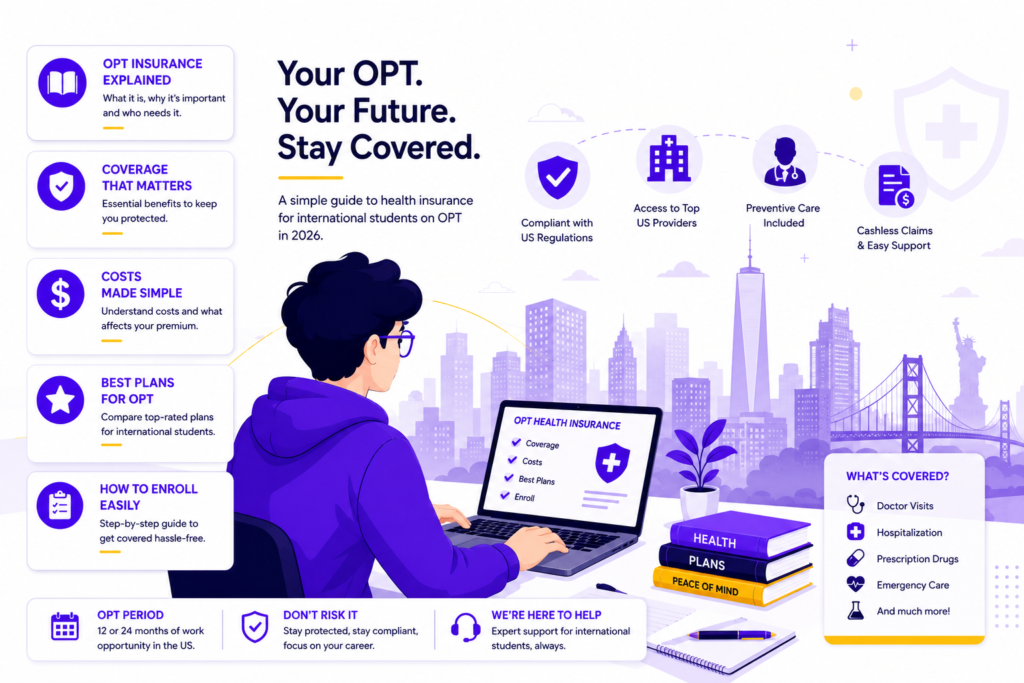
Also Read: OPT Health Insurance Guide for International Students (2026)
Why student health insurance cost feels high compared to tuition budgeting
Many graduate students underestimate this expense when building their overall cost-of-attendance budget, because it’s easy to focus on tuition and living expenses and treat insurance as an afterthought. But U.S. medical pricing makes this a costly oversight: an emergency room visit can run over $1,000, a single night in the hospital can cost $10,000 to $30,000, and an appendectomy can generate a bill of $30,000 to $50,000 before insurance is applied. Viewed against those numbers, even the higher end of student health insurance cost is a small price for the financial protection it provides.
How Graduate Students Can Reduce Student Health Insurance Cost
- Compare SHIP against waiver-eligible private plans before your enrollment deadline, since the price gap can be substantial
- Choose a moderate deductible rather than the lowest possible one, if you’re generally healthy and want to lower your monthly premium
- Use your campus health center for routine care, since many are free or low-cost and reduce how much you draw on your insured benefits
- Check for university-subsidized rates for teaching or research assistants, which are sometimes lower than the standard student rate
- Confirm your coverage dates precisely so you’re not paying for months you don’t need, particularly around graduation or program breaks
What a typical student health insurance cost actually buys you
At most price points, your premium buys you a baseline of doctor visits, urgent care, emergency treatment, hospitalization, prescription drugs, and increasingly, mental health counseling as an included essential benefit under ACA-aligned plans.
What varies most by price is the deductible, the annual or lifetime maximum, whether medical evacuation and repatriation are bundled in, and how broad the provider network is. Two plans priced similarly can differ significantly in what they actually pay out when you file a claim, so always read the schedule of benefits rather than comparing premiums alone.
Also Read: SHIP vs Private Health Insurance: Which Should International Students Choose?
Budgeting student health insurance cost as part of your total expenses
When building your overall U.S. graduate school budget, treat this expense as a fixed annual line item alongside tuition, fees, and living expenses, not a variable you’ll figure out later.
Universities that include a cost-of-attendance breakdown for international students typically list the insurance premium separately from tuition, which makes it easier to plan for upfront rather than being surprised by an automatic charge on your student account.
Budgeting with clarity, not guesswork
Student health insurance cost shouldn’t be the line item you figure out after you’ve already arrived in the U.S. GradRight’s platform lets you check your university’s exact SHIP pricing, compare it against waiver-eligible private plans, and see real cost estimates before you commit, so your health insurance budget is based on your actual numbers, not a rough guess.
If you’re planning your U.S. graduate school budget, GradRight can help you see where your money goes and where you might reasonably save.








 Australia
  Canada
  France
  Germany
  India
India  Ireland
  UAE
UAE  United Kingdom
  United States