





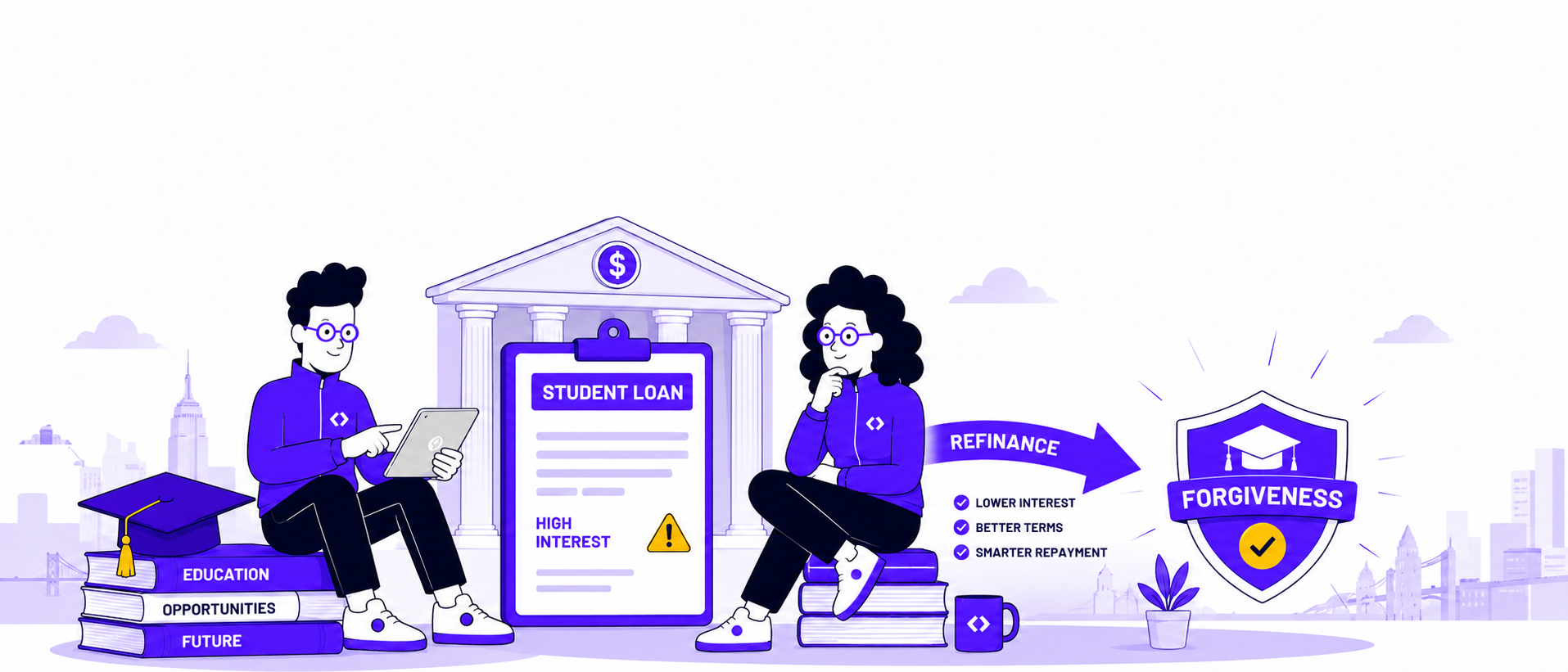
If you’re an Indian graduate weighing whether to refinance your student loans, you’ve likely asked one specific question: can refinanced student loans be forgiven? It’s an important question to get right before you sign anything, because the answer directly affects whether refinancing is a smart move or a costly mistake for your situation.
This guide gives you a clear, accurate answer to can refinanced student loans be forgiven, explains exactly what you give up when you refinance, and shows how to think about the decision as an Indian student or working professional in the US.
Can refinanced student loans be forgiven?
No. While private loans can be refinanced for a lower interest rate, there are no federal forgiveness programs or income-driven repayment plans available for private loans; only federal loans are eligible for these programs.
Once you refinance, whether you started with a federal loan, a private loan, or an Indian education loan, your new loan is a private contract, and private lenders are not part of any federal forgiveness system.
So if you’re asking “can refinanced student loans be forgiven” because you’re hoping to combine a lower rate with future forgiveness, the honest answer is that you can’t have both. Refinancing and forgiveness eligibility are mutually exclusive paths once the switch is made. It’s worth repeating: can refinanced student loans be forgiven after the switch to a private lender? No, not through any federal program.
Also Read: Student Loan Refinancing in 2026: Everything Indian Students in the USA Need to Know
Why the answer to “can refinanced student loans be forgiven” is almost always no
People searching “can refinanced student loans be forgiven” are usually trying to figure out whether PSLF, IDR forgiveness, or another federal program could still apply after they refinance. It cannot, for the reasons below.
Public Service Loan Forgiveness (PSLF) No Longer Applies
Only federal loan borrowers with Direct Subsidized, Direct Unsubsidized, or Direct PLUS Loans are eligible for PSLF, and refinancing moves your debt out of that category entirely. Ten years of qualifying payments while working for the government or a nonprofit can wipe out your federal balance, but refinancing to private closes that path for good, even if you’re years into it.
This is the single biggest reason financial advisors urge borrowers to think twice before refinancing federal loans: once you refinance, there is no way to reverse the decision and reclaim PSLF eligibility.
Income-Driven Repayment And Its Built-In Forgiveness
Private student loans do not qualify for income-driven repayment plans, even if the loans you’re refinancing started out as federal loans, and you don’t get to bring any of the benefits of federal loans with you. Income-driven plans like IBR, and the newer RAP plan launched in mid-2026, tie your payment to your income, while a private lender charges what the loan contract says regardless of what you earn.
Other Federal Protections You Lose
If you refinance, you may lose benefits associated with your underlying federal loans, such as federal Income-Driven Repayment Plans, Economic Hardship Deferment, Public Service Loan Forgiveness, or other deferment and forbearance options. The CFPB lists deferment, forbearance, cancellation, and affordable repayment options among the rights borrowers lose when they refinance federal loans into private ones.
Why this matters especially for Indian graduates in the US
Most Indian students studying in the US carry private education loans taken out in India, not US federal loans, since federal aid is generally reserved for US citizens and eligible permanent residents. This changes how the “can refinanced student loans be forgiven” question applies to you specifically.
If your original loan was already a private Indian education loan, you were never eligible for PSLF or federal IDR in the first place, so refinancing that loan into a US private loan doesn’t cause you to lose forgiveness options you never had. The forgiveness question becomes relevant mainly in two scenarios:
- You have US federal loans from an earlier degree completed as a US citizen or permanent resident, and you’re now considering refinancing them alongside other debt.
- You’re weighing whether refinancing your Indian loan into a US loan changes your protections, which it does, but not in the forgiveness sense, since Indian education loans don’t carry US-style forgiveness programs either.
When refinancing still makes sense despite no forgiveness
Even though the answer to can refinanced student loans be forgiven is no, refinancing remains a smart move for many Indian graduates because:
- You were unlikely to qualify for PSLF or IDR forgiveness anyway, since those programs apply to federal loans held by US citizens and permanent residents in qualifying public service jobs.
- Refinancing may be a good option if you’re highly motivated to repay your debt, have a secure job, emergency savings, and strong credit, and are unlikely to benefit from forgiveness options.
- A lower interest rate on a private refinance can save more money over your repayment term than pursuing a forgiveness path that never applied to your loan type.
When you should not refinance
- If any portion of your debt is a US federal loan and you work, or plan to work, for a government agency or nonprofit, refinancing could cost you a shot at PSLF.
- If your income is unstable or your visa status could change, keeping access to income-driven flexibility (where it applies) matters more than a lower rate.
- If you’re still exploring whether federal relief programs might apply to you, it’s worth confirming your loan type and citizenship-based eligibility before refinancing anything.
How to check what kind of loan you actually have
Before deciding, confirm:
- Whether your existing loan is federal (only relevant if you or a cosigner are a US citizen or permanent resident) or private.
- Whether it originated in India (in which case forgiveness programs never applied) or in the US.
- Whether you currently qualify for, or are enrolled in, any federal repayment plan.
Also Read: Private Student Loan Refinancing: How It Works, Best Lenders, and Rates in 2026
How GradRight helps you make this decision with clarity
Because most Indian graduates in the US are working with private education loans rather than US federal loans, the can refinanced student loans be forgiven question often resolves itself once you understand your loan type. What matters more, in practice, is finding the lowest possible rate on a refinance that fits your visa status, income, and long-term plans.
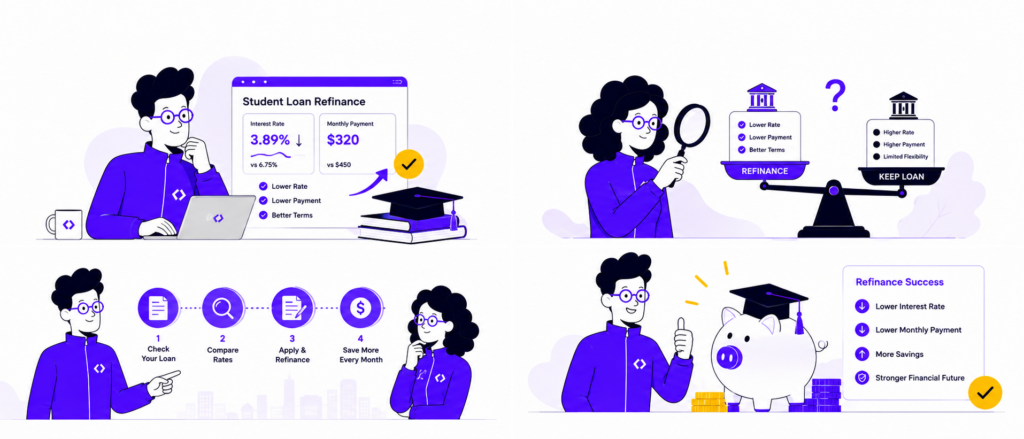
GradRight lets you submit a single profile and receive competing offers from domestic and international lenders, so you can compare a US-dollar refinance against an Indian-lender refinance side by side, with real numbers instead of assumptions. If you’re unsure whether refinancing is right for your specific loan history, GradRight’s team can walk you through the details before you commit to anything.





 Australia
  Canada
  France
  Germany
  India
India  Ireland
  UAE
UAE  United Kingdom
  United States
