




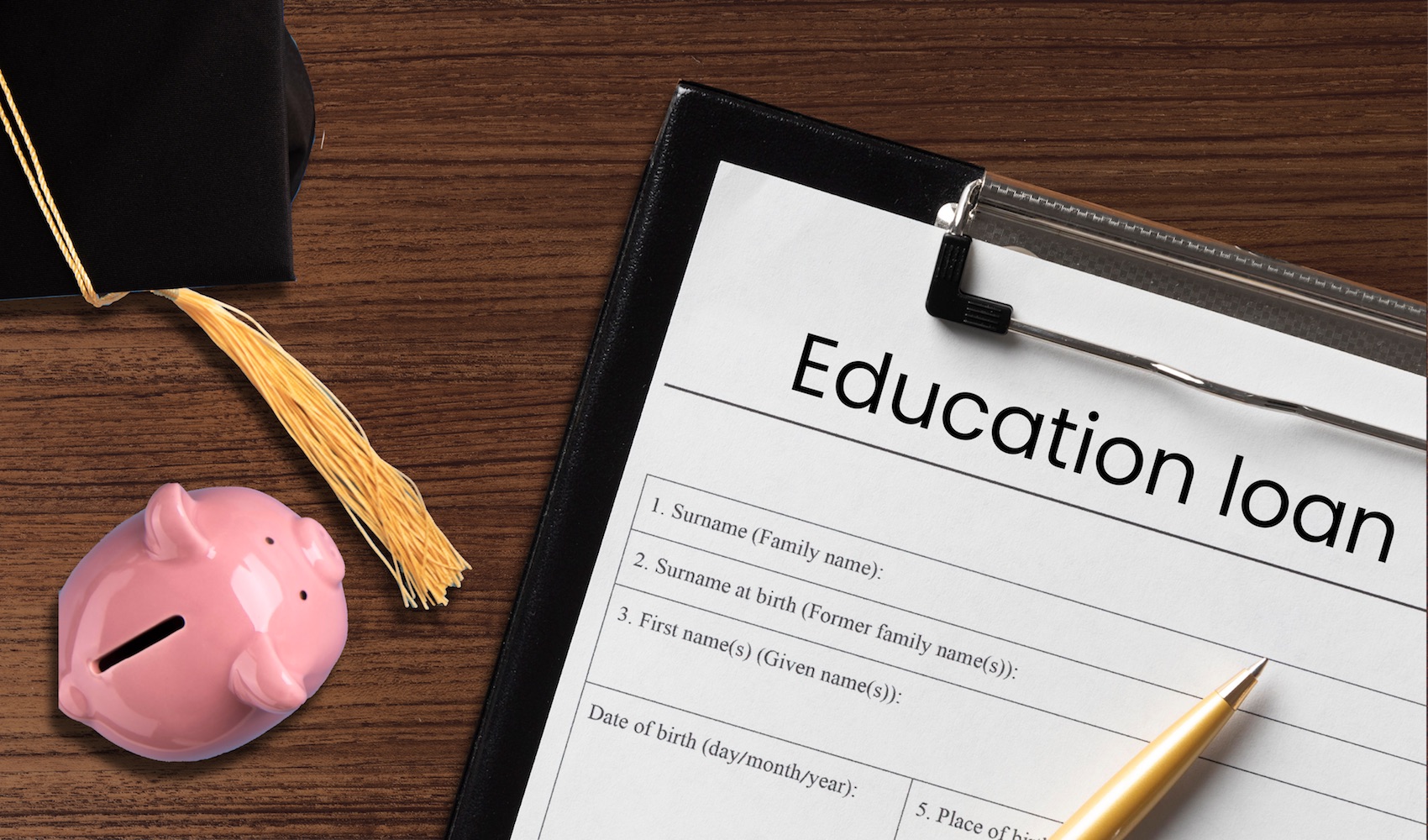
Getting an education loan to study abroad entails collecting numerous documents, moving across counters, and reading mundane details for the loan to be approved. One document that stands at the centre of this entire process – and is often misunderstood – is the education loan sanction letter.
The education loan sanction letter is a critical document needed for admission abroad. It serves as proof of financial competence to universities, visa officers, and in the case of USA-bound students, for obtaining the I-20 form. This guide covers exactly what a sanction letter is, what it contains, the in-principle sanction letter concept, and how to get one without unnecessary delays.
Education Loan Sanction Letter – Quick Reference
| Question | Answer |
| What is a sanction letter? | A formal document from your lender confirming that your education loan application has been approved – stating the approved amount, interest rate, and terms. |
| When is it issued? | After the lender verifies your application, documents, and confirms eligibility. Before actual disbursement. |
| What is an in-principle sanction letter? | A conditional sanction letter issued before final admission confirmation. Used to resolve the chicken-and-egg problem between university I-20 and bank loan approval. |
| When do you need a sanction letter? | For university enrollment confirmation, for US university I-20 process, for visa application proof of funds, and for Germany Blocked Account / Canada GIC. |
| Does a sanction letter mean the loan is disbursed? | No. Sanction confirms approval. Disbursement happens later, typically semester-wise to the university. |
| How long does it take to get one? | 3-5 days (NBFCs like Tata Capital, Avanse). 15-25 working days (public banks). Some lenders offer pre-admission sanction. |
| Is a sanction letter the same as a loan agreement? | No. The sanction letter confirms approval and terms. The loan agreement is signed later and triggers disbursement. |
| Can you get a sanction letter without confirmed admission? | Yes – through in-principle sanction (also called pre-admission sanction). Available at HDFC Credila, Tata Capital, Avanse, and others. |
| Is the sanction letter enough for a US visa? | It significantly helps but visa officers want comprehensive financial proof. Combine with bank statements and co-applicant income proof. |
| Does GradRight help get a sanction letter? | Yes – GradRight FundRight matches you with lenders and facilitates faster sanction. |
What Is an Education Loan Sanction Letter?
An education loan sanction letter is a formal document that notifies the approval of a student loan. Once a student submits their application for an education loan along with the required documents, the lender carries out verification and authorization. The sanction letter is issued after this process as acknowledgement that the borrower has successfully qualified for the loan.
Think of it as the preface to your loan agreement – it contains all the key information about your approved loan without yet triggering actual disbursement. The sanction letter confirms the lender’s commitment to fund your education, subject to final conditions being met.
| What a Sanction Letter Contains | Details |
| Applicant name | Full name of the student borrower exactly as in application |
| Co-applicant name | Name of the parent, guardian, or sponsor |
| Approved loan amount | The total sanctioned amount in Indian Rupees |
| Purpose of loan | Description of the course and institution for which the loan is approved |
| Interest rate | The applicable rate (fixed or floating, benchmark + spread) |
| Repayment tenure | Duration of repayment after moratorium period |
| Moratorium period | Duration of the study period + grace period before EMI begins |
| Processing fee | Amount payable to the lender upon acceptance |
| Conditions for disbursement | Any pending conditions (e.g., original admission letter, university fee demand) |
| Validity of sanction letter | Date after which the letter expires if not acted upon (typically 3-6 months) |
Also Read: Step-by-Step Guide to Securing an Education Loan for Studying Abroad
What Is an In-Principle Sanction Letter? (The US University Problem Solved)
This is one of the most practically important concepts for Indian students applying to US universities – and the original reason in-principle sanctions exist.
The circular problem: US universities require students to demonstrate financial competence (proof of funds) before they issue the I-20 form. But the bank requires the I-20 to confirm the loan offer (since the I-20 specifies the program start date, cost of attendance, and university details needed for disbursement). The student is stuck in the middle: no I-20 without loan proof, no final loan without I-20.
The in-principle sanction letter solves this. Also called a tentative sanction letter or pre-admission sanction, it is a conditional letter sent by the bank to the borrower specifying the loan amount that will be granted if the student is accepted at a specific university. It serves as proof of financial competence to the university – enough for them to issue the I-20 – without requiring the bank to have the I-20 first.
| Sanction Letter Type | When Issued | What It Proves | Use Case |
| In-Principle / Pre-Admission Sanction | Before final/unconditional admission or I-20 | Conditional commitment – loan will be approved if student meets stated conditions | US university I-20 process, Germany Blocked Account setup, visa proof of funds before final admission |
| Full / Final Sanction Letter | After unconditional admission and all documents verified | Firm commitment – loan is approved and will be disbursed as per terms | Visa application, university enrollment confirmation, Germany/Canada financial proof requirement |
| Disbursement | After loan agreement signed and university fee demand received | Actual funds released – tuition paid to university, living expenses to student account | University semester fee payment |
European nations like Germany, the United Kingdom, and the United States have similar conditions for financial proof at the university enrollment stage. The in-principle sanction handles this by decoupling the proof-of-funds requirement from the final loan disbursement.
Get your education loan sanction letter faster. Compare 18+ lenders on GradRight and get competing offers in 48 hours. Compare Education Loans on GradRight
Why the Sanction Letter Is a Critical Document for Study Abroad
| Where Sanction Letter Is Used | How It Is Used | Country/Situation |
| University enrollment confirmation | Proof that funding is secured. Some universities require this before confirming your seat. | All countries |
| US I-20 form issuance | US universities need proof of financial competence to issue I-20, which specifies program start date and is required for F-1 visa. | USA specifically |
| F-1/other student visa application | Visa officers use sanction letter as one element of financial proof alongside bank statements. | USA, Canada, UK, others |
| Germany Blocked Account (Sperrkonto) | Proof of education funding required alongside the blocked account setup at Deutsche Bank or similar. | Germany |
| Canada GIC (Guaranteed Investment Certificate) | Financial proof of study funding required for Canadian student visa alongside GIC. | Canada |
| UK CAS (Confirmation of Acceptance for Studies) | Financial requirements must be met before CAS is issued. | UK |
| Education loan insurance | Required by some lenders as a condition of sanction. | All lenders where applicable |
Documents Required to Get an Education Loan Sanction Letter
Student Documents
- Identity proof: Aadhaar, Passport, PAN card, Voter ID
- Address proof: recent utility bill, Aadhaar, driving licence
- Academic transcripts: Class 10, 12, and graduation mark sheets and certificates
- Standardised test scores: GRE, GMAT, TOEFL, IELTS as applicable
- Admission letter: final (unconditional) for full sanction; conditional letter acceptable for in-principle sanction
- Course details and fee structure from the university
Co-applicant Documents
- Identity and address proof
- Income proof: salary slips (recent 3 months), Form 16, or ITR for last 2 years
- Bank account statements: last 6 months
- Statement of assets and liabilities if required
For Secured Loans (Collateral)
- Property title documents with government-approved valuation certificate
- Fixed deposit certificates or insurance policy documents if used as collateral
Critical: ensure complete consistency of name, address, and date formats across all documents. The most common reason for sanction letter delays is document inconsistency – a name appearing differently across the student’s application form, academic certificates, and co-applicant proof.
How to Get an Education Loan Sanction Letter – Step by Step
- Research lenders and compare options: use GradRight FundRight to compare 18+ lenders simultaneously. This gives you competing sanction offers without applying to each lender separately.
- Submit your application with all required documents. For an in-principle sanction, a conditional admission letter is typically sufficient at this stage.
- Lender reviews your application, verifies documents, and conducts credit assessment. Timeline: 3-5 working days (NBFCs), 15-25 working days (public banks).
- Once approved, the lender issues the sanction letter. For Tata Capital and similar NBFCs, this can be within 24 hours of processing fee payment.
- Review the sanction letter carefully: verify approved amount, interest rate, processing fee, repayment tenure, moratorium period, and any pending conditions.
- Accept the sanction by signing and returning the acceptance copy. Pay the processing fee if required at this stage.
- Use the sanction letter for university purposes (I-20, enrollment, GIC/Sperrkonto setup) and visa application.
- Once you have your final admission letter and university fee demand, the lender moves to the loan agreement stage and initiates disbursement.
How to Avoid Rejection of Your Sanction Letter Application
To avoid rejection of your education loan sanction letter application, it is necessary to cross-check all documents and information before submitting:
- Verify name consistency: your name must appear identically across the application form, PAN card, Aadhaar, academic certificates, and admission letter. Even a middle name present in one document and absent in another can cause delays.
- Ensure academic documents are complete: all semesters of all degrees must be included. Missing semester mark sheets are a common cause of sanction delays.
- Confirm co-applicant documents are current: bank statements must be recent (within 6 months). Salary slips must be recent. ITRs must cover the required period.
- Use the correct admission document: for full sanction, use your unconditional offer letter – not the conditional offer letter which may cause the full sanction to be held pending conditions being met.
- Check lender’s course and university eligibility: some lenders (Tata Capital) only cover STEM and Management programs. Applying for an ineligible course results in rejection regardless of other documents.
- Do not apply to multiple lenders simultaneously without a strategy: each formal application triggers a hard inquiry on CIBIL. Multiple simultaneous hard inquiries can lower co-applicant CIBIL score, potentially affecting your eligibility.
Also Read: Compare Education Loan Interest Rates – All Lenders 2026
Get your sanction letter faster. GradRight FundRight matches you with the right lenders in 48 hours. Compare Education Loans on GradRight
Related Education Loan Guides
Step-by-Step Education Loan Guide for Study Abroad
Compare Education Loan Interest Rates – All Lenders
Documents Required to Study Abroad
USA Visa Slot Booking for Students
Education Loan Moratorium Period Guide
Applying for Education Loan – Do It Right
How to Crack Your Best Education Loan








 Australia
  Canada
  France
  Germany
  India
India  Ireland
  UAE
UAE  United Kingdom
  United States