



A student exchange program is a pathway to innumerable experiences and opportunities. For Indian students, exchange programs offer a way to gain international academic exposure without committing to a full degree abroad – and often at significantly lower cost.
Student exchange programs work on the basis of an agreement between two partner universities. They allow you to pursue education abroad for a period of six months to one year while your credits are transferred to your home university. Some popular student exchange destinations for Indians are the USA, Australia, the UK, Canada, France, Singapore, and Japan.
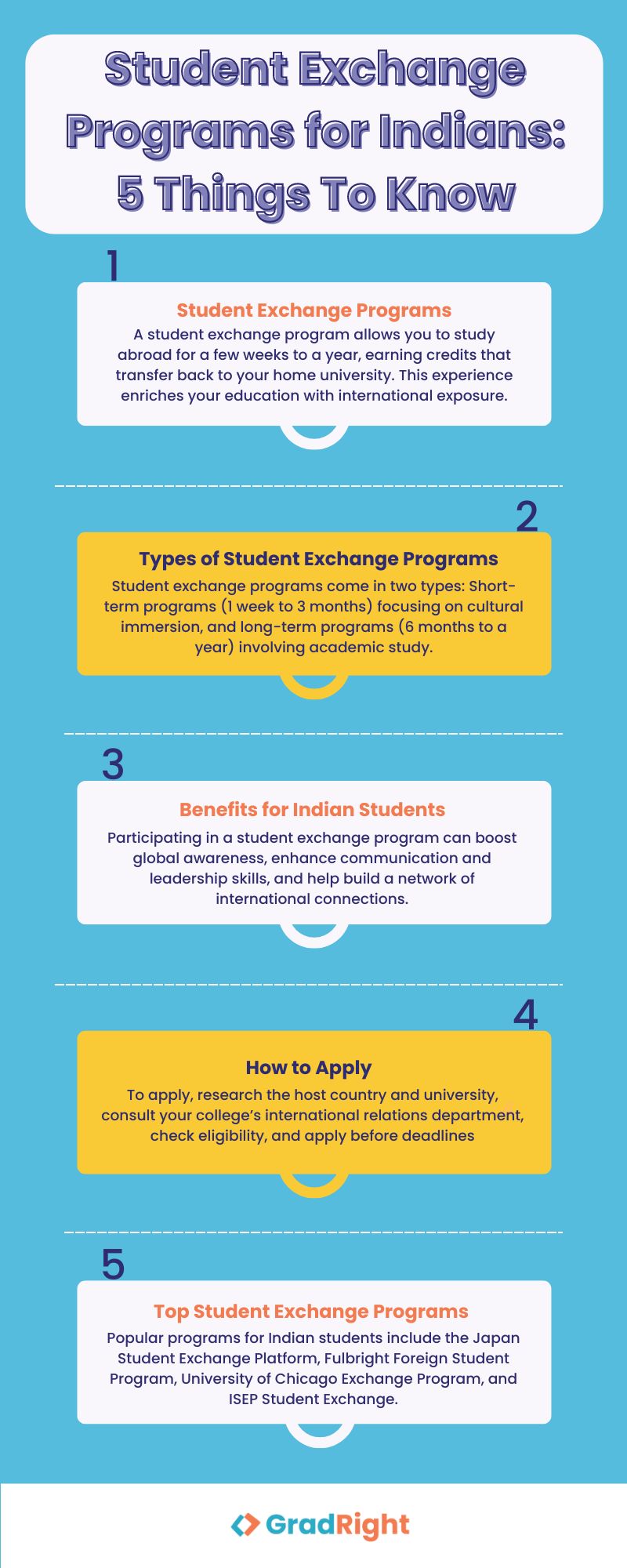
Exchange Program vs Full Degree Abroad: Key Differences
|
Factor |
Student Exchange Program |
Full Degree Abroad |
|
Duration |
Typically 6 months to 1 academic year |
2-4 years (Masters) to 4-5 years (UG) |
|
Degree awarded |
No new degree – credits transfer to home university |
Full degree from international university |
|
Cost |
Usually lower; home university tuition may apply; some scholarships available |
Full international tuition + living costs |
|
Visa requirement |
Yes – student visa required for programs over 3 months |
Yes – student visa for full duration |
|
Credit transfer |
Credits counted toward your home degree |
Not applicable – completing the degree there |
|
Flexibility |
High – return to home university after exchange |
Lower – commit to full program |
|
Admission competitiveness |
Usually through home university partnership (often merit-based) |
Full international admissions process |
|
Best for |
Students wanting international exposure without leaving their home degree |
Students fully committed to studying abroad |
Top Student Exchange Programs for Indian Students 2026
|
Program |
Organisation |
Duration |
Destinations |
Key Feature |
|
EF Student Exchange Program |
EF Education First |
1 week to 1 year |
USA, UK, Australia, Canada, France, Germany, Spain, and more |
Multiple program types by age, language, course, and destination. Year-long exchange programs to diplomas. |
|
ISEP (International Student Exchange Programs) |
ISEP network |
1 semester to 1 year |
200+ universities in 50+ countries |
Network-based; affordable through partner university tuition swaps |
|
Erasmus+ (exchange component) |
European Commission |
3-12 months |
EU countries + partner countries globally |
Primarily for students enrolled at EU universities but some partner agreements with Indian institutions |
|
Fulbright Foreign Student Program |
US Department of State |
1 academic year |
USA |
For graduate students, young professionals; covers tuition, living, and travel |
|
AFS Intercultural Programs |
AFS Volunteers |
1 semester to 1 year |
USA, Europe, Latin America, Asia |
Cultural immersion + academic study; homestay with host family; strong intercultural focus |
|
Global UGRAD (Global Undergraduate Exchange Program) |
US Department of State |
1 semester |
USA |
For undergraduate students; community service + academic study; competitive scholarship |
|
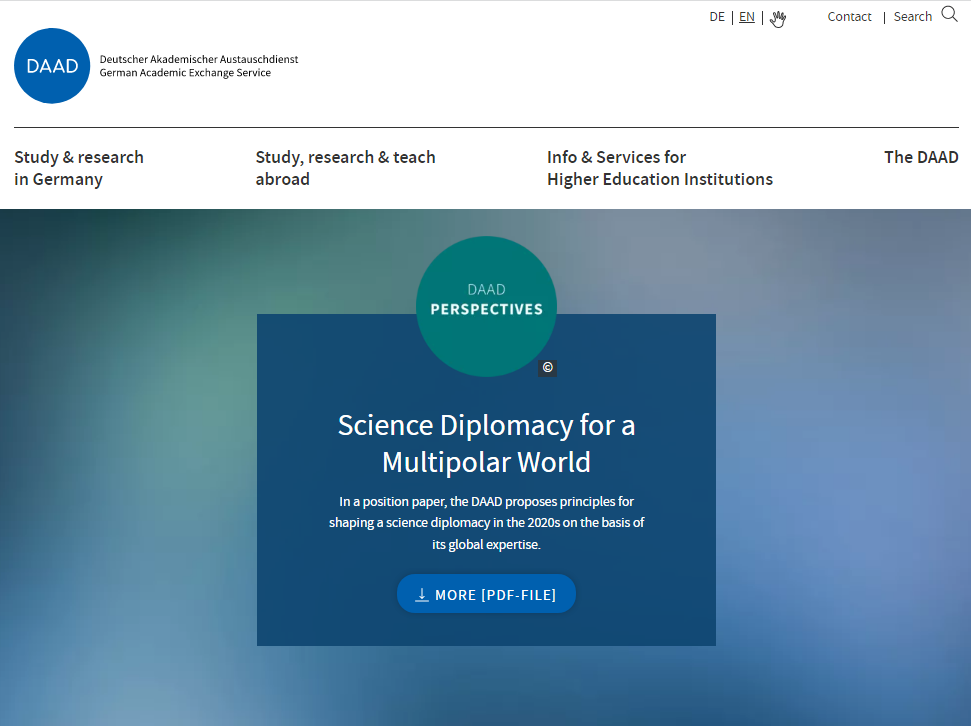
DAAD (German Academic Exchange Service) |
DAAD Germany |
Various (short courses to full degree) |
Germany |
Scholarships for Indian students to study in Germany; some exchange-type programs |
|
DUO-India Fellowship |
ASEM Education Hub |
1 semester |
Europe (ASEM member countries) |
Supports balanced exchange pairs between India and European institutions; travel + living stipend |
Note: Program availability and eligibility change each cycle. Verify current openings and deadlines at each program’s official website before applying. Some programs (Erasmus+, Global UGRAD) require enrollment at a partner institution.
Why Student Exchange Programs Are Worth Doing
Opting for a student exchange program for Indian students can help you in multiple ways:

- Raise global awareness: exposure to different academic systems, cultures, and ways of thinking that transform how you see the world
- Build practical communication and leadership skills: navigating a foreign university, making new friends across cultures, and managing independently all develop real-world skills
- Make global connections: classmates met on exchange programs often become professional contacts across 20-30 countries
- Strengthen your personality: living independently abroad builds confidence, resilience, and adaptability in ways that classroom learning cannot replicate
- Enhance academic breadth: access courses at partner institutions not available at your home university
- Improve career prospects: international experience is specifically valued by multinational employers; some exchange programs include recruitment opportunities at the host university
- Potential pathway to full study abroad: exchange programs help you evaluate whether you want to pursue a full degree at the host institution or in that country
Suggested Read: Why Study in USA: Top Reasons
Long-Term vs Short-Term Exchange Programs
|
Type |
Duration |
What It Involves |
Best For |
|
Long-term exchange (semester) |
5-6 months (one semester) |
Full academic semester at partner institution; attend regular classes; credits transferred; student visa required |
Students wanting full immersion in academic life abroad without the full year commitment |
|
Long-term exchange (full year) |
8-12 months (full academic year) |
Full academic year abroad; attend classes; local community work possible; host family option available; student visa required |
Maximum international immersion; strongest impact on cultural understanding and language development |
|
Short-term exchange / summer school |
2-8 weeks |
Intensive courses, workshops, language programs, or research programs during summer or between semesters; may not require full student visa |
Students who cannot commit a full semester but want some international experience; language skill development; research exposure |
|
Cultural immersion programs |
2 weeks to 3 months |
Structured cultural programs, community service, and some coursework; often with host family or group accommodation |
Students seeking cultural exposure and personal development more than academic credit |
Long-term exchange programs usually last between six months to a full academic year. Within this program, the students attend classes at a partner institution in the host country and require a student visa. Within this program, you can also attend local community work and stay with a host family, expanding your cultural and language proficiency.
EF Student Exchange Program – Detail
From an incredible list of year-long exchange programs to diplomas, the EF Student Exchange Program has it all. You can choose programs by age, language, course, and destination – making it one of the most flexible exchange program frameworks available to Indian students.
So, with the EF Student Exchange program, Indian students can fulfill their dream of studying abroad. As an international student, you will constantly be tied to travel, so you must possess an internationally accepted student card. An ISIC card (International Student Identity Card) is the standard globally recognised proof of student status.
|
EF Program Feature |
Details |
|
Program types |
Year-long exchange, semester exchange, language programs, summer programs, diplomas |
|
Age range |
Programs available for school students, undergraduates, and adults |
|
Language options |
English, French, Spanish, German, Japanese, Chinese, and other major languages |
|
Destinations |
USA, UK, Australia, Canada, France, Germany, Switzerland, Japan, Spain, New Zealand, and more |
|
Accommodation |
Host family, student residence, or shared flat depending on program type |
|
How to apply |
Through EF India office or EF website (ef.com); specify age, language, course, and destination preferences |
Also Read: What Is the Benefit of an ISIC Card?
How to Apply for a Student Exchange Program
To become an exchange student, the primary step is to contact a student exchange agency. You could also seek contact with the international relations department of your university. You can apply for a student exchange program, be it for a Bachelor, Masters, or Doctorate degree. Here is the general process:
|
Step |
Action |
|
1. Research |
Conduct thorough research on the country and university you aspire to study in. Different universities offer different courses that might interest you, and each country has a different cost of living. |
|
2. Check your university partnerships |
Contact your home university international relations office to find out which partner institutions they have exchange agreements with. Most Indian universities affiliated with international networks have exchange agreements. |
|
3. Check eligibility |
Confirm the eligibility requirements: GPA requirement, language proficiency, year of study, and any field-specific requirements. |
|
4. Prepare documents |
Collect required documents: academic transcripts, language test scores (IELTS, TOEFL, or DELF for French), letters of recommendation, statement of purpose, and passport. |
|
5. Apply through your home university |
For bilateral exchange programs, most applications go through your home university international office rather than directly to the partner. Submit by your university internal deadline (often months before the partner deadline). |
|
6. Apply directly for independent programs |
For programs like EF, AFS, and some Fulbright programs, apply directly through the organisation portal. |
|
7. Get student visa |
After acceptance, apply for the appropriate student visa for your destination country. |
|
8. Get ISIC card |
Obtain an International Student Identity Card before departure. As an international student constantly tied to travel, the ISIC card gives access to student discounts in 130+ countries. |
Cost of Student Exchange Programs for Indians
The cost of a student exchange program for Indian students varies based on the agreement established between the partner universities. The cost also varies according to the duration of the course, type of program, and country of study.
|
Cost Component |
What to Know |
|
Tuition during exchange |
Under bilateral university partnerships, you typically pay your home university tuition rate, not the host university rate. This makes exchange programs significantly cheaper than enrolling as a full fee-paying international student. |
|
Living costs in host country |
Must be self-funded. Living costs vary significantly by country. USA and UK expensive; Germany and some European countries more affordable. |
|
Travel costs |
Return airfare to destination country. Budget USD 600-1,200 for USA/Europe from India; USD 300-600 for Southeast Asia. |
|
Health insurance |
Mandatory in most countries. Check if your Indian health insurance covers international travel or purchase specific student travel insurance. |
|
Scholarship availability |
Some programs (Fulbright, Global UGRAD, DUO-India) are fully funded. Others (EF, AFS, ISEP) require self-funding but may have partial scholarships. Check each program. |
|
GradRight App advantage |
Students using GradRight App get up to 40% better loan rates if funding is needed for a longer exchange program. |
Need funding for your exchange program? GradRight connects you with 18+ lenders. Students using GradRight App get up to 40% better loan rates. Explore Study Abroad Funding on GradRight
Most Popular Exchange Program Destinations for Indian Students
|
Destination |
Why Indian Students Choose It |
Popular Programs Available |
|
USA |
Top global universities; English medium; strong research programs; large Indian diaspora |
Fulbright, Global UGRAD, EF, ISEP, bilateral university programs |
|
UK |
English medium; prestigious universities; 2-year Graduate Route post-study; proximity to Europe |
EF, ISEP, bilateral university programs |
|
Australia |
English medium; welcoming to Indian students; PGWP; warm climate |
ISEP, bilateral programs, EF Australia |
|
Canada |
Indian community; English and French; PGWP pathways |
EF, ISEP, bilateral programs |
|
France |
Erasmus+ (if enrolled at EU institution); French language programs; culture |
EF French programs, Alliance Francaise partnerships, ISEP |
|
Germany |
DAAD scholarships; near-zero tuition even for exchange students; European hub |
DAAD, EF, ISEP, bilateral German university programs |
|
Singapore |
English medium; top Asian universities (NUS, NTU); gateway to Southeast Asia |
Bilateral programs through Indian university partnerships with NUS/NTU |
|
Japan |
JASSO scholarships; unique cultural experience; growing English-medium programs |
JASSO scholarships, Japan-India exchange agreements, EF Japan |
Also Read: Canada Student Visa Medical Test – Complete Guide
Planning an exchange program or full study abroad? GradRight SelectRight helps you find the right university and program for your profile. Free, data-driven. Find Your Program on GradRight
Related Guides
What Is the Benefit of an ISIC Card?
Canada Student Visa Medical Test Guide
Australia Student Visa (Subclass 500) 2026
Documents Required to Study Abroad
Short-Term Courses in Australia for International Students
Microsoft Scholarship 2026
GradRight SelectRight – University Selection Platform



 Australia
  Canada
  France
  Germany
  India
India  Ireland
  UAE
UAE  United Kingdom
  United States