

IELTS has very few formal eligibility barriers. Anyone over 16 can register, regardless of nationality, education level, or work background. What does trip people up – especially in India – is the passport requirement, the fee increase, and not knowing which test type to book.
This guide answers all of that, without the filler.
IELTS Eligibility 2026 – At a Glance
| Criteria | Details |
| Minimum age | 16 years. Under-18 needs parental/guardian written consent to book. |
| Maximum age | None |
| Qualification | None required – open to school students, graduates, professionals |
| Nationality | All nationalities accepted |
| ID on test day | Valid passport only. No Aadhaar, PAN, or driving licence. |
| Fee (India 2026) | Rs. 19,000 – Academic, General Training, and UKVI versions (IDP India, April 2026) |
| One Skill Retake | Computer-based IELTS only – retake one section within 60 days, ~Rs. 7,500-8,000 |
| Score validity | 2 years from test date |
Do You Need a Degree or Minimum Marks to Take IELTS?
No. IELTS has no academic eligibility requirement. Class 10 students, Class 12 students, undergraduates, postgraduates, working professionals, and homemakers can all register. The only real eligibility gate is the age minimum and the passport requirement.
Check the eligibility criteria of the institution you are applying to separately – universities set their own academic requirements for admission, which is a different matter from IELTS eligibility itself.
Also Read: IELTS Academic vs General Training – Which One Do You Need?
The Passport Rule – and Why Indian Students Get Caught
No Passport = No Exam. No Exceptions.
A valid passport is the only accepted ID for IELTS registration and on the day of the test in India (IDP India official). Aadhaar card, PAN card, voter ID, and driving licence are not accepted – not even as secondary ID.
This catches a lot of Indian students off guard. Here’s the practical picture:
- If your passport is expired: Apply for a new one before booking IELTS. Normal processing is 2-4 weeks. Tatkal takes 1-2 weeks but requires a genuine urgency reason – a pending study abroad application counts.
- If you have applied but passport hasn’t arrived: Don’t book your IELTS test yet. Passport in hand, then book.
- Name mismatch: Your IELTS registration name must match your passport exactly – including middle name. A spelling difference between registration and passport is grounds for cancellation on test day.
- Passport expiry during the test window: Your passport must be valid on the day of your test. If it expires before your test date, renew it first.
Note on IELTS Online (at-home): Only available to candidates aged 18 and above (per IELTS Online T&Cs). If you are 16-17, you must take the test at an authorised test centre.
Computer or Paper IELTS – Which Should You Choose?
Most Indian cities now have computer-delivered IELTS available daily. For most students, computer is the better choice. Here’s why:
| Factor | Paper-based | Computer-delivered |
| Results | 13 days | 3-5 days |
| One Skill Retake | Not available | Available (within 60 days, one section only) |
| Test dates | Fixed Thursdays/Saturdays, ~48/year | Daily slots, 350+ dates/year |
| Writing | Handwritten – black pen mandatory (Feb 2025) | Typed – faster for most students |
| Score | Identical | Identical |
Choose paper only if you’re specifically uncomfortable typing under timed conditions, or if no computer centre is available in your city.
IELTS Exam Fee in India 2026 – and What to Budget
The IELTS exam fee increased to Rs. 19,000 from April 1, 2026, for Academic, General Training, and UKVI versions (Source: IDP India). IELTS Life Skills (for UK family/settlement visa) costs Rs. 15,500.
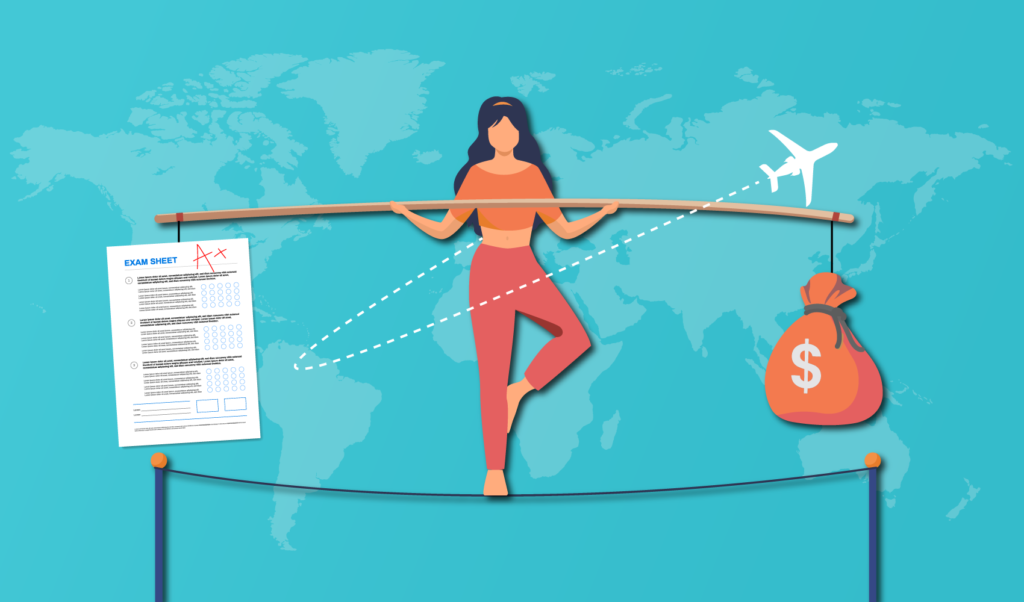
Budget for more than one attempt. Most Indian students retake at least once – especially for Writing, which is consistently the weakest section. Here’s the realistic cost picture:
| Scenario | Cost |
| One attempt | Rs. 19,000 |
| Two full attempts | Rs. 38,000 |
| One full attempt + One Skill Retake | Rs. 26,500-27,000 approx. |
| Computer IELTS (recommended – OSR eligible) | Rs. 19,000 base |
One Skill Retake: If you took computer-based IELTS and scored well in three sections but fell short in one, you can retake just that section within 60 days at approximately Rs. 7,500-8,000 – instead of paying the full Rs. 19,000 again. The retaken section’s score replaces the original.
Taking IELTS from Home – Who Can and What You Need
IELTS Online (at-home) is available for the Academic test only, for candidates aged 18+. You need: a private room, stable internet (2Mbps minimum), a Windows/macOS computer with webcam and microphone, and the Inspera software downloaded beforehand. Full technical requirements at ielts.org/ielts-online.
Important: For UK Student Visa (UKVI) purposes, IELTS Online is not accepted. You must take IELTS at an authorised UKVI test centre.
Eligibility for Candidates with Disabilities
IELTS offers testing accommodations for candidates with disabilities or special needs, including Braille test papers, enlarged print, lip-reading versions of the Listening test, extended time, and amplification equipment. Contact your test centre in advance – some arrangements require documentation or lead time.
For dyslexia or specific learning difficulties, a professional assessment report issued after age 13 is required. Contact your centre at least 2-4 weeks before your test date to confirm what is available (British Council disability support).
Found your target score? Shortlist universities that match your IELTS band with GradRight’s AI. Start on GradRight
Scoring well in IELTS is only step one. Choosing the right program – one that fits your profile, budget, and career goals – is where students lose time. SelectRight uses 8 million+ data points to shortlist universities where you have the strongest chances, and connects you with alumni for real decisions.
Compare education loans from 18+ lenders – banks and NBFCs bid for your profile. Explore GradRight



 Australia
  Canada
  France
  Germany
  India
India  Ireland
  UAE
UAE  United Kingdom
  United States