






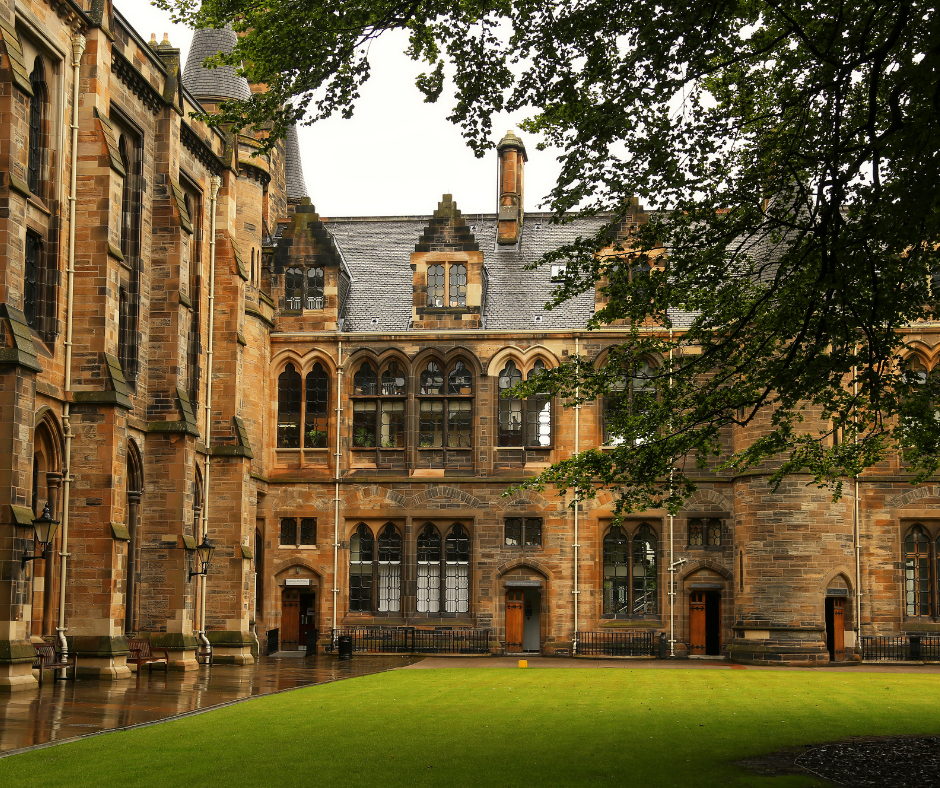
Glasgow, United Kingdom
It underpins many of aspects of modern life and its themes are at the heart of global technological challenges, including energy generation and storage, microelectronics and healthcare. University of Glasgow research in the area has spanned the development of photovoltaics for enhanced solar energy systems, next-generation data storage technologies and characterisation of alloys for nuclear reactor design.;Why this programme;The School of Physics and Astronomy plays a leading role in the exploitation of data from the Large Hadron Collider, the world’s largest particle accelerator at CERN.;The School has close links with Sellafield Ltd. and the UK National Nuclear Laboratory in the area of nuclear fuel reprocessing and nuclear waste management.;The School of Physics & Astronomy hosts the Kelvin Nanocharacterisation Centre, which houses state-of-the-art instrumentation for studying materials at the nanoscale or below.;The School of Physics & Astronomy plays a world-leading role in the design and operation of the worldwide network of laser interferometers that have detected gravitational waves.;With the Advanced Functional Materials programme of the University of Glasgow you will also benefit from our membership of the Scottish Universities Physics Alliance. The alliance brings together internationally leading Physics research across Scotland to form the largest physics grouping in the UK.;You will gain the theoretical, observational and computational skills necessary to analyse and solve advanced Materials Science problems, providing you with an excellent foundation for a career of scientific leadership in academia or industry.;You will develop transferable skills that will improve your career prospects, such as project management, team-working, advanced data analysis, problem-solving, critical evaluation of scientific literature, advanced laboratory and computing skills, and how to effectively communicate with different audiences.;The School of Physics and Astronomy has an Athena Swan Silver Award, and the School of Chemistry has an Athena Swan Bronze Award, demonstrating the support for women and under-represented groups in scientific studies and careers, with the goal to improve the working environment for all.;It is expected that the programme will be accredited by the Institute of Physics.;Career Prospects;Along with careers spanning a range of areas within academia and research and development, roles also include; Material Science Scientist, Senior Analytical Scientist, and Senior Scientist in Materials Characterisation within Pharmaceutical and Manufacturing companies.;I want to find another Master Course;Get more details;Visit official programme website


Don’t just apply; apply where you belong. Use GradRight’s AI platform to compare programs with other top-tier options based on real student outcomes, costs, and your unique profile.
Compare ProgramsAccess India’s first loan bidding marketplace to get competitive, low-interest education loan offers from 15+ top lenders, tailored to your aspirations.
Compare Loan OffersNavigate international health insurance requirements with ease. Get comprehensive, uni-compliant coverage that protects your health and your budget.
Check Insurance Plans
Don’t just apply; apply where you belong. Use GradRight’s AI platform to compare programs with other top-tier options based on real student outcomes, costs, and your unique profile.
Compare Programs
Access India’s first loan bidding marketplace to get competitive, low-interest education loan offers from 15+ top lenders, tailored to your aspirations.
Compare Loan Offers
Navigate international health insurance requirements with ease. Get comprehensive, uni-compliant coverage that protects your health and your budget.
Check Insurance PlansBased on current data, Advanced Functional Materials at University of Glasgow has a total cost of ₹60,34,800 and an estimated ROI (including loan interest) of 82% over a 12-months program. University of Glasgow's median graduate package is ₹54,00,000.
University of Glasgow requires a minimum TOEFL iBT score of 90 or an IELTS score of 6.5, along with a GPA of 3.00. GRE is not required and GMAT is not required for this program.


Trusted by 2,60,000+ students for their education abroad
 Australia +61
 Canada +1
 France +33
 Germany +49
 India +91
 Ireland +353
 UAE +971
 United Kingdom +44
 United States +1
By signing up, you agree to the Terms of Service and Data Processing Agreement
Enter the security code we sent to
By signing up, you agree to the Terms of Service and Data Processing Agreement
