A Data Science degree comparison should cover curriculum, mathematics, programming, machine learning, degree duration, fees, practical learning, and career opportunities. Comparing these factors can help you understand how each program aligns with your academic interests and career goals.
Data Science vs Computer Science
Data Science and Computer Science share subjects such as programming, databases, and algorithms, but their academic focus differs. Data Science places greater emphasis on statistics, data analysis, machine learning, and extracting insights from data. Computer Science provides broader foundations in computing, software development, algorithms, operating systems, and computer systems.
When comparing Data Science vs Computer Science, look at the subjects offered by each program, the level of mathematics and statistics, programming requirements, specializations, and career paths supported by the curriculum.
Data Science can lead to roles such as Data Scientist, Data Analyst, and Machine Learning Engineer, while Computer Science can support pathways such as Software Engineer, Developer, and Systems Engineer.
Data Science vs Artificial Intelligence
Data Science and Artificial Intelligence have significant overlap in Python, machine learning, statistics, and data-driven problem-solving. However, Data Science generally focuses on working with data, statistical analysis, predictive modeling, and extracting insights, while Artificial Intelligence focuses more specifically on AI, machine learning, deep learning, neural networks, and intelligent systems.
When comparing Data Science vs AI degrees, review the curriculum carefully. Look at the depth of machine learning, deep learning, mathematics, statistics, programming, and model development offered by each program.
Career paths can also overlap. Data Science graduates may pursue Data Scientist or Machine Learning Engineer roles, while AI-focused programs can prepare students for roles such as AI Engineer, Machine Learning Engineer, and AI Developer.
Data Science vs Data Analytics
Data Analytics and Data Science both involve working with data, but their focus and technical depth can differ. Data Analytics commonly involves analyzing datasets, identifying trends, creating reports and visualizations, and supporting business decisions. Data Science can extend these skills into statistics, machine learning, predictive modeling, and programming.
When comparing Data Science vs Data Analytics, examine subjects such as SQL, statistics, data visualization, business analytics, Python, machine learning, and practical projects.
Data Analytics can lead to roles such as Data Analyst, Business Analyst, and BI Analyst, while Data Science can open pathways into these areas as well as more specialized machine learning and data science roles.
Data Science vs Information Technology
Data Science and Information Technology represent different areas of technology education. Data Science focuses on data, statistics, analytics, programming, and machine learning, while Information Technology covers areas such as IT systems, networking, databases, software applications, infrastructure, and cybersecurity.
When comparing Data Science vs IT, look at the subjects, programming requirements, technical specializations, practical learning opportunities, and career paths included in each degree.
B.Tech vs B.Sc vs BCA in Data Science
Data Science is available through different undergraduate degree formats in India. A B.Tech or B.E. in Data Science generally follows a four-year engineering structure combining technical and Data Science coursework. A B.Sc in Data Science is commonly structured as a three-year undergraduate degree with a focus on data, statistics, and computing. A BCA in Data Science typically combines computing foundations with Data Science and data applications.
The right comparison depends on more than degree duration. Students should compare curriculum, mathematics, programming, specializations, practical projects, internships, eligibility, fees, and career paths across individual programs.
3-year vs 4-year Data Science degrees
Duration is an important factor when comparing Data Science degree programs. Three-year B.Sc. and BCA pathways can provide an undergraduate route with a shorter study period, while four-year B.Tech. and B.E. programs follow an engineering-focused structure.
Instead of comparing duration alone, evaluate the depth and structure of the curriculum, practical learning, internships, specializations, placement opportunities, and options for further study.
Government vs private Data Science colleges
Students comparing government vs private Data Science colleges should consider admission requirements, fees, curriculum, infrastructure, placements, and industry exposure.
Government and private institutions can differ considerably in their program structure and costs, so the institution type alone does not determine the academic or career experience. Compare the specific Data Science course, faculty, labs, internships, industry partnerships, placement information, and total program cost before making a decision.
How to choose a Data Science degree
There is no single Data Science degree format that fits every student. Start by identifying the type of learning and career path you want, then compare programs against those priorities.
Compare the Data Science curriculum
Look for core subjects such as Python, SQL, statistics, mathematics, databases, machine learning, data visualization, and data analysis. If you are interested in Machine Learning, check how deeply the program covers machine learning, deep learning, model development, and related mathematics.
Consider the degree duration
Compare three-year and four-year programs based on the complete curriculum rather than duration alone. Look at the number and depth of technical subjects, practical projects, internships, specializations, and career paths.
Compare Data Science fees
Look beyond tuition fees when comparing Data Science colleges. Consider accommodation, living expenses, academic costs, and other program-related expenses to understand the total cost of the degree.
Check practical learning opportunities
Data Science is a practical and technical field, so compare programs based on projects, internships, labs, industry exposure, competitions, and opportunities to work with real datasets.
Compare career paths
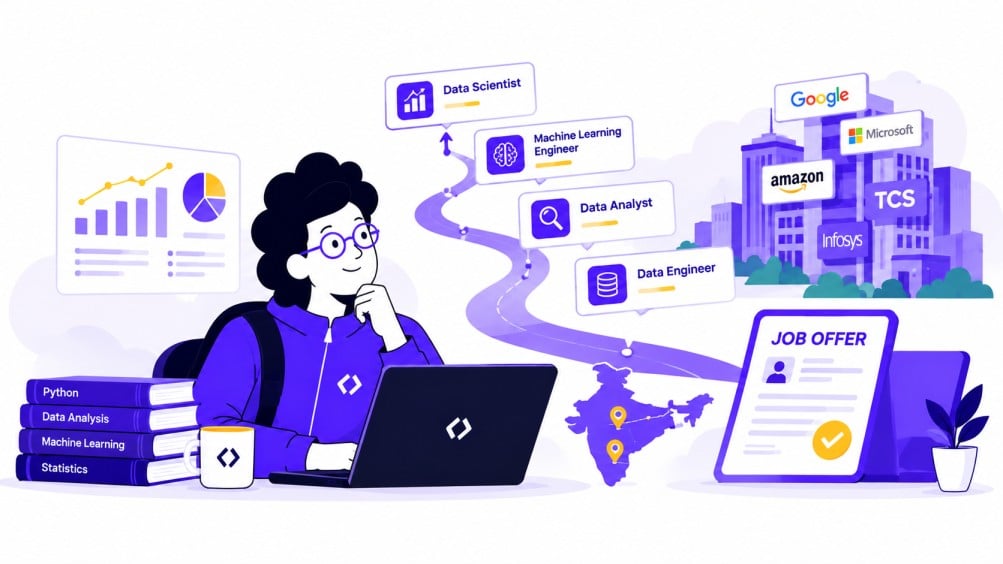
Review the career paths supported by each curriculum. Depending on the program, Data Science graduates can explore roles such as Data Analyst, Data Scientist, Machine Learning Engineer, Data Engineer, and Business Intelligence Analyst.
What to compare when choosing a Data Science college
A Data Science college comparison should cover more than fees and rankings. Review:
- Curriculum: Data Science subjects, electives, specializations, and technical depth
- Eligibility: Academic requirements and admission criteria
- Fees: Tuition and total cost of attendance
- Faculty: Academic and industry experience
- Infrastructure: Computing labs, software, research facilities, and learning resources
- Internships: Access to internships and practical projects
- Industry exposure: Industry projects, collaborations, hackathons, and other opportunities
- Placements: Placement support, recruiters, roles, and graduating-batch data
- Location: Campus location and associated living costs
- Further study: Options for postgraduate education and specialization
Placement and salary figures should be checked against the specific institution, program, graduating batch, role, and methodology used to calculate the reported figures.
Data Science career paths by degree and specialization
The degree you choose can influence the subjects and skills you build, but career outcomes also depend on your skills, projects, internships, and specialization.
A program with stronger statistics and analytics coursework may align with Data Analytics and business intelligence pathways. Programs with deeper machine learning, Python, mathematics, and model development can support pathways into Machine Learning and Data Science roles. Programs with broader computing and software foundations can provide additional flexibility across technology roles.
Compare the actual curriculum of each program rather than choosing based only on the degree title.



 Australia +61
 Canada +1
 France +33
 Germany +49
 India +91
 Ireland +353
 UAE +971
 United Kingdom +44
 United States +1