
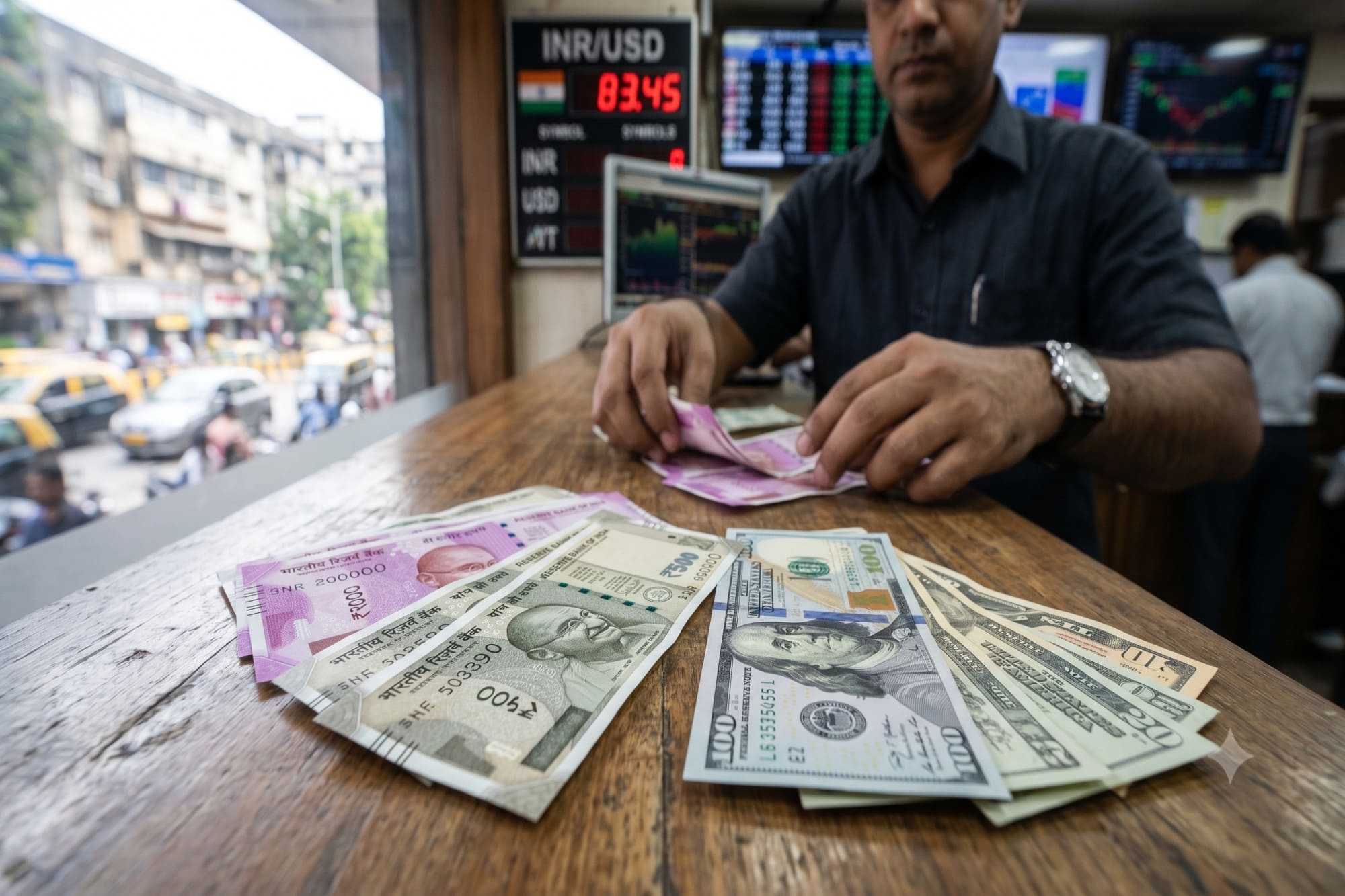
The question we hear most from students who are eligible to refinance but haven’t yet: ‘The USD rate sounds better, but it’s variable – what if rates go up? Is it actually worth it?’
It’s the right question. And we’d rather work through it properly than give you a cheerful ‘refinancing always wins’ answer that ignores the risk.
What You’re Actually Comparing
Your current Indian loan – whether from a public sector bank or an NBFC – is almost certainly floating too, linked to India’s RLLR or MCLR. So the real comparison isn’t fixed vs variable. It’s Indian floating vs US floating, in different currencies, at different rate levels, with different benchmarks driving movement.
| INR Loan (India) | USD Loan (US Refinance) | |
| Rate range (2025) | 9.5% – 14% | 4.5% – 9%+ |
| Rate type | Floating (RLLR/MCLR) | Variable (SOFR/prime) |
| Currency | INR | USD |
| Credit assessed on | CIBIL (India) | FICO / TransUnion (US) |
| Tax benefit | Section 80E (India) | US student loan interest deduction |
| Co-applicant released? | No – stays liable | Yes – on full closure |
The Currency Argument – Both Directions
- The case for refinancing into USD:
Your income is in dollars. Your rent, groceries, and daily expenses are in dollars. Having your loan in dollars too means you manage one currency, one account, and one set of payments. The structural misalignment disappears.
- The case for staying in INR:
The rupee has historically depreciated against the dollar over time. If you earn in USD and your loan is in INR, your EMI is effectively getting cheaper in dollar terms year on year. Some students factor this in and decide to leave the loan as-is.
Both arguments are valid. The question is which matters more for your specific situation – and that depends on how long you plan to stay in the US, how much you value simplicity vs optimisation, and what the actual numbers look like for your loan amount and tenure.
When The Variable Rate Risk Is Real
USD rates have moved meaningfully in recent years. A student who refinanced at 4.5% in 2021 and is now on a variable rate has seen that rate move. This is not a hypothetical risk – it has happened.
When we model a refinancing case, we run two scenarios alongside the headline saving: one where USD rates stay flat, and one where they rise by 1.5%-2% over the tenure. If the saving holds across both scenarios, the case for refinancing is more robust. If it only works at today’s rate, that’s a different conversation.
Example – ₹72 lakh NBFC loan, 8 years remaining:
The starting rate differential in this case is large enough that the saving holds across most realistic scenarios. On a smaller loan or smaller rate gap, the math is tighter. |
What We Would Recommend
For most students we’ve worked with who have a meaningful INR-USD rate gap, stable US income, and a reasonable FOIR, refinancing has made sense. The currency alignment benefit is real, the co-applicant release is meaningful, and the monthly saving – even in a higher-rate scenario – has generally held.
But we’ve also had conversations where we’ve told students to hold off. Thin US credit, high existing US obligations, a rate gap that’s too small to justify the effort and variable risk – all of these have led us to say ‘not yet’ rather than push a transaction.
We’re still learning what the right call is in edge cases. Every student we work with adds to that. If you’re sitting on the fence, the most useful thing we can do is run the actual numbers for your profile – not give you a general answer.
| Want us to model the numbers for your specific loan?
We’ll run both the optimistic and conservative scenario for your loan amount, tenure, and current US obligations – so you can make the decision with full information. Reach out via GradRight.com or through your existing GradRight advisor. |
For informational purposes only. Rates and eligibility criteria vary by lender and are subject to change. All case references are anonymised. Contact GradRight for a personalised assessment.









 Australia
  Canada
  France
  Germany
  India
India  Ireland
  UAE
UAE  United Kingdom
  United States