





Think about the last time you got career advice from someone who’s day-time job is what you
daydream about.
For most students I work with, the answer is: that’s never happened.
That’s a massive access problem. And it’s the reason I want to talk about what happens at MOTF; specifically, what happens when students meet the mentors.
What Mentorship Usually Looks Like
Let’s be honest. In India, “mentorship” usually means one of three things.
- A corporate leader visits your college, gives a 45-minute talk with slides, and maybe, takes three polite questions. You clap. They leave. Nothing changes.
- Or you attend a webinar with 400 other people. You type a question in the chat. It doesn’t get picked. The session ends with “we’ll share the recording.”
- Or you send a LinkedIn request to someone you admire. They don’t accept it. Or they do, and you send a message, and it sits on “seen” forever.
I’m not blaming anyone here. These people are busy. But the result is that most Indian students go through their entire education without a single real mentorship conversation.
Inside the MOTF Mentor Experience
MOTF is different, and I don’t say that lightly.
At the Brain Retreat, the mentors aren’t giving talks.
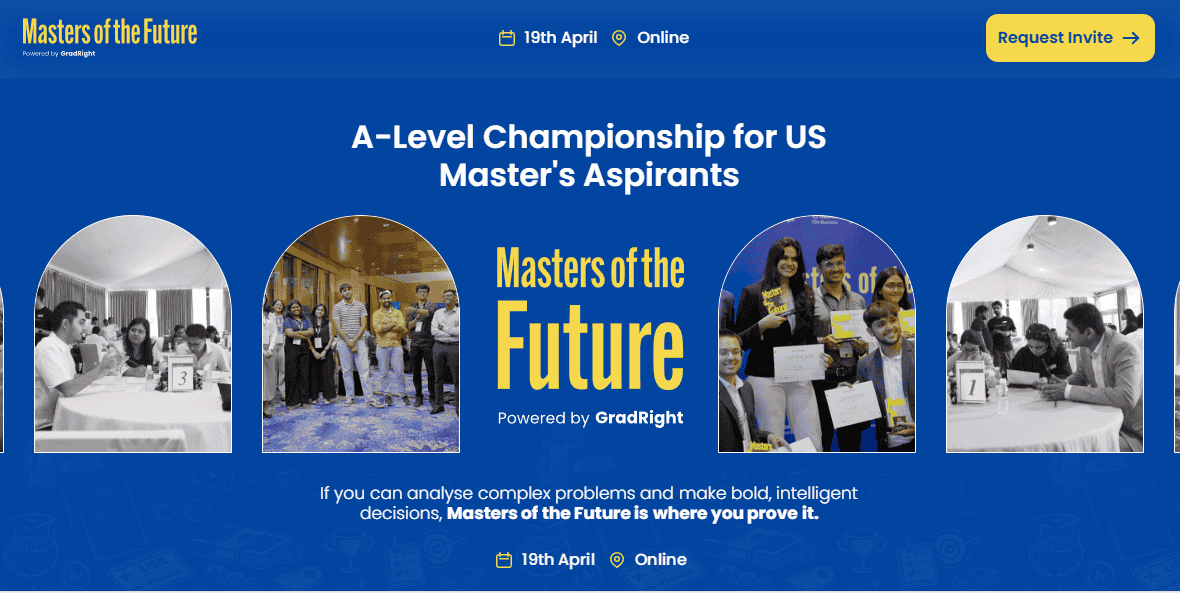
They’re in the room for two full days. They sit with finalists. They listen to their solutions to real business problems. They push back. They ask hard follow-up questions. They tell students when an idea is weak and explain why. And when an idea is strong, they get genuinely excited.
It’s a working relationship compressed into 48 hours, but still very real.
I’ve watched a student from Pune present a financial model to Sarbvir Singh, the CEO of PolicyBazaar, and get 15 minutes of pointed questions about their assumptions.
The student was nervous at first. By the end, they were defending their thinking with a clarity I hadn’t seen from them before.
That’s what access does. It doesn’t just give you information. It gives you confidence.
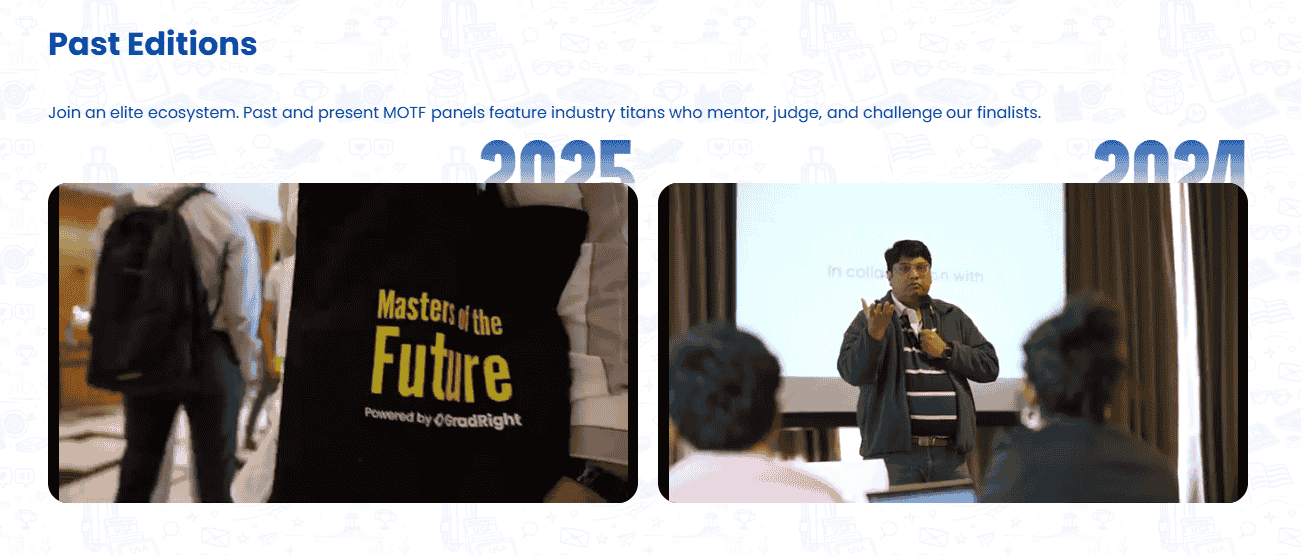
The Mentors in the Room
Let me walk you through who these mentors are:
Sarbvir Singh, CEO of PolicyBazaar
PolicyBazaar is one of India’s biggest fintech companies. Sarbvir deals with data, risk, and consumer trust at a scale most people can’t imagine. If you’re interested in finance or analytics, 20 minutes with him is worth more than a semester of case studies. He’s been at MOTF before and came back. That tells you something.
Kapil Bharati, Co-founder of Delhivery
Delhivery is one of India’s largest logistics companies, built from scratch. Kapil knows what it means to scale something physical and messy across a country like India. For engineering students, hearing him talk about building under real constraints is a different kind of education.
Bipin Preet Singh, Co-founder & CEO of MobiKwik
MobiKwik competed with Paytm and PhonePe in one of the most brutal markets in India. Bipin understands risk, timing, and survival. If you’re thinking about entrepreneurship or fintech, his perspective on resilience is something you won’t find in a classroom.
Tej Kapoor, Managing Partner at IvyCap Ventures
Tej is a venture capitalist. He sees hundreds of pitches a year. He knows what makes an idea strong and what makes it just noise. For any student who wants to know if their thinking is sharp enough for the real world, Tej’s feedback is the kind of reality check you actually want.
Mihir Desai, Product Head (Education Loans) at ICICI Bank
This mentor holds the most relevance to every student reading this. Mihir sits on the other side of the loan table. He knows what makes a student “fundable” in a bank’s eyes. Most students have no idea how banks evaluate them. Mihir can tell you in 10 minutes what no one else will.
Vijit Anand, CFO of Purplle
Purplle is scaling fast in Indian e-commerce. Vijit knows what financial discipline looks like in a growing company, in practice. For finance students, that’s the gap between theory and reality.
Shouvik Ghosh Roy, CTO of Mosaic Wellness
For CS and engineering students, Shouvik is the most relatable person in the room. He’s building tech products right now. His feedback on a technical solution carries a weight that’s different from a professor’s.
And they’re not the only ones. Past editions have also had leaders from Tata 1mg, Alteria Capital, Innoven Capital, Contify, InfraMarket, and Prime Securities. Even stand-up comedian Biswa Kalyan Rath showed up at the inaugural edition, because MOTF isn’t just intense, it’s also genuinely fun.
Want to be in a room with people like these, not as an audience member, but as someone they’re evaluating and mentoring? [Register for MOTF 2026].
What Brings Them Back?
This is the part that surprised me the most.
These are busy people. They run companies. They manage billions. But they come back. Every Year.
I think part of it is that many of them studied abroad themselves. They remember being 22 and confused. They remember not having anyone to ask. There’s a genuine “pay it forward” instinct that you can feel in the room.
And part of it is that GradRight has built something that keeps these people connected to education in a way that feels useful, not ceremonial. Through ShiftED, through MOTF, through other initiatives, these relationships are ongoing, not one-off.
The Access That Didn’t Exist Before
I said at the beginning that most students have never had a real mentorship conversation. MOTF is where that changes.
Only 30 people make it to the finale. That’s what makes the mentorship meaningful. It’s not diluted across hundreds. It’s concentrated. Personal.
If you want to be one of those 30, register for MOTF 2026.
And if you’re figuring out the bigger picture like which universities, which loans, what scholarships, download the GradRight app from Google Play Store or Apple App Store. It’s an AI-powered study abroad and education finance platform that helps you discover the right programs, universities, scholarships, loans, and everything else you need.


 Australia
  Canada
  France
  Germany
  India
India  Ireland
  UAE
UAE  United Kingdom
  United States