



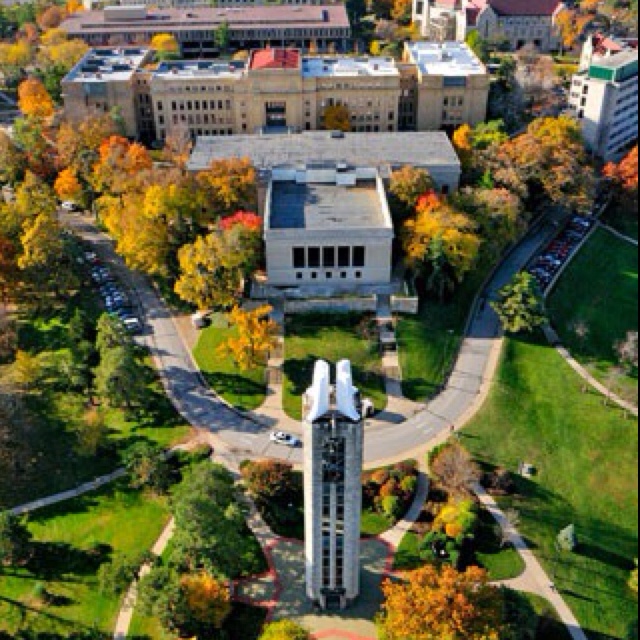

Lawrence, United States
Chemical and Petroleum Engineering graduates at University of Kansas hold key roles in the design, development, production, and purification of materials that are considered essential to human life and well-being, such as food products, fuels and lubricants, pharmaceuticals, fertilizers, synthetic fibers, microelectronic components, and plastics. Chemical engineers are involved in reducing the use of energy to make these products in safe and sustainable ways. They are responsible for minimizing environmental effects of chemical production on the environment.;Learning outcomes;Petroleum engineering is concerned with the drilling, recovery, production, and distribution of petroleum and natural gas. Petroleum engineers use knowledge of fluid and rock properties in subsurface environments with methods of producing oil and gas safely and economically. At KU, the focus is on reservoir engineering, improving production from oil and gas reservoirs. Reservoir engineers use geological detection with computerized mathematical analysis to produce these valuable raw materials. Through such techniques, petroleum engineers continue to extract oil and gas from reservoirs that were considered uneconomical only a few years ago. Petroleum engineering is uniquely challenging in that the raw product must be recovered far from physical observation.;I want to find another Master Course;Accreditation;Officially accredited/recognized by the The Higher Learning Commission of the North Central Association of Colleges and Schools, University of Kansas (KU) is a very large (enrollment range: 30,000-34,999 students) coeducational higher education institution.
The University of Kansas is a public research university founded in 1865 in Lawrence, Kansas, and serves as the state's flagship institution. It enrolls approximately 27,000 students and its schools include the School of Business and the School of Engineering. KU is a member of the Association of American Universities and is particularly known for its pharmacy, journalism, and special education programs, alongside operating one of the largest academic medical centers in the state through the University of Kansas Health System.


Don’t just apply; apply where you belong. Use GradRight’s AI platform to compare programs with other top-tier options based on real student outcomes, costs, and your unique profile.
Compare ProgramsAccess India’s first loan bidding marketplace to get competitive, low-interest education loan offers from 15+ top lenders, tailored to your aspirations.
Compare Loan OffersNavigate international health insurance requirements with ease. Get comprehensive, uni-compliant coverage that protects your health and your budget.
Check Insurance Plans
Don’t just apply; apply where you belong. Use GradRight’s AI platform to compare programs with other top-tier options based on real student outcomes, costs, and your unique profile.
Compare Programs
Access India’s first loan bidding marketplace to get competitive, low-interest education loan offers from 15+ top lenders, tailored to your aspirations.
Compare Loan Offers
Navigate international health insurance requirements with ease. Get comprehensive, uni-compliant coverage that protects your health and your budget.
Check Insurance PlansBased on current data, Chemical and Petroleum Engineering at University of Kansas has a total cost of ₹47,10,867 and an estimated ROI (including loan interest) of 108% over a 12-months program. University of Kansas's median graduate package is ₹55,50,700.
University of Kansas requires a minimum TOEFL iBT score of 79 or an IELTS score of 6.5, along with a GPA of 3.00. GRE is not required and GMAT is recommended with a minimum score of 540 for this program.



Trusted by 2,60,000+ students for their education abroad
 Australia +61
 Canada +1
 France +33
 Germany +49
 India +91
 Ireland +353
 UAE +971
 United Kingdom +44
 United States +1
By signing up, you agree to the Terms of Service and Data Processing Agreement
Enter the security code we sent to
By signing up, you agree to the Terms of Service and Data Processing Agreement