





TL;DR:
- Student health insurance in Germany is mandatory and depends on eligibility.
- Public insurance (TK, AOK) is standard for most students under 30
- Costs are ~€110–€150/month with comprehensive coverage
- Private insurance is for students over 30 or in language/prep courses
- Choice depends on eligibility, not preference alone
So you’ve gotten into a German university. Congratulations! Now comes the part nobody warned you about: figuring out student health insurance in Germany. If you’ve spent any time researching it, you’ve probably run into a wall of German terminology, conflicting advice, and the nagging feeling that you might be missing something important.
Here’s the good news: student health insurance in Germany is actually one of the more straightforward things about moving there, once you understand the basics. The trick is knowing which type applies to your situation, because the wrong choice can cause headaches at enrollment or cost you significantly more than necessary.
Let’s break down the difference between public and private student health insurance in Germany and how to know which one actually fits you.
How public and private insurance work in Germany
Germany runs a dual insurance system. On one side, you have public insurance (known as GKV, or gesetzliche Krankenversicherung), which is a statutory, government-regulated system. On the other side is private insurance (PKV, or private Krankenversicherung), which works more like traditional insurance plans you might be familiar with from back home.
For most students, the system is designed to be affordable. Public insurance for students comes with a heavily discounted “student tariff” that’s set by law and does not fluctuate based on your income. Private insurance, in contrast, is priced based on the plan you choose, and for certain student groups, it can actually be the cheaper option.
The critical thing to understand upfront: you cannot easily switch between the two systems mid-studies. This makes choosing correctly from the start more important than it might initially seem.
Also Read: Can Indian Students Study in Germany for Free? Honest Guide for 2026
Who is eligible for public student health insurance in Germany?
If you are under 30 years old and enrolled in a recognized degree program at a state-accredited German university (a staatlich anerkannte Hochschule), you are almost certainly eligible for public student health insurance. This includes international students from outside the EU, which often surprises people who assume the system is only for German or EU nationals.
Public insurance in Germany covers a genuinely comprehensive range of services: GP visits, specialist referrals, hospital stays, prescription medications, mental health care, and preventive checkups. The European Health Insurance Card (EHIC) that comes with your policy also gives you coverage across EU countries and a few others like Iceland, Norway, and Switzerland, which is useful during semester breaks or travel.
You apply directly to a public insurer, submit your university admission letter (Zulassungsbescheid) and passport, and they issue you an insurance confirmation (Versicherungsbescheinigung). This certificate is required for university enrollment, so getting your insurance sorted early is not optional.
Who needs private student health insurance in Germany?
Private insurance is not just for wealthy students or those who want premium perks. For several groups, it is the only realistic or practical option.
- Students over 30 years old
Once you cross 30, you lose eligibility for the discounted public student tariff. While you can still opt for public insurance, it shifts to standard voluntary rates of around €230–€280 per month, which is significantly higher than the student rate. In many cases, private student plans designed for international students (such as those offered by DR-WALTER, MAWISTA, or ottonova) become the more cost-effective option.
- Students in language courses or Studienkolleg programs
If you are enrolled in a preparatory language course or Studienkolleg before starting your degree, you are generally not eligible for public student insurance at the subsidized rate. In these cases, private insurance is the only option that meets enrollment and visa requirements.
- EU/EEA/Swiss students with EHIC cards
Students from EU countries with a valid European Health Insurance Card may have their home-country insurance recognized in Germany. However, this is not automatic and depends on university acceptance. In some cases, you may need to obtain an exemption certificate instead of enrolling in German public insurance.
It’s also worth knowing that if you voluntarily choose private insurance even when eligible for public insurance, you will need a formal exemption certificate (Befreiungsbescheinigung) from a public insurer for your enrollment paperwork.
How to apply for student health insurance in Germany
Here’s how the process of applying for student health insurance in Germany typically works in practice:
- Choose your insurance type: Public (TK, AOK student insurance, etc.) or private provider
- Check eligibility based on age, program type, and university requirements
- Apply online or through the insurer’s local office
- Submit your university admission letter and passport details
- Receive your insurance confirmation certificate (required for enrollment)
- If choosing private insurance, request a public insurance exemption if needed
- Ensure confirmation is sent directly to your university before deadlines
Germany student insurance cost in 2026: Public vs private plans
Here is where the numbers actually land in 2026.
Public (GKV) student tariff: The base monthly contribution is set at €87.38, but when you add the insurer’s supplementary contribution and the mandatory long-term care (Pflegeversicherung) contribution, the total lands at roughly €110 to €150 per month depending on your provider and age. TK insurance in Germany (Techniker Krankenkasse), for example, charges €110.38 per month as of 2026, making it one of the more affordable public options.
Private insurance for students: Plans can start as low as €40 to €80 per month for basic expat-style coverage, but these often come with limitations on what they cover. More comprehensive private student plans designed for university enrollment sit in the €80 to €150 per month range. Students over 30 using private insurance typically pay within this band as well, making it cost-competitive with the full public rate they would otherwise face.
If you are under 30 and eligible, public insurance gives you more comprehensive, standardized coverage for a fairly predictable monthly cost. If you are over 30 or in a non-degree program, private student health insurance in Germany can save you money while still meeting visa and enrollment requirements.
Student health insurance coverage in Germany: Public vs private
Here’s the difference between the coverage of public and private student health insurance in Germany:
| Aspect | Public Insurance (Germany – GKV) | Private Insurance |
| Core coverage | Comprehensive national healthcare system | Varies widely by plan |
| Doctor visits | Fully covered with small co-pays in some cases | Covered in most plans, but limits may apply |
| Hospital treatment | Fully covered, including surgeries and emergency care | Covered, quality depends on plan tier |
| Mental health services | Reliable and generally accessible | Often limited in basic plans; stronger in premium plans |
| Dental care | Basic check-ups and essential treatments included | Often excluded or limited in lower-tier plans |
| Additional benefits | Standardized coverage across providers | May include faster specialist access, private rooms (higher tiers) |
| Out-of-pocket cost | Low to moderate co-pays | Can range from low to high depending on plan |
| Flexibility | Limited choice of providers | More flexibility with premium plans |
| Key limitation | Less flexibility and longer wait times for specialists | Coverage gaps in budget plans |
Public vs private insurance: Which one should you choose?
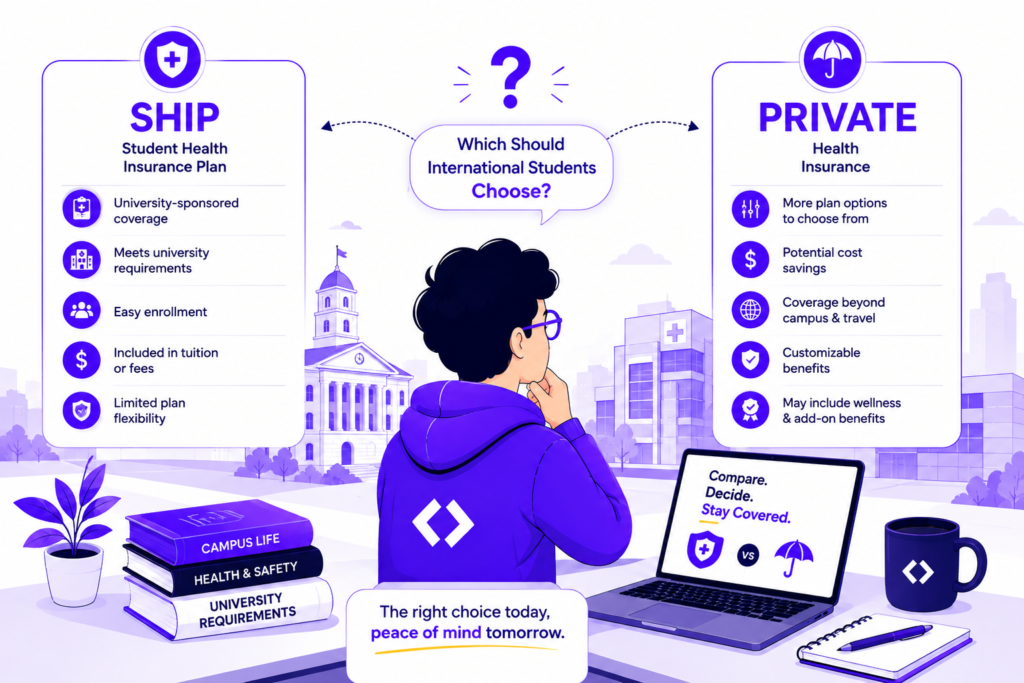
There is no single best option for student health insurance in Germany; it depends entirely on your eligibility and study situation. Public insurance is usually ideal for students under 30 enrolled in degree programs, offering standardized coverage, predictable costs, and wide acceptance. Private insurance is more suitable for students over 30, those in language courses, or preparatory programs where public coverage is not available.
While private plans can sometimes be cheaper, coverage varies widely and requires careful comparison before selection. In simple terms, public student health insurance in Germany prioritizes stability and comprehensiveness, while private insurance serves specific eligibility cases where flexibility or alternative pricing is needed.
Also Read: Importance of Health Insurance for College Students
Conclusion
Choosing student health insurance in Germany doesn’t have to feel uncertain or overwhelming. Once you understand how the system works, the decision becomes much more structured and manageable. The key is simply getting the right information early and aligning your choice with your eligibility, university requirements, and study plans.
At GradRight, we work closely with students planning their entire study abroad journey, and insurance is one of the most common areas where confusion leads to avoidable mistakes. We’ve seen students face delays because they selected private plans not accepted by their universities, and others pay more than necessary by not understanding their eligibility for public insurance.
Sorting this out early ensures a smoother enrollment process and fewer last-minute issues. If you’re still planning your applications, funding, or Germany study path, you can reach out to GradRight to explore how we can support you.








 Australia
  Canada
  France
  Germany
  India
India  Ireland
  UAE
UAE  United Kingdom
  United States