




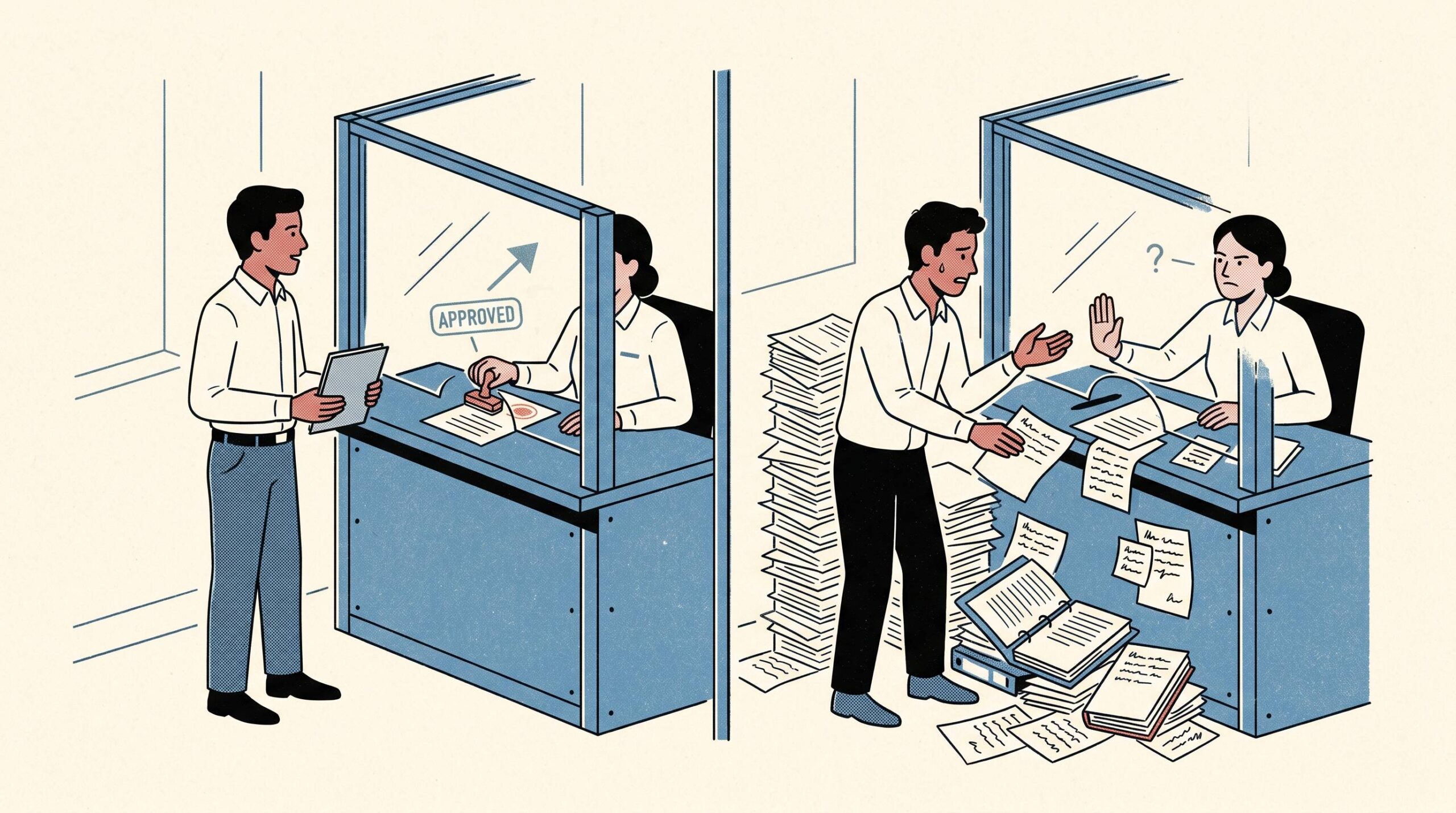
Mithlesh Kumar watched two students walk into the same US consulate in Hyderabad on the same morning. One got approved in minutes. One didn’t. He had been sitting in that waiting room long enough to see a pattern or rather, to confirm there isn’t one.
“Same consulates, same morning, completely different outcomes. There is no pattern you can predict,” Kumar told Financial Express.
Kumar, a Bengaluru-based GenAI Architect with over ten years in the technology sector, recently received his F1 visa for an MBA at Washington University in St. Louis’ Olin Business School, along with a $70,000 merit scholarship. His own interview lasted less than two minutes.
The officer asked three questions. First was “why MBA?” Second was “why Washington University in St. Louis?” and the third, “why now?” Kumar answered clearly, without rehearsal, without a script. The visa was approved.
What actually goes wrong
Kumar was direct about what he saw failing around him. Students over-preparing the wrong things, five-hundred-page document files, memorised answers, rehearsed monologues.
“Don’t over-prepare on documents, prepare on your story. The officer doesn’t have time for 500 pages. They want to know who you are, why you’re going, and why you’ll come back. If those three answers are clear in your head, the interview takes care of itself.”
He also flagged rehearsed answers as a specific red flag. One student near him gave long, theatrical responses. The officer reportedly said he could tell answers were scripted. Approved? No.
The scholarship factor
Aman Singh, co-founder of GradRight, said scholarships often strengthen F-1 visa applications because they improve the applicant’s financial profile.
“One of the key factors in an F1 visa decision is proving that you can financially support your education and living expenses in the U.S. A scholarship, especially one awarded directly by the university, helps strongly with this.”
He also said visa slots remain difficult to secure and students rejected once should return with a stronger application instead of giving up.
“For students who were refused – don’t stop. You can get a fresh date again in approximately 8 months. But return with a stronger, more documented case. The same application will get the same result.”
This is the part most students miss. The visa officer is not just evaluating your English or your confidence. They are evaluating risk, specifically, the risk that you will not be able to support yourself, or that you will not return. A scholarship directly reduces both.
Source: Financial Express



 Australia
  Canada
  France
  Germany
  India
India  Ireland
  UAE
UAE  United Kingdom
  United States