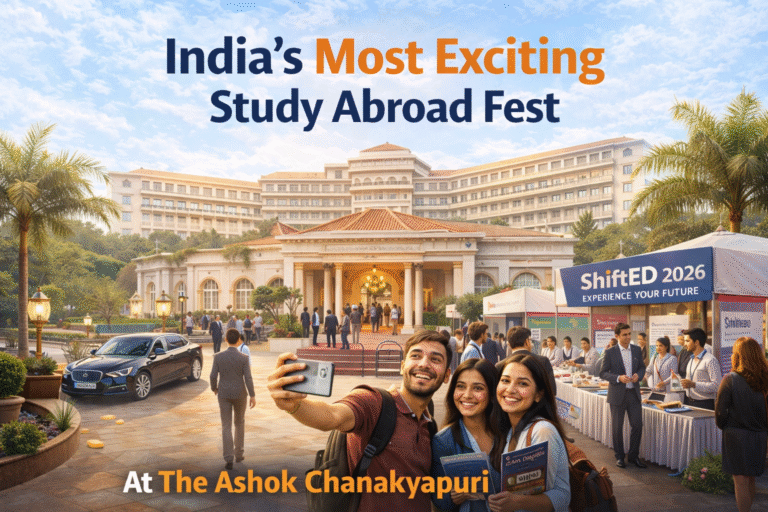



Senior leaders from leading American business schools said at ShiftED 2026 that despite visa challenges and policy uncertainty, India remains central to US higher education and talent pipelines. Institutions are expanding dual degrees, pathway models and long-term partnerships to deepen engagement with Indian students.
Speaking at ShiftED 2026, academic leaders from top US institutions described India as a strategic higher education market, shifting focus from traditional recruitment to structured partnerships and ecosystem building.
With visa costs rising and H-1B pathways becoming more complex, universities acknowledged short term mobility friction. However, they emphasised that demand for Indian talent remains strong across US industries, particularly in STEM aligned business fields such as analytics, supply chain and quantitative finance.
Institutions are responding by expanding dual degree formats, 1+1 pathway models and split programmes that allow part of the curriculum to be completed in India before transitioning to the US. Some universities are also exploring hybrid delivery and long-term campus presence models.
Speakers noted that Indian students continue to perform strongly in leadership and technical roles globally, reinforcing the importance of India in long term talent strategies.
While visa backlogs and regulatory shifts create uncertainty, academic leaders described current conditions as temporary disruptions, maintaining that US higher education continues to depend heavily on Indian talent.