




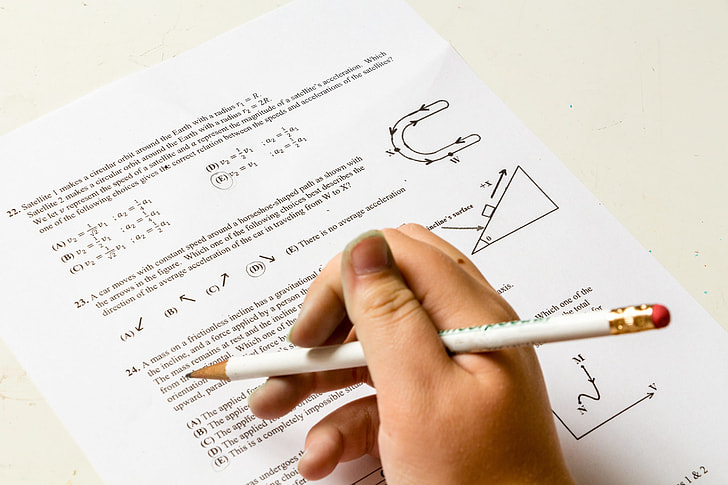
Are you gearing up for the GRE in 2026?
You might be bombarded with questions like ‘How to prepare for the GRE,’ ‘What are the best books for GRE preparation’, and ‘How much GRE preparation time is ideal?’ You don’t just need hard work – it’s about smart work too. That’s why you need a proven strategy to crack the GRE with flying colours.
What Is the GRE Exam?
The GRE, also known as the Graduate Record Examination, is a multiple-choice test widely recognised by universities globally for admission into graduate programs. It is also accepted by business and law schools worldwide.
The GRE can be completed in under 2 hours – it’s the world’s most widely accepted graduate admissions test in a shorter time frame.
There are three total sections of the GRE:
- Analytical Writing
- Verbal Reasoning
- Quantitative Reasoning
GRE Exam Format
|
Many universities look at your GRE score percentile, academic record, and supporting materials to compare you to other test-takers. A high GRE score will directly impact your graduate, business, or law school applications.
For understanding the right university to select based on your GRE score, use GradRight’s university search platform – 40,000+ programs, AI-powered, free.
Also Read: GRE Exam 2026: Complete Guide – Format, Fees and Syllabus
GRE Exam Preparation Strategy 2026
With 4 to 5 hours of daily practice, a student can easily crack the GRE in 8 to 12 weeks.
Step 1: Establish Your Baseline
Take a free GRE practice test under similar conditions to the actual exam. A baseline score will help you find your strengths and weaknesses. Use the free POWERPREP practice tests from ETS (ets.org/gre/prepare) – these replicate the same sections as the original test.
Step 2: Set Your Cut-Off Score
Set your GRE target score based on the universities you want to apply to. Your target score should be above the average GRE score for that program – this increases your admission chances significantly.
Step 3: Develop a Study Plan
Based on your baseline and target scores, create a study plan that addresses your weaknesses. Collect GRE prep materials – books, online programs, or prep courses – and fix certain hours each day for practice.
Step 4: Focus on Technique
Practice is as important as mastering content. Simulate test conditions by taking timed practice tests in a quiet environment. Build effective test-taking strategies, not just content knowledge.
Step 5: Practice With and Without a Calculator
Familiarise yourself with the on-screen calculator provided in the GRE. Also practice solving problems without it to strengthen your mental math skills – the calculator is point-and-click and can slow you down.
Step 6: Review and Adjust
Regularly review your practice test results to identify patterns and areas that need more focus. If you’re not improving in a section after 2 weeks, change your approach or resources.
Step 7: Enhance Your Vocabulary
A strong vocabulary is crucial for the GRE verbal sections. Read widely and make a list of new words to study. Use GRE power vocab lists and other prep materials to build your vocabulary systematically.
Find universities that match your GRE score target – AI-powered search. Explore on GradRight
Also Read: GRE Study Materials 2026: Best Books and Free Resources
Advantages of Taking the GRE Exam
- Gateway to top programs: Scoring well on the GRE can be your gateway to prestigious Master’s or Doctoral programs worldwide.
- Demonstrates intellectual aptitude: High scores showcase your critical thinking, analytical skills, and verbal abilities.
- Career opportunities: GRE scores can enhance your job prospects by showcasing problem-solving and cognitive abilities.
- Flexibility: A strong GRE score allows you to explore specialized fields or change career paths by pursuing higher education in a different domain.
- Globally recognized: By investing time in GRE preparation, you set yourself up for success in academic and professional endeavors worldwide.

How to prepare for the GRE exam?
One common question among prospective graduate students is “how do I start preparing for the GRE?” The answer often lies in developing a structured study plan. For effective GRE preparation, creating a structured study plan that covers all sections becomes crucial.
Here is a section-by-study plan.
Preparing for the GRE analytical writing section
- Know the task pool: ETS publishes the complete pool of Argument topics. Practice with actual topics from this pool at ets.org/gre/prep.
- Follow official guide instructions: Each Analytical Writing section comes with official instructions. Read them carefully before each practice session.
- Create a response template: As you practice, develop a mental template for structuring your Argument essay – introduction, identifying assumptions, evaluating evidence, conclusion.
- Utilize free resources: Use ETS’s free practice prompts to familiarize yourself with the argument task format.
- Understand the argument task approach: You are not debating the topic’s truth – you are evaluating whether the argument’s logic and evidence are sound.
Preparing for the GRE Verbal Reasoning Section
- Start slow: During initial phases, complete practice questions without a timer to build accuracy first.
- Build vocabulary continuously: Keep learning vocabulary until the day of the exam. Learn synonyms for common GRE words.
- Use diverse methods: Flashcards, etymologies, mnemonics, and vocabulary games all help. Don’t rely on just one method.
- Practice sentence framing: Techniques like writing in active voice and avoiding overuse of subordinate clauses help with Text Completion and Sentence Equivalence questions.
Preparing for the GRE Quantitative Section
- Master math fundamentals: Don’t move to practice questions until you’ve completely grasped the fundamentals – arithmetic, algebra, geometry, and data analysis.
- Review official guide topics: Practice each topic from the official guide using previous GRE questions.
- Watch for tricky questions: GRE questions are frequently challenging even without advanced math. Your critical thinking and elimination skills are key.
- Use the calculator wisely: The calculator performs only basic operations. Estimate first, then verify with the calculator only when necessary.
Also Read: GRE Exam 2026: Complete Guide – Format, Fees and Syllabus
Also Read: GRE Study Materials 2026: Best Books and Free Resources
Also Read: GRE Exam Syllabus 2026 (Section-wise)
Also Read: Understanding Your GRE Score 2026: Percentiles and Validity









 Australia
  Canada
  France
  Germany
  India
India  Ireland
  UAE
UAE  United Kingdom
  United States