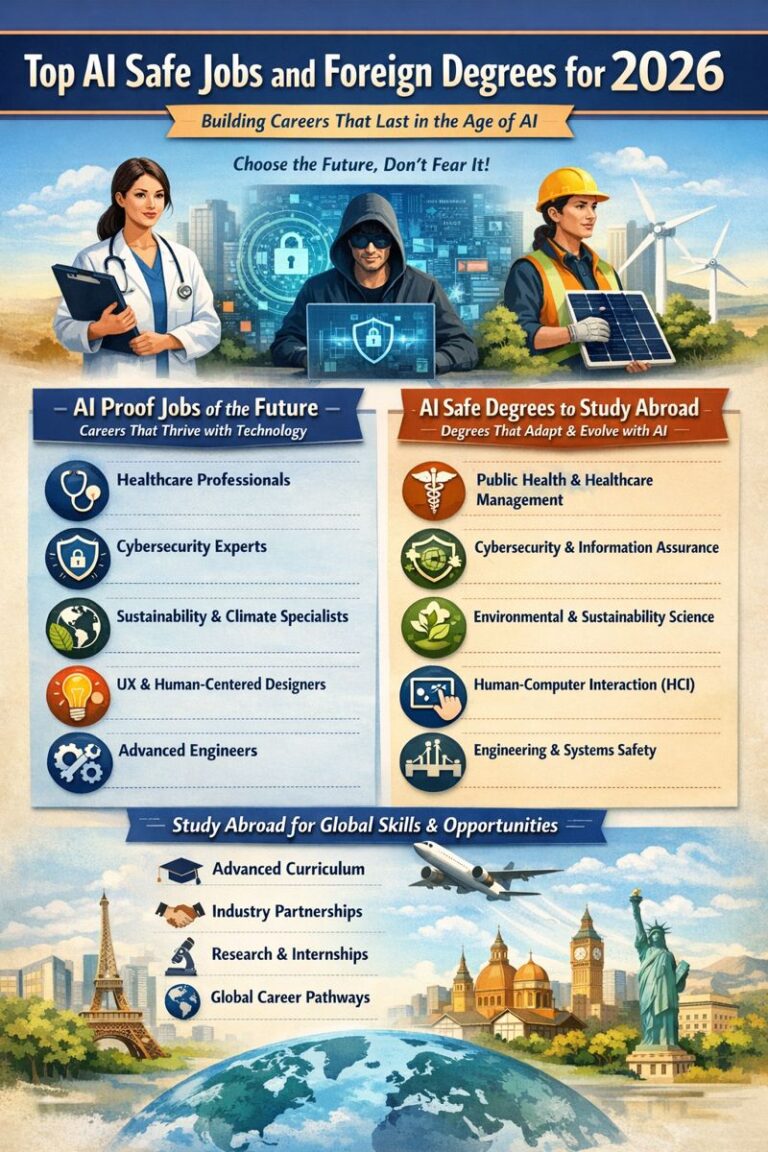





For international students planning their next academic move, 2026 feels different. Tuition costs are higher than they were a few years ago. Hiring cycles are more selective. Artificial intelligence and automation are reshaping entire job functions. In this environment, ambition alone is not enough. Students are looking for clarity, security, and return on investment.
This is why conversations around STEM courses in USA are no longer just about interest or prestige. They are about outcomes. About which degrees actually lead to high paying roles, how long it takes to recover costs, and whether a Master’s in the US is still financially worth it in 2026.
This guide looks at high paying STEM courses in USA through a practical lens. It focuses on salary outcomes, costs, demand trends, and which programmes offer the strongest ROI for international students.
Why STEM Master’s still dominate ROI conversations in 2026
Despite market uncertainty, STEM fields continue to drive global job growth. Companies still need engineers, data specialists, cybersecurity professionals, and applied scientists. What has changed is the scrutiny.
Students now ask sharper questions. Which Master’s degrees are in demand 2026. Is it worth doing MS in the USA in 2026. Which STEM Master’s has best ROI. These questions are less about fear and more about financial logic.
The reason STEM Master’s continue to perform well is simple. They sit at the intersection of skills shortage and long term relevance. When paired with the right specialisation, they offer faster employability and higher starting salaries.
Computer Science Master’s with high ROI
A computer science Master’s high ROI US programme remains one of the strongest bets for international students. Demand spans software engineering, cloud systems, AI infrastructure, and product development.
Graduates from strong programmes often enter roles with starting salaries between USD 95,000 and USD 130,000. While tuition costs can be high, the cost of STEM Master’s vs salary equation still works in favour of computer science when graduates secure roles within six to nine months.
For students asking whether STEM Master’s is worth it financially, computer science remains the benchmark.
Data Science Master’s and applied analytics
A data science Master’s best ROI option appeals to students who want versatility. Data science graduates work across technology, finance, healthcare, retail, and logistics.
The average starting salary for data science roles in the US ranges from USD 90,000 to USD 120,000, depending on location and industry. The STEM Master’s average salary US figures for this field remain strong, especially for students with internships or applied project experience.
From an affordability perspective, several universities offer comparatively lower tuition, making data science one of the cheapest high ROI STEM Master’s options when planned carefully.
Engineering Master’s with high salary outcomes
Traditional engineering disciplines continue to deliver strong ROI when paired with modern applications.
An engineering Master’s high salary US pathway often includes specialisations in electrical engineering, mechanical systems, robotics, materials science, or industrial engineering. These degrees remain relevant in manufacturing, energy, automotive, and advanced hardware sectors.
Students often ask which engineering is best in 2026. The answer depends on alignment. Programmes that integrate software, automation, or systems thinking tend to outperform purely theoretical tracks in terms of salary and employability.
AI and Machine Learning Master’s programmes
AI focused degrees have grown rapidly, but not all programmes deliver equal value. AI Master’s programmes high return are those that emphasise applied learning, real world datasets, and industry collaboration.
Graduates entering machine learning, applied AI, or AI product roles can command salaries well above USD 110,000. However, these programmes can be expensive, which makes it important to evaluate affordability and scholarship options.
For students comparing top STEM Master’s for quick ROI in the US, AI degrees perform best when paired with prior technical experience.
Cybersecurity Master’s and long term stability
Cybersecurity remains one of the most resilient STEM fields. A cybersecurity Master’s US profile benefits from consistent demand across government, finance, healthcare, and technology.
Starting salaries often range from USD 85,000 to USD 115,000, with strong growth over time. The cost of entry is usually lower than AI or computer science programmes, making cybersecurity one of the more affordable STEM Master’s high earnings US options.
For students concerned about long term employability rather than short term hype, cybersecurity offers stability.
Biotechnology and life sciences with high paying roles
A biotech Master’s high paying jobs pathway works best for students targeting specialised roles in pharmaceuticals, biomedical engineering, or life sciences research.
While entry level salaries can be slightly lower than software roles, specialised biotech positions often grow steadily. ROI improves significantly for students who secure roles in regulated industries or continues into applied research and product development.
This field rewards patience and specialisation more than speed.
Understanding ROI beyond salary numbers
ROI is not just about the highest paying STEM Master’s jobs US. It is about how quickly you recover costs and how stable your career trajectory is.
Students evaluating high ROI STEM programs for internationals should consider:
- Tuition and living costs
- Time to first job
- Visa friendly employers
- Geographic salary differences
- Career progression over five to ten years
A slightly lower starting salary with faster placement can often outperform a higher paying role that takes longer to secure.
Is an MS in the USA worth it in 2026
For most students, the answer depends on planning quality rather than degree choice alone. Those who align their background, university selection, and career goals carefully tend to see strong outcomes.
When students ask what is the best degree to get in 2026 or is STEM Master’s worth it financially, the honest answer is that the US still offers unmatched depth in STEM education. However, ROI is no longer automatic. It is earned through informed decisions.
Choosing the right STEM Master’s for quick ROI
Students aiming for quick ROI should prioritise:
- Strong industry connections
- Applied curriculum
- Internship access
- Cities with dense job markets
These factors matter as much as rankings. For students focused on which STEM Master’s has best ROI, programme structure often matters more than brand name.
Final perspective for 2026 applicants
STEM education in the US remains one of the strongest global investments when approached strategically. From computer science to cybersecurity, from data science to applied engineering, the opportunities are real.
The key difference in 2026 is awareness. Students are no longer chasing degrees. They are planning outcomes.
Those who understand the balance between cost, salary, demand, and long-term relevance will continue to see high returns from their STEM Master’s investment.