
A few months ago, an admissions director from a well-known US business school told me something I haven’t forgotten. He said, “We get thousands of applications from India. The SOPs read like they were written by the same person. How are we supposed to know who’s actually going to thrive here?”
He wasn’t being dismissive. He was being honest. And he’s not alone.
This is why some of the best US universities are now doing something different in India.
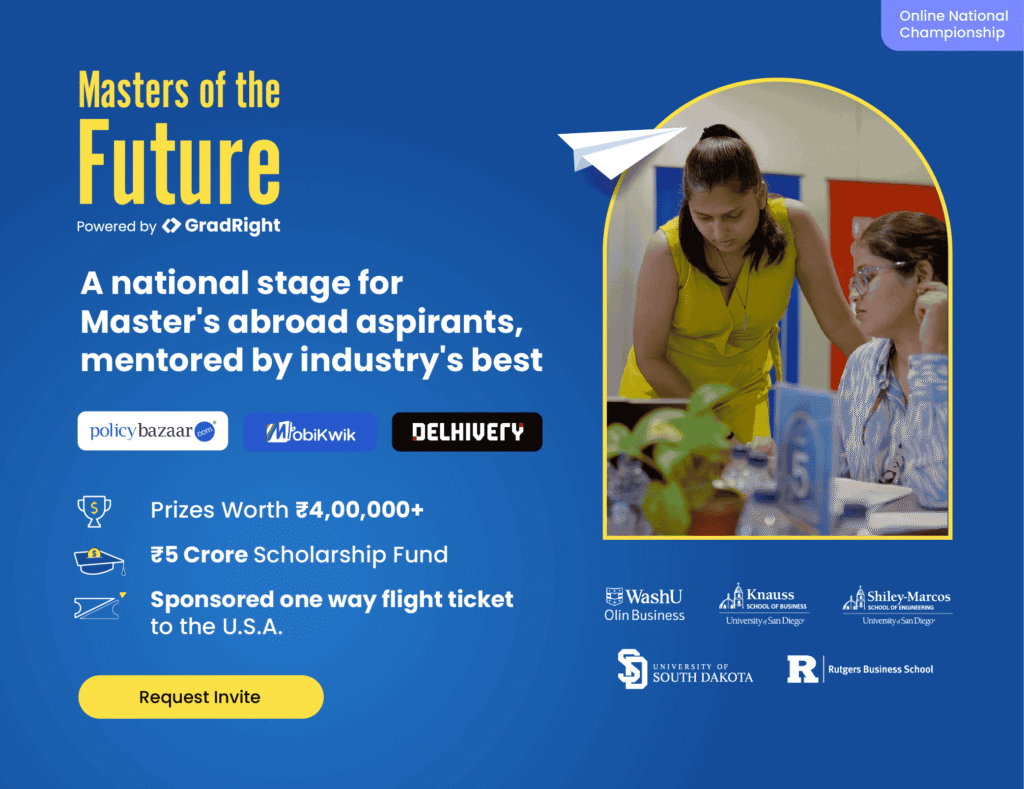
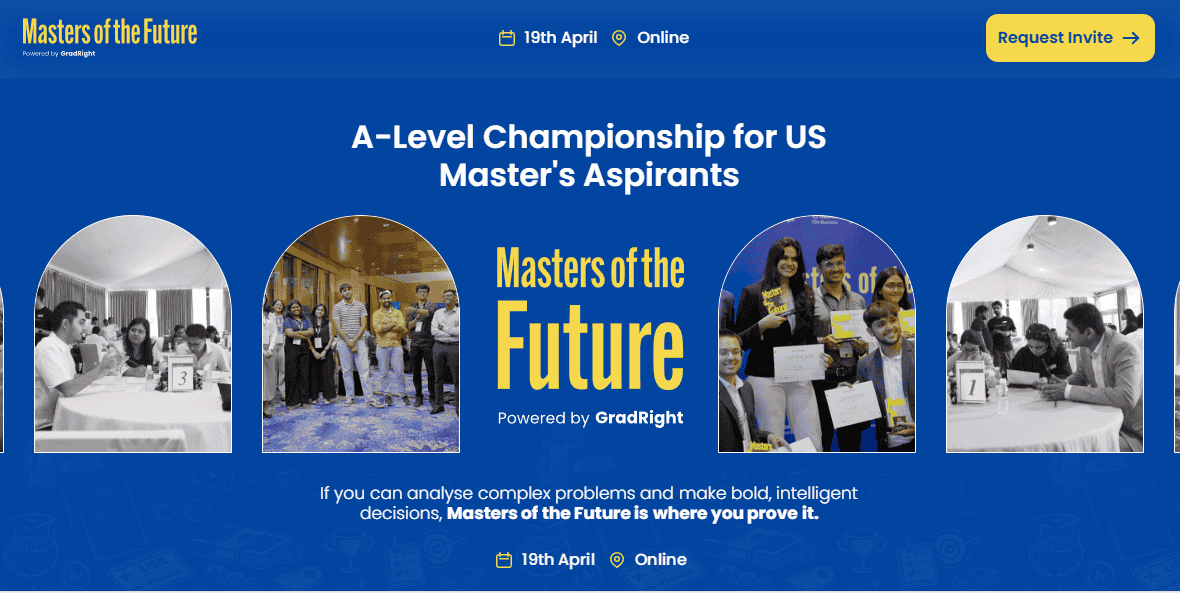
They’re participating in Masters of the Future (MOTF), a national championship organized by GradRight, where they watch Indian students and working professionals solve real problems live, under pressure, in real time.
Let me explain why this shift is happening, and what it means for you.
The old recruitment model stopped working
For decades, US universities recruited from India the same way.
Fly a representative to Mumbai, Delhi, Hyderabad.
Set up a table at an education fair. Hand out brochures.
Collect email addresses.
Follow up with webinars.
This worked when 5,000 Indian students went to the US each year. The ones showing up at fairs were probably serious. The pool was small enough that you could have real conversations.
Now it’s over 360,000 Indian students a year. The fairs are crowded. A university rep might talk to 300 people in a day and have maybe 10 meaningful conversations. The rest are collecting pamphlets and moving on.
On the back end, it’s worse. Admissions teams are sometimes just 5–10 people reviewing thousands of international applications.
When everyone looks strong on paper, the paper stops telling you anything useful.
The result is that universities sometimes admit students who look right but aren’t the best fit. Some of those students struggle. Some drop out. That hurts the university’s outcomes, and it hurts the student even more.
Nobody wins in this system.
What universities actually want to see in students
Here’s what I’ve heard again and again in my conversations with admissions teams. They want to see things that no application can show them.
How you think when you don’t have time to prepare. An SOP is written over weeks, revised by friends, polished by consultants. It tells a university nothing about how you actually think under pressure.
How you work with other people. Master’s programs are collaborative, with group projects, study teams, presentations. But the entire application process is individual. Universities have no way to know if you’re a good collaborator.
Whether your ambition is real. Every SOP says “I’m passionate about finance” or “I want to change the world through data science.” Universities can’t tell who means it and who’s writing what they think admissions wants to hear. They want to see someone who’s actually done something.
Whether you’ll actually thrive, not just get in. This is the big one. Universities care about graduation rates, job placements, alumni outcomes. They don’t just want students who can get admitted. They want students who will do well. And the application process is a poor predictor of that.
So the question becomes: how do you create a setting where universities can actually see all of this?
That’s what MOTF was built for.
Why MOTF works — from the university’s side
At MOTF, university admissions teams don’t sit behind a booth.
They’re in the room. They watch students and working professionals solve real business problems under time pressure.
They see how people break down a case, how they present, how they handle pushback, how they collaborate.
In two days, they learn more about a candidate than they would from reading a hundred applications.
And the talent is pre-filtered. By the time someone reaches the MOTF finale, they’ve already been through multiple rounds with project submissions, interviews, and zonal presentations.
So the universities aren’t sifting through thousands. They’re looking at 30 people who’ve already proven they belong there.
Prof. Timothy Solberg from Washington University’s Olin Business School, who was present at a past edition, put it clearly — “the standard of financial analysis from the finalist teams showed that students were well prepared for Olin’s most selective master’s programs”. He saw it happen live. Not on a piece of paper.
That’s a fundamentally different kind of evaluation. And it’s why universities keep coming back.
So if you’re reading this as a student or working professional, this is what it looks like when universities are actively looking for people like you, in a setting where you can actually show who you are.
Which universities can you interact with at MOTF
WashU Olin and Rutgers Business School have been involved with GradRight MOTF since the very first edition.
Olin’s faculty watched live case study presentations and said the quality matched what they expect from their most competitive applicants. Prof. John Lungo from Rutgers said the talent and ambition he saw was truly exceptional, and that Rutgers looks forward to welcoming those students.
For 2026, the table has grown. Lehigh, Tulane, University of San Diego’s Knauss Business School and Engineering School, and University of South Dakota have all joined.
Each of these schools is looking for something specific. Some want strong quantitative thinkers for their analytics and finance programs. Others want engineers with leadership potential. The two-track structure of MOTF 2026 (one for final-year students, one for working professionals) lets universities engage with exactly the kind of candidate they are on the lookout for.
Curious about what past editions looked like?
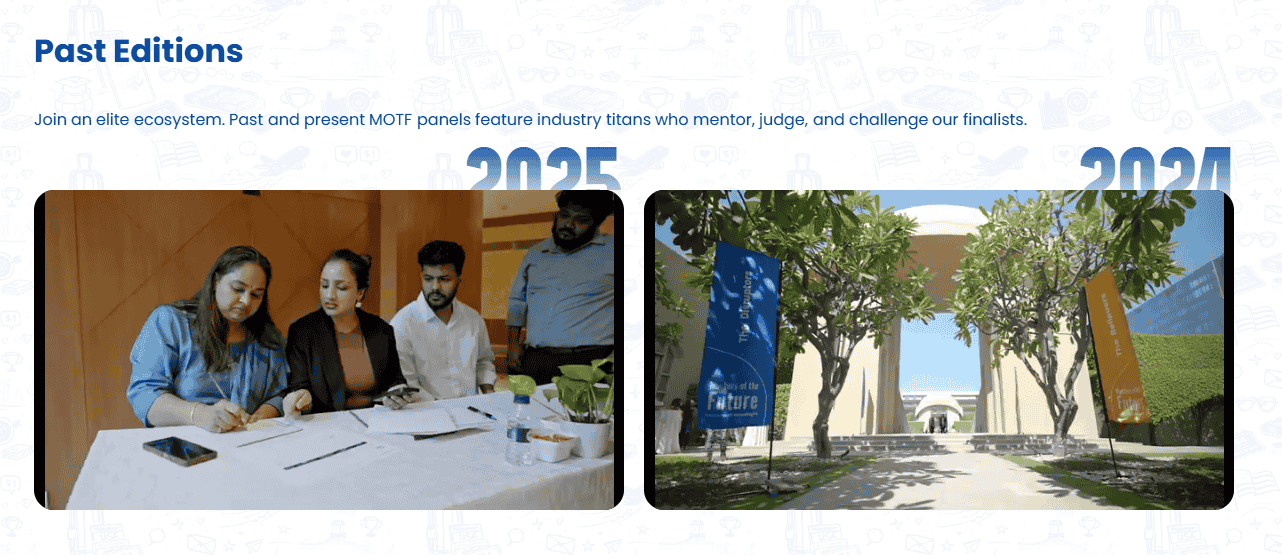
See highlights from MOTF 2025.
What this means for you
Most of the study abroad process is designed to make you feel like you’re on the outside, trying to get in. Apply, wait, hope. You never really know what universities are looking for. You never get to show them who you are beyond a test score and an essay.
MOTF flips that. It puts you in a room (even if it’s a virtual one) where the people who make admissions decisions can actually see you work.
Not your consultant’s version of you. Not your SOP’s version of you. You.
We’re moving toward a world where students don’t just apply and hope. They demonstrate, and universities discover. MOTF is what that looks like in practice.
And honestly, this is just the beginning.
Register for MOTF 2026. The finale is April 18–19, online, and it’s free to apply.

And if you’re figuring out the bigger picture like which universities, which loans, what scholarships, download the GradRight app from Google Play Store or Apple App Store. It’s an AI-powered study abroad and education finance platform that helps you discover the right programs, universities, scholarships, loans, and everything else you need, all in one place.