Most students do not arrive at the decision to study abroad with complete certainty. It usually begins in fragments. A conversation with a friend who moved overseas. A LinkedIn post announcing a Master’s in Europe. A late-night search that opens too many tabs and answers very little. Excitement builds alongside doubt, and before long, studying abroad feels important but unclear.
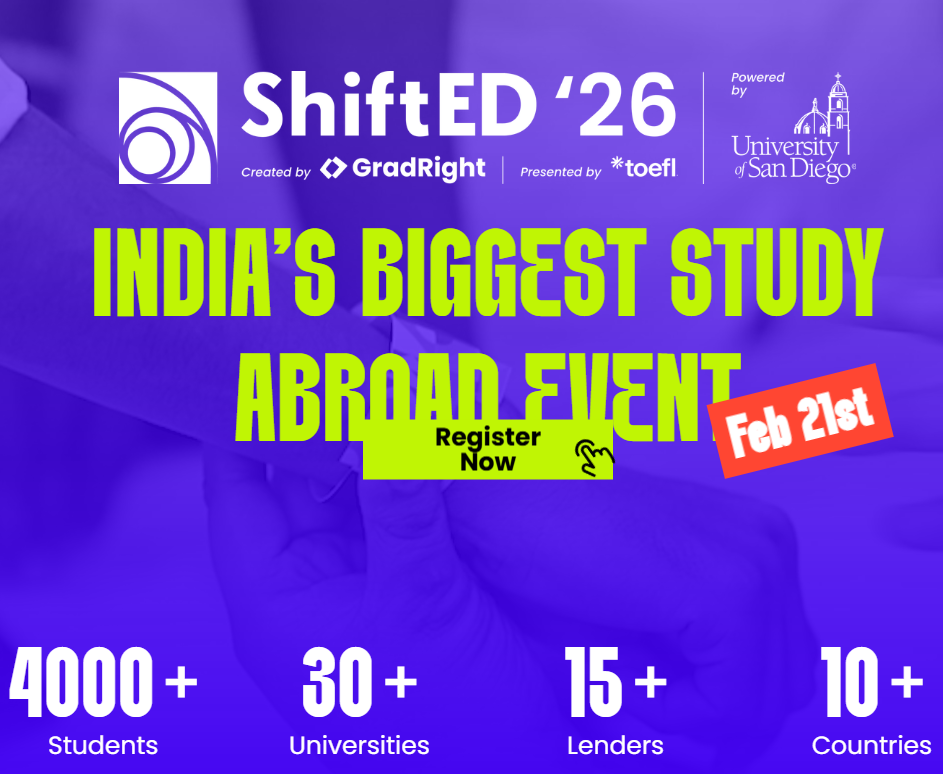
That is the mindset many students in Delhi find themselves in right now, especially those planning to apply in the coming year. ShiftED 2026 Delhi, happening on 21st February, is designed for exactly this moment. Not for students who have everything figured out, but for those who know they want to go abroad and are still trying to understand how the system actually works.
Admission Shark Tank: The first realisation most students have
Many students believe they understand admissions until they are exposed to how admissions decisions are actually made. This realisation tends to hit during the Admission Shark Tank, one of the most anticipated sessions at ShiftED.
In this live format, selected students present their academic background, goals, and interests directly to representatives from global universities. There are no rehearsed scripts or consultant prepared pitches. What matters is clarity. Why this programme. Why this country. Why now.
As feedback unfolds in real time, patterns start to emerge. Strong profiles are questioned when goals feel vague. Seemingly average profiles receive encouragement when intent is clear. Universities explain what they value, what they overlook, and where students often misjudge their own readiness.
For students watching from the audience, this session quietly changes how they think about applications. Admissions stop feeling mysterious and start feeling structured. For some, a conditional admit may even be offered on the spot, but the larger takeaway is understanding how universities evaluate candidates in reality, not theory.
Playing God: When choices stop being hypothetical
Another experience that tends to stay with students is Playing God. At first glance, it looks like a simulation. In practice, it feels far more personal.
Students are placed in decision scenarios involving universities, countries, funding options, and timelines. Each choice leads to a different outcome. A lower cost option may restrict post study work. A prestigious programme may increase financial pressure. A rushed decision may limit long term flexibility.
As consequences unfold, students begin to recognise how interconnected these decisions are. What seemed like a small compromise suddenly carries weight. Playing God does not tell students what the right choice is. It shows them that every study abroad decision has tradeoffs, and avoiding those trade-offs is not the same as understanding them.
By the end of the experience, many students walk away with a sharper sense of what actually matters to them.
The G.O.A.T. Championship: How pressure reveals preparedness
The GOAT Championship introduces a different kind of intensity. This is not about memorising information or answering theoretical questions. Participants are evaluated on how they think under pressure. How they justify their choices. How well their study abroad plan aligns with their career goals and financial reality.
Students are pushed to articulate why a particular country makes sense, how they plan to manage costs, and what outcomes they are realistically aiming for. Some realise their plans are stronger than they thought. Others recognise gaps they had been ignoring.
While the championship includes prizes and recognition, its real value lies in exposure. It shows students that studying abroad is less about intelligence and more about decision making, planning, and self-awareness.
Ed Loan Arena: The conversation students dread, handled properly
For many students and families, the most intimidating part of studying abroad is funding. The Ed Loan Arena exists to make this conversation clearer and more grounded.
Instead of speaking to one lender or relying on secondhand information, students can interact with multiple financial institutions in one place. Prodigy Finance, ICICI Bank, Zolve, Axis Bank, Credila, Tata Capital, and Poonawala Fincorp are all part of this space.
Students can discuss loan eligibility, interest structures, collateral requirements, and country specific policies openly. Questions that usually feel uncomfortable are encouraged. What happens if a university choice changes. How repayment works if outcomes vary. What risks actually exist.
For many students, this is the first time education loans feel understandable rather than overwhelming.
Why peer conversations matter more than expected
In between structured sessions, something quieter but equally important takes place. Through ConnectED, students interact with peers who are at similar stages of planning. Conversations feel honest. Doubts are shared openly. Confusion feels normal rather than isolating.
The games and prizes add energy, but the real value lies in perspective. Students realise that most people do not have perfect plans. Everyone is navigating uncertainty, just at different speeds.
This sense of shared experience often reduces anxiety and builds confidence in ways formal sessions cannot.
Why ShiftED 2026 Delhi feels different before it even begins
ShiftED does not promise certainty. It promises clarity.
By the time students leave on 21st February, many will not have final answers. What they will have is a clearer understanding of their profile, realistic expectations about outcomes, and a better sense of what steps to take next.
For students planning a Master’s abroad, ShiftED 2026 Delhi is not just an event on a calendar. It is a checkpoint. A place to test assumptions before committing years and resources to a decision.
And often, that pause makes all the difference.