




By 2024, analysts expect about 1.8 million Indian students to be studying overseas, more than double the pre-COVID figure.
That wave of ambition has a price tag—nearly ₹85 thousand crores in annual tuition and living costs.
If you’re a parent or student reading this, you already know the numbers feel bigger than the guidance most banks give you.
Branch officers talk in brochures. They quote flat rates, slip in forex mark-ups, and leave you guessing how today’s rupee will look against tomorrow’s dollar.
That’s why GradRight built a loan-bidding marketplace where lenders compete among themselves so that you get the loan that’s best for you.
Since launch, GradRight has already processed about ₹16,300 crore in loan requests for more than 200,000 students, proving that smarter matching can beat back-office red tape.
Over the next few sections, we’ll build a personalized loan roadmap, comparing interest versus currency risk, trimming hidden fees, timing disbursals, and using simple study abroad financing tips that most counsellors skip.
Why choose FundRight for your education loan?
Most families still chase financing the old way, one bank at a time, long queues, and no leverage. GradRight changes that dynamic by turning your application into a live marketplace.
The result is a loan roadmap that GradRight users call “competitive by design,” and it shows in four areas that move the needle for international education planning.
Transparent Bidding And Lower Rates
When your profile goes live on GradRight, more than fifteen lenders receive the same information at the same time.
Internal audits show this head-to-head model trims about 1–1.5 percentage points from the rate most families first hear at a bank counter. These are real savings that shorten the repayment period by several months over a typical ten-year term.
Collateral Only If You Really Need It
Over half the offers on FundRight are unsecured, which means you can secure up to ₹50 lakh without mortgaging the family home.
When collateral is required, the platform spells out margin money, accepted assets, and processing fees line by line.
Timelines That Protect Your Visa Window
Digital KYC and parallel verification cut approval times to about 7–10 working days once documents are uploaded. That’s critical loan planning for international students who need a sanction letter before the embassy interview.
Clarity On Every Rupee
All bids appear on one dashboard. You see the interest rate, processing fee, margin money, moratorium terms, and, even for dollar loans, the expected rupee cost once currency movement is factored in.
So, FundRight replaces branch-hop fatigue with a customized loan roadmap for education that is transparent, faster, and often cheaper than the traditional route. In the next section, we’ll show you how to create your profile and enter the financial details that trigger those competing bids.
Step 1: Create your profile and input financial details
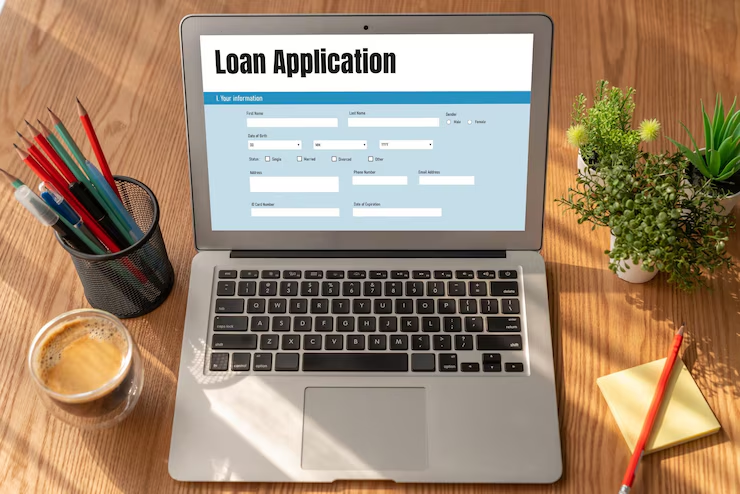
GradRight opens with a short, four-screen wizard that captures every fact lenders need before they place a bid. Finish it once, and you’ll never have to retype these basics again.
Admit
Start with where you stand today. Select Admitted, Wait-listed, or Yet to Apply, then choose your program’s intake month, say, September 2025.
If you’ve taken the GRE, GMAT, IELTS, or any other test, add the scores now. A confirmed admit plus solid scores usually pulls in stronger unsecured bids, trimming early interest estimates on your personalized loan roadmap.
University
Begin typing your university’s name and pick the exact campus/program from the drop-down list.
The platform links this choice to its tuition database, so lenders later quote against a real cost-of-attendance figure.
Loan Amont
Enter the full budget, which is tuition, housing, insurance, everyday living expenses, and a modest currency buffer. Decide whether you want an INR loan, which shields you from dollar swings and still qualifies for Section 80E tax relief, or a USD loan if your school bills directly in dollars.
Location
Choose the country and city if you already know them. Some lenders specialise in certain destinations or offer rate incentives for STEM-heavy regions like the USA, Canada, or Germany, so accuracy here routes your profile to the most relevant bidders.
Allow twenty minutes if your PDFs, like offer letter, cost sheet, co-applicant salary slips, are ready.
Once you hit Submit, GradRight grades your profile, predicts a sanction range, and queues the case for live bidding. Offers usually start appearing within a day.
In the next section, we’ll explain how those competing bids arrive, what each number on the offer sheet really means, and how to compare them without getting bogged down in jargon.
Step 2: Get personalized loan offers from multiple lenders
Once your profile is complete, GradRight shares it with every lender on the marketplace at the same time. Most students begin receiving firm offers within 24–48 hours.
What appears on your dashboard:
Each lender’s quote is shown in a simple row. You will see:
- Interest rate and type (fixed or floating)
- Processing fee stated as a flat amount or percentage
- Margin money, the share of tuition that the lender expects you to fund
- Moratorium and tenure
- Secured or unsecured label and, for secured bids, the loan-to-value ratio
- Currency indicator
- Offer expiry date
A typical profile attracts bids from a dozen or more lenders. Even a one-percentage-point gap on a ₹40 lakh loan can reduce interest outgo by roughly ₹2 lakh over a ten-year term, so these side-by-side numbers are the heart of your loan roadmap.
How to read the first set of bids:
- Sort by effective interest.
- Check collateral requirements. If two unsecured offers sit close to secured ones, note them, they save you paperwork and keep property off the table.
- Confirm currency risk. A 7% USD loan often behaves like an 11–12% INR loan once rupee depreciation is added. The dashboard’s conversion helps you spot this quickly.
- Watch the clock. Offers expire after the stated expiry, so arrange documents for the strongest bids first.
With concrete numbers in place, you can now compare, negotiate where possible, and narrow the field to the lender that best fits your budget and timeline.
In the next section, we’ll walk through a clear method to compare interest rates, repayment terms, and eligibility so you can choose the offer that truly lowers your total cost.
Step 3: Compare interest rates, repayment terms, and eligibility
Your dashboard now shows a neat stack of offers. The temptation is to grab the lowest headline rate and move on, but resist it.
A true education financing roadmap weighs every rupee you will ever pay. Here’s a practical way to sort the bids and keep your personalized loan roadmap honest.
Calculate The All-In Cost
See the effective interest, not headline interest. Add processing fees, GST, and the simple interest that accrues during the study-plus-grace period. A 10.25% loan with a 1% fee can outstrip a 10.75% loan with a flat ₹5,000 fee once you run the math.
Currency check. If an offer is in USD, convert it to an INR equivalent after assuming a modest 3–4% annual rupee depreciation.
Read The Repayment Structure
Repo-linked floating rates reset every three or six months, which can help when the cycle is soft but adds risk later. Decide whether the trade-off matches your job-market outlook.
Some lenders charge simple interest during the course, while others compound. Simple interest keeps the balance flat and trims total outgo by several months of EMI.
Next, check tenure. Longer tenures shrink monthly payments but add interest. A balanced loan planning for international students keeps EMI below 40% of the expected post-study take-home pay.
Check Collateral And Co-Applicant Impact
If an unsecured offer sits within half a percentage point of a secured one, keep the property papers in the drawer.
When security is unavoidable, look for loan-to-value ratios of 85 % or more; anything lower ties up assets without giving you the full benefit. Strong co-applicant income often pulls unsecured bids into the same rate band as secured ones; use that leverage.
Scan For Silent Costs
- Prepayment rules: Zero-penalty part-payments let you wipe out principal whenever scholarships, internships, or early salaries land.
- Step-up EMIs: A few lenders allow lower payments for the first two years, then larger EMIs once your salary stabilises, which is useful if you’re heading into a residency or research role.
- Insurance bundling: Embedded credit-life cover is convenient but pricey; buying the same cover separately saves 20–30%.
Stress-Test The Short List
Plug each shortlisted bid into GradRight’s EMI calculator. Shift the rate up by 1% to simulate a tightening cycle and make sure the payment still fits. This single step can prevent a refinance scramble later.
Work through these five filters and you’ll cut a dozen offers down to the two or three that truly lower total cost while protecting cash flow.
Step 4: Choose the best loan option for your needs
You have narrowed the field to two or three strong bids. Now match each offer to the practical realities of your degree, your future income, and your family’s risk tolerance.
Calculate Real Cost
Add processing fees and the interest that accrues while you study, convert dollar loans to rupees after assuming roughly 4% annual depreciation. The lowest sticker rate is rarely the least-cost loan.
Keep EMI Workable
Target an EMI that is no more than 40% of the salary you expect in your first year after graduation. If two loans are otherwise equal, pick the one with lighter payments up front.
Pledge Collateral Only When It Pays
Accept secured terms only if the rate is at least 0.5 percentage points lower and the lender offers 85% or better loan-to-value. Otherwise, choose the unsecured bid.
Check The Fine Print
Zero-penalty prepayment and a repo-linked floating rate protect you if income rises or rates fall. A one-time switch from floating to fixed is a useful backup.
Lock The Offer
Click Accept on the GradRight dashboard. The lender reserves the quoted terms for the next five to seven days while you prepare documents.
With the best-fit offer secured, you are ready for paperwork. The next section explains exactly which documents to collect, how to upload them without delays, and how GradRight tracks verification in real time.
Step 5: Submit the required documents for verification
Once you click Accept, you have roughly five to seven days to upload a complete document set. The sooner everything is in, the faster the lender can move your file to sanction.
Core documents you’ll need:
Identity and residence
- Passport, PAN, and Aadhaar for both the borrower and the co-applicant.
- Scan in colour, crop to the edges, and keep each file under 1 MB.
Academic proof
- Offer letter or I-20 plus your latest degree transcript.
- Combine multi-page PDFs so reviewers see everything in one file.
Cost-of-attendance evidence
- The university’s official fee schedule and a line-item estimate of living expenses.
Financial strength of the co-applicant
- Last three salary slips or income-tax returns and the most recent bank statement.
- Highlight salary credits, mask unrelated entries if you prefer.
Collateral papers (only if you pledged security)
- Property deed or fixed-deposit receipt, a fresh valuation report, and an encumbrance certificate.
- Make sure the title search is less than six months old to avoid re-verification.
How GradRight streamlines the upload:
- Upload your PDFs into the encrypted portal.
- The dashboard flags missing or blurry files within minutes, so you can fix issues before they slow the queue.
- KYC, income, and collateral teams review in parallel, and most clean files are clear within two to four working days.
In the next step, you’ll review the sanction letter, e-sign the agreement, and lock the terms you secured during bidding.
Step 6: Receive loan approval and sign the agreement
Two business days after every document turns green, a sanction letter lands in your GradRight dashboard. Open it and work through this checklist before you sign:
Confirm the basics:
- Your name, university, intake date, and total sanctioned amount match the offer you accepted.
- Currency and interest rate are exactly as quoted.
Scrutinise the key clauses:
- For floating rates, repo-linked resets should be quarterly or half-yearly, never “at lender’s discretion.”
- Check that the grace period (course + six or twelve months) still shows simple interest if that was part of the bid.
- Zero-penalty clauses must be explicit; if a fee appears, ask for it to be struck off before signing.
- For secured loans, make sure the deed returns automatically once the outstanding balance falls below the agreed threshold.
Sign and store:
E-sign through the portal. Some lenders will courier a hard-copy set for signatures. Return these within the stated window to avoid rate lapse. Save the final PDF and print one copy for your visa interview.
With the agreement locked, the loan is ready for disbursement. In the next section, we’ll cover how and when funds reach your university, and what you can do to manage interest during the study period.
Step 7: Loan disbursement and managing your finances
Once the signed agreement is uploaded, your lender schedules the first disbursement. Tuition fees move straight to the university’s account, and living expenses land in your foreign-currency account or on a prepaid student card.
Send the latest fee-demand letter about two weeks before each due date so the bank can release money on time. Also, keep proof of housing and insurance ready, as some lenders ask for it before releasing living expenses.
Next, know that interest starts the day every release leaves the bank. Pay that simple interest each month, and the principal stays flat, saving you several EMIs later.
If possible, build a 5% buffer into your budget because a small rupee slide can add thousands to costs, and the buffer lets you handle it without fresh paperwork.
When your grace period ends, switch on auto-debit so you never miss an EMI. If your salary or stipend arrives in dollars, pre-pay small chunks whenever the exchange rate favours you. Every extra dollar you send cuts interest.
Success stories: Students who secured loans with GradRight
The three success stories below show how GradRight’s FundRight tool turns confusion into clear-cut decisions, from collateral-free approvals to scholarship boosts. Read them, borrow the playbook, and start shaping your own outcome.
Harsha Surampudi — Funding Secured Before the Admit
Harsha needed proof of funds to finish her Canadian applications. She built a profile on FundRight’s pre-admit flow, uploaded test scores and a cost sheet, and received three unsecured bids within 48 hours.
She chose the lowest rate, locked ₹30 lakh at 10.6 percent, and submitted her financial documents well ahead of the university deadline, an early win in anyone’s book of student success stories.
Rohit — Five Rejections to One Yes
Collateral-heavy bank rules shut Rohit out five times. He moved his file to GradRight and bid two days later on a dollar-denominated loan that matched his budget.
Rohit accepted, cleared the sanction in a week, and is now at Ohio State, proof that success stories in education loans start with lenders who actually compete for your profile.
Vamsi — No Collateral, Full Ticket to Arizona
Vamsi’s middle-income background meant zero assets to pledge. FundRight surfaced an unsecured offer at a rate lower than most secured quotes elsewhere. He sealed the deal, booked his flight to Arizona, and joined the long list of real student stories where “no collateral” no longer means “no chance.”
Frequently Asked Questions
1. How does GradRight simplify the education loan application process?
One profile, one upload. The platform sends that profile to 15-plus lenders simultaneously, returns bids in 48 hours, and shows every fee, rate, and term on one screen.
2. What documents are required to apply for a loan with GradRight?
Passport, PAN/Aadhaar, admission (or offer) letter, university fee schedule, latest mark-sheet, three recent salary slips or IT returns for the co-applicant, and, only if you pledge security, basic property or FD papers.
3. Can I apply for a non-collateral loan through GradRight?
Yes. More than half the bids on the marketplace are unsecured, and ticket sizes can cover 100% of tuition plus living costs if your co-applicant’s income and academic profile are strong.
4. How long does the approval process take?
Clean files typically receive a sanction letter within seven to ten working days after all documents are uploaded.