



You have prepared answers to every possible question. You know your university, your program, your funding source, and your post-graduation plans. However, many F-1 student visa rejections happen before the first question is even asked. Consular officers are trained to read non-verbal signals, document organization, and behavioral cues with remarkable speed. Understanding what they observe in those first few seconds can be the difference between a blue slip and a visa stamp.
What F-1 visa interviews are actually evaluating
The F-1 student visa interview is not primarily a knowledge test. It is an intent assessment. The consular officer’s legal mandate under Section 214(b) of the Immigration and Nationality Act is to determine whether you have strong ties to your home country and a genuine, temporary reason to be in the United States. Every observation they make, verbal or not, feeds into that single question.
Officers conduct dozens of interviews per day, often spending as little as two to three minutes per applicant. That compressed timeline means they form initial impressions extremely quickly. Research on decision-making in high-volume assessment contexts consistently shows that first impressions formed in the opening moments of an interaction are difficult to reverse through verbal responses alone. For a USA student visa interview, that means the 30 seconds before you say a single word carry more weight than most applicants realize.
Furthermore, the US Department of State trains consular officers specifically to look for consistency between what applicants present non-verbally and what they say. Inconsistency, in either direction, raises scrutiny. Understanding the five things officers observe before you start speaking does not require manipulation or performance. It simply requires intentional preparation.
The 5 things F-1 visa officers notice before you speak
These are not myths from student forums. They are consistent with publicly available State Department interviewing guidelines, observations from immigration attorneys, and patterns reported by students across multiple visa application cycles.
1. How You Approach the Window
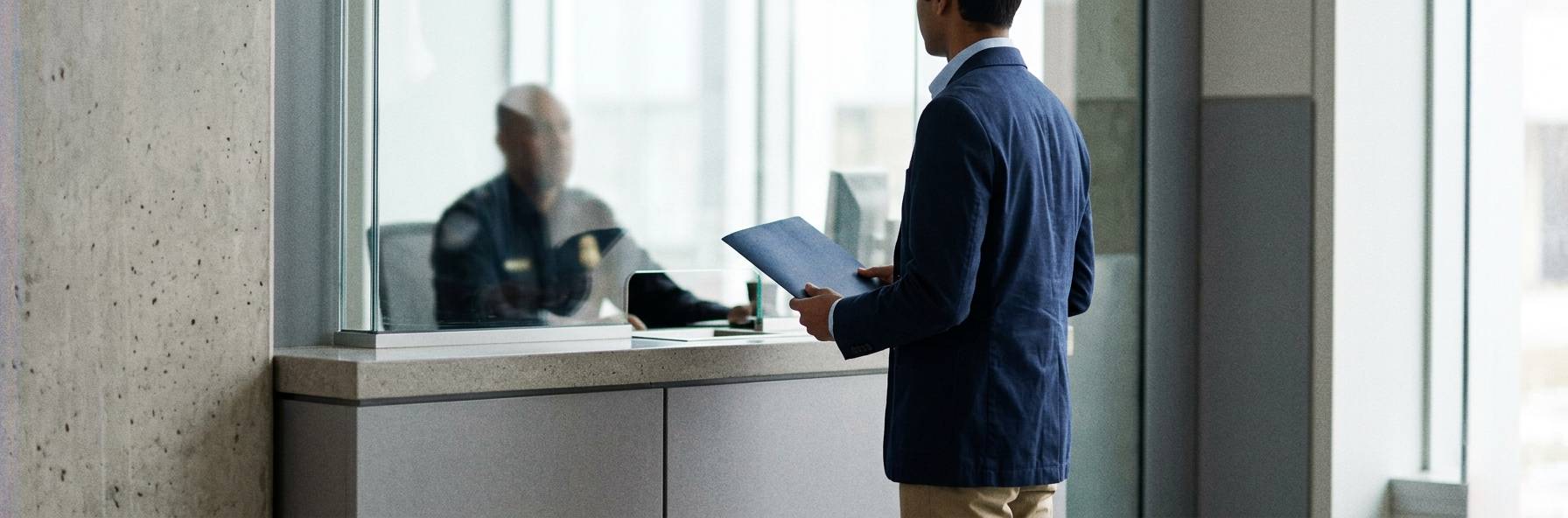
The way you walk to the interview window communicates confidence, anxiety level, and composure under pressure. Officers are trained to notice applicants who appear unusually nervous before the interaction begins, not because nervousness is automatically suspicious, but because extreme anxiety sometimes indicates rehearsed rather than genuine responses. Walk at a steady pace. Make eye contact as you approach. Do not rehearse answers out loud in the queue. Applicants who appear to be mentally running through scripts often freeze or give oddly formal answers when the actual questions deviate from what they practiced.
2. The Condition and Organization of Your Documents
Before you say anything, you will slide your documents through the window. How those documents are organized tells the officer a significant amount. A well-organized document set suggests a methodical, prepared applicant who has taken the process seriously. Documents stuffed into a plastic bag, loose papers in random order, or a folder so overpacked it takes 40 seconds to find the I-20 all signal the opposite. For a USA student visa application, the standard order that officers expect to reach for is: passport, DS-160 confirmation, visa fee receipt, I-20, financial documents, and academic credentials. Anything beyond that is supplementary and should be clearly separated. Additionally, your documents should be originals where required, and photocopies should not be mixed in without clear labeling.
3. Your Dress and Overall Presentation
Dress code for an F-1 visa interview is not about fashion. It is about signaling that you understand the formality of the occasion. You are presenting yourself to a representative of the US government for an official immigration adjudication. Business casual is appropriate. What officers notice negatively is not a specific clothing choice but a presentation that suggests the applicant did not treat the interview as a significant event. Overly casual dress, visibly unkempt presentation, or clothing with large logos or slogans can, in combination with other signals, contribute to an impression of under-preparedness.
4. Your Body Language at the Window
The first seconds at the window involve placing documents, making eye contact, and settling into position. Officers notice whether you make eye contact or avoid it, whether your hands are visibly shaking, whether you shift weight or stand still, and whether you appear to be listening or waiting to recite. None of these individually determines an outcome, but collectively they form the baseline from which the officer interprets everything you say. Stand comfortably upright. Keep your hands relaxed. Make natural eye contact without staring. If you are nervous, acknowledge it to yourself privately and focus on breathing slowly before you approach rather than trying to suppress the feeling in the moment.
5. Whether You Have Everything Ready Before Reaching the Window
Officers consistently note that applicants who scramble at the window create a poor first impression. Searching for your passport after you reach the front, realising your fee receipt is at the bottom of your bag, or asking the officer to wait while you organize papers all signal disorganization at a moment when composure matters. Have your core document set in hand before you reach the window. Your passport should be open to the photo page. Everything else should be in a folder in the sequence the officer will ask for it.
| What Officers Notice | Positive Signal | Negative Signal |
| Approach to the window | Steady, calm, makes eye contact | Visibly rehearsing, erratic movement |
| Document organization | Ordered, original, accessible | Random order, mixed copies, overpacked folder |
| Dress and presentation | Business casual, neat | Overly casual, suggests low formality awareness |
| Body language at window | Relaxed, upright, attentive | Shaking hands, avoidance of eye contact |
| Readiness before the window | Documents in hand, passport open | Searching through bags at the window |
How verbal and non-verbal signals work together
Once the interview begins, the non-verbal foundation you have set either supports or undermines your verbal answers. An officer who has already formed a positive initial impression will interpret a slightly imperfect answer charitably. An officer who has formed a negative initial impression will scrutinize answers more closely for inconsistencies.
This is particularly important for F-1 visa interview questions around intent to return. When officers ask why you chose this specific university, or what you plan to do after graduation, they are not looking for a technically correct answer. They are looking for an answer that sounds like it comes from someone who genuinely made this decision for genuine reasons. Rehearsed answers have a particular cadence that experienced officers recognize. Genuine answers, even when slightly less polished, are accompanied by natural body language and the kind of spontaneous detail that memorized scripts rarely contain.
For USA student visa interview questions specifically around finances, the same principle applies. If you say your father is funding your education and then look uncertain when asked about his occupation or income, the inconsistency between your answer and your demeanour creates doubt. The answer itself was not wrong. The non-verbal signal attached to it raised the question. Prepare your financial narrative to the point where you could explain it to a stranger in a casual conversation, not just recite it at an interview window.
One practical approach: practice your answers out loud with someone who will interrupt you with follow-up questions you did not prepare for. The goal is not to memorize answers. The goal is to become so familiar with your own story that the answers come naturally regardless of how the question is phrased.
The bottom line
The F-1 student visa interview rewards applicants who are genuinely prepared, not performers who have rehearsed scripts. The five things officers notice before you speak, how you approach, how your documents are organized, how you present yourself, how you carry yourself at the window, and whether you arrive ready, all feed into the same underlying question: is this a credible, prepared applicant with a genuine reason to study in the United States?
The financial credibility that supports your visa case is equally worth preparing carefully. GradRight helps Indian students compare education loans across 15+ lenders and model their repayment timelines so your funding story is backed by actual numbers. A free GradRight profile gives you a clear financial picture before you walk into that consulate.




 Australia
  Canada
  France
  Germany
  India
India  Ireland
  UAE
UAE  United Kingdom
  United States