




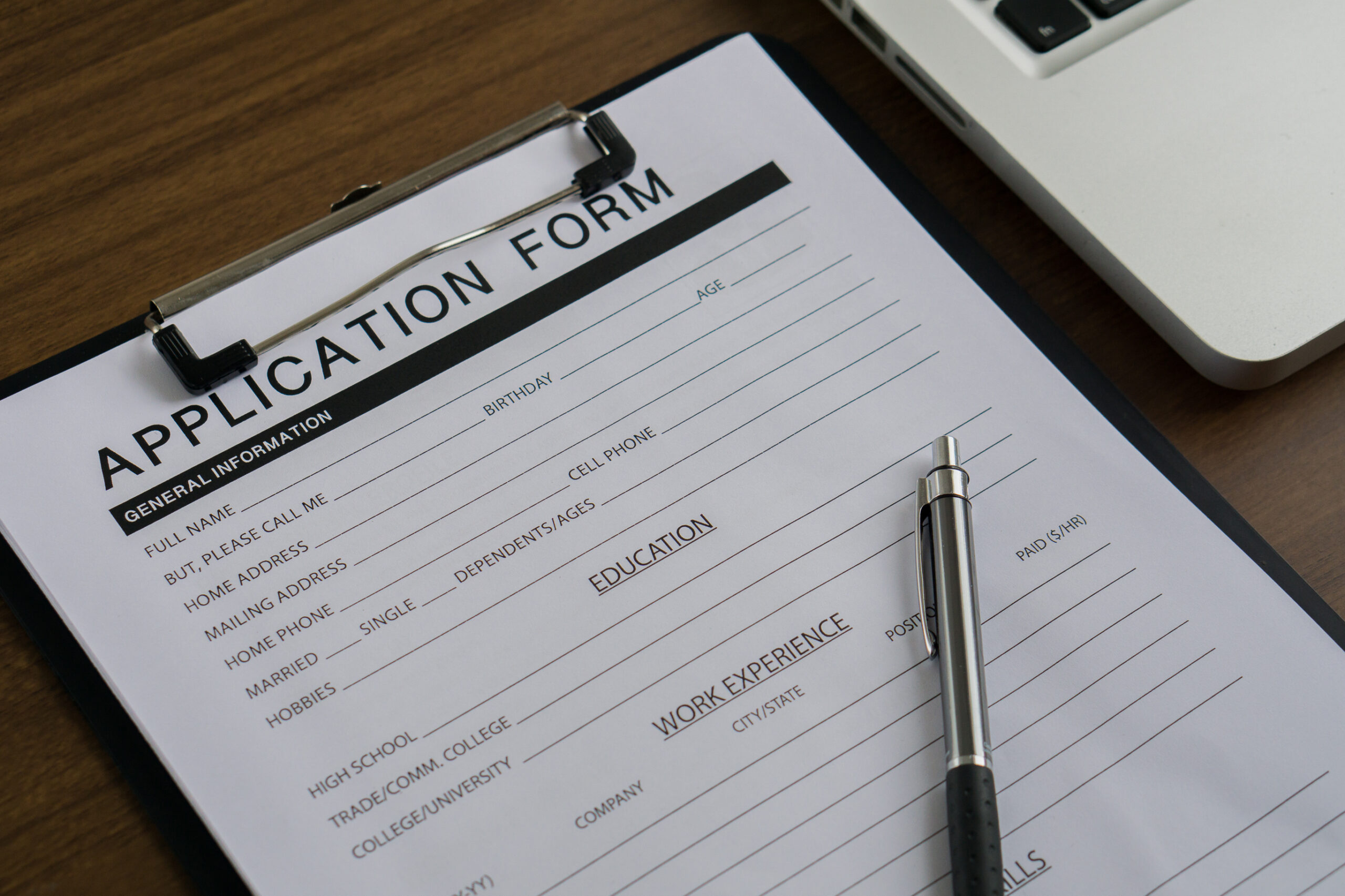
Considering applying for grad school? Here’s an interesting fact for you. Did you know that you only have 15 seconds to make an impression through your application? Yes, you read that right.
Admission counsellors supposedly spend just about 15 seconds reviewing a resume. So, how do you make those 15 seconds count?
A resume for a master’s program differs from a resume for a job application. It does not focus on job summaries or experience. Rather, it recounts your academic prowess. But here is the thing.
Crafting a standout resume for graduate school is more than just highlighting grades. It’s a strategic tool that can significantly increase your chances of admission to a reputable school. It highlights educational achievements, research activities, leadership roles, and potential career prospects.
Importance of a strong resume for Master’s applications
Most graduate schools have to sift through thousands of applicants every year. Let’s look at the data from some of the top graduate schools.
- Harvard Business School receives more than 8000 applications every term, with an acceptance rate of only 14.4%.
- MIT Sloan follows, with 5000 applications each term and an acceptance rate of 14.8%.
- For Stanford GSB, the number exceeds 6000 applications per term, but it has an acceptance rate of only 8.6%.
These figures mean only one thing. For your application to be shortlisted, your resume needs to stand out.
A strong resume for master’s applications is not a choice but a necessity. It is one of the primary documents that evaluates your ability, interest and alignment for the program. A well-crafted resume can go a long way to strengthen your master’s application. Here’s how it can help:
Can Create A Lasting First Impression
Admission officers often rush to go through stacks of resumes in a short time. First impressions can either seal the deal or undermine your application entirely.
Highlights Academic and Research Strengths
You want the admission counsellor to know why you’re a good fit for the university. A strong resume is a great way to showcase your strengths and show how your academic interests align with the university.
Showcase your internship experience
Academic and research-based programs, like an MS in Physics, place more emphasis on your academic achievement. Putting the spotlight on your internship experience is a great way to illustrate the strength of your candidacy.
Strengthens the Narrative of Your Application
A strong resume will quantify your achievements and connect the dots between your grades, internship, research, and leadership roles. It doesn’t just magnify your achievements, it tells your story. It validates your SOP and demonstrates professional maturity.
Optimise Your Application for Digital Screening
Many universities use an Applicant Tracking System or digital screening tools to shortlist candidates. A well-tailored resume with relevant keywords and standardised formatting can get your application shortlisted.
Key sections to include in a Master’s application resume
Listed below are the sections that should be present in every effective resume for Graduate School:
- Contact Information
- Objective or Summary
- Academic Grades
- Research Experience
- Internship Experience
- Work Experience
- Skills
- Publications and Presentations
- Leadership and Extracurricular Activities
- Awards, Certifications, and Honours
How to highlight academic achievements and research work
A report of the CGS: Holistic Review in Graduate Admission (2025) has interesting data. 75% of the respondents reported that each academic department manages its admissions.
This means your resume should be tailored to the specific department of the university where you are applying. Create individual resumes for different universities that speak to the unique requirements of their program.
Here are some pro tips to create a professional resume for master’s applications
- Highlight the most recent experience. Start with the last academic institution attended, and rewind from there.
- Add key metrics. Elaborate on each achievement – GPA, scholarships received, class ranks, university ranks, etc.
- Highlight your contributions to group research. Detail what role you had, what skills you used, and the results achieved through your work.
- Highlight your extracurricular coursework. If there is a change in your field of study, show how it aligns with your overall goals. If you took any course that is directly relevant to what you intend to pursue, mention that.
- List extracurricular activities that can speak to your leadership roles and soft skills. Utilise this space to write about hackathons, competitions or group projects.
Showcasing relevant work experience and internships
Professional degree programs often look for relevant work experience in graduate applications. Research-based programs, on the other hand, put more weight on your academic performance.
- Relevant work and internship experience can add more strength to your candidature. Make sure to highlight not just the duration and role, but also detail the kind of work you did and the results achieved.
Example:
Internship and Research Work XYZ Hospital | June 2020 – August 2021
Analysing and categorising patient data according to demographics, occupational history, and diagnostic imaging procedures.
XYZ University – Research Collaborator | October 2021
Collaborated on an article that was published at the National Psychology conference. - Remember, it does not always have to be paid work. Even volunteering, freelancing, or part-time work is often a valuable addition. Here is what to do. Emphasize what is most important. Write about how well the experience built on the research, analysis, technical, or leadership skills.
- Make use of the Title Case. Use and capitalise “ACTION WORDS”: Analysed, Developed, Managed, Designed.
- Add figures or results to strengthen a statement. For example, “the Project achieved a 15% efficiency increase post-automation.”
Adding extracurricular activities and leadership roles
Graduate schools often look for candidates who can prove their skills beyond academics. By featuring non-academic activities, you can showcase your unique traits.
Leadership, teamwork, and problem-solving expertise are considered essential soft skills. These can become strong indicators of your value contribution to the institute.
- Include leadership roles and titles
- Showcase self-initiated projects
- Focus on end goals and achievements
For example:
- President of Robotics Club | ABC University | 2023-2024
- Hosted the National Robotics Championship with more than 500 participants.
- Led a team of 20 members, secured 3rd position at TechFest 2024.
Formatting and design tips for a professional resume
The resume format for master’s applications should follow a clean, structured design. It should be easy on the eye and follow a professional design standard. Here are some useful tips for resume building for master’s admissions:
- Use suitable font styles. Calibri, Arial, and Times New Roman 10-12 for sentence case is considered standard.
- Create a one-page resume. Single-page format is ideal unless you have extensive research or publications to talk about
- Keep a consistent layout format. All headings should have similar case, bullets aligned, and fonts should match.
- Use section headings to make it easy to scan.
- Create a simple email for contact (example – firstname.lastname@email.com).
- Don’t use graphics or photographs unless the program requires you to do so, in which case, do the opposite.
- Save your resume in the PDF format. It ensures your layout stays the same, no matter the device used.
Common mistakes to avoid in a graduate school resume
- Keep out the typos and spelling errors. A common error, but when overlooked, it discredits your academic skills.
- Don’t lie or exaggerate. As per a CareerBuilder survey (2024), 75% of hiring managers have caught a lie on a resume. Academic committees are just as discerning, if not more so.
- Unnecessary detail makes your resume uninteresting. Don’t list everything. Instead, stick to what’s relevant.
- Avoid using unnecessary jargon. Keep the language simple so that even a non-technical person may understand it.
Resume optimisation for ATS (Applicant Tracking System)
More and more universities are adopting the Applicant Tracking System to filter candidates. Optimising your application to make it ATS-friendly will ensure it passes the initial screening.
Guidelines for ATS optimisation:
- Use standardised heading sections such as “Education,” “Experience,” and “Skills”.
- Include relevant program keywords. You can select them from the program description and course details.
- Avoid Tables and Text Boxes, as ATS systems have difficulty reading them.
- Keep it plain and simple. No graphics, icons, or columns.
Example Keywords for a Data Science Master’s Application:
Machine Learning, Python, Data Analysis, Predictive Modelling, Research Methodology
Resume for Master’s application sample
Here are two samples of a strong resume for master’s applications:
A resume encapsulates years of dedication, hard work, and learning into one page that summarises your profile. Strike the right balance between academics, research, professional experience, leadership, and design in your resume writing. It will ensure the admission committee’s attention to your profile.
Frequently asked questions
1. What is the ideal length of a resume for master’s applications?
Your resume should be clean, precise and structured. Single-page format is ideal, unless you have extensive research/publications to showcase.
2. How can I highlight research experience effectively?
Add a section dedicated to research experience. Give details of the research subject, tools and methodologies used, data extracted, key findings and publications, if any. You should also add details of your individual contribution if it is a group research project.
3. Should I include extracurricular activities in my resume?
Yes, all relevant extracurricular activities should be included in the resume. Admission committees look for well-rounded students. Your interests beyond academics speak to your soft skills. Choose activities that underline your leadership, teamwork and problem-solving capabilities.
4. How do I tailor my resume for different university programs?
Go through each program’s requirements and analyze what coursework or experience they are looking for. Add relevant certifications, projects or experience that aligns with the program’s objectives. You can also use keywords from their course description and underpin your relevant experience to reflect their focus.
5. What are the most common resume mistakes to avoid?
Avoid making typos and grammatical errors, inconsistent formatting, vague language, and too much jargon. Delete all irrelevant information.







 Australia
  Canada
  France
  Germany
  India
India  Ireland
  UAE
UAE  United Kingdom
  United States