




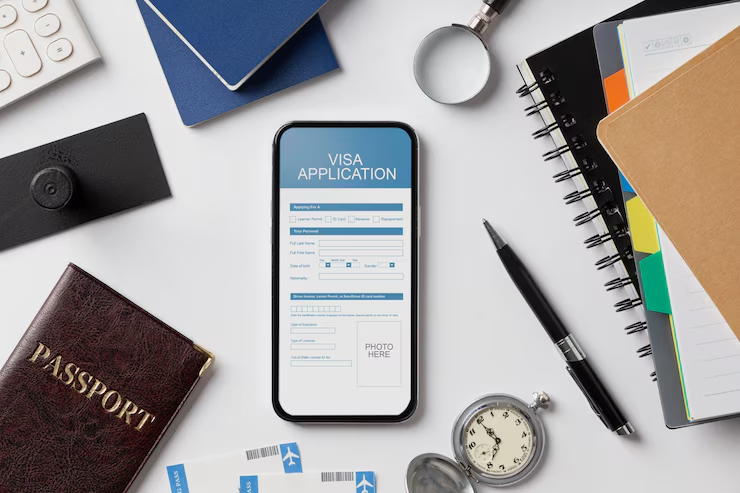
A record number of Indian students are going abroad with each passing year. But why are so many migrating abroad?
A few facts will shed light on the state of higher education in India:
- IIT Bombay at #118 is the best Indian university. The much vaunted IISc Bangalore is at #211 in QS World University Rankings 2025. Even China, our neighbor to the north, has two universities in the top 20.
- India ranks fourth globally in research output by universities. 1.3 million papers were published between 2017 and 2022. But it stands ninth in citations.
- The sudden increase in the number of IITs and IIMs has led to their degrees being diluted in value. Shockingly, some graduates from IIT Bombay got a pay package of ₹4 lakh per annum in 2024.
- The startup space in India is mostly e-commerce stores and SaaS services. Over 28,000 of these startups closed in 2023-2024. Working at these places is a dead end for bright minds.
The top study abroad destinations for Indian students generally include the United States, the United Kingdom, Australia, Canada, and Germany. These countries offer a mix of high-ranking universities and promising career opportunities.
Understanding the application to visa process is crucial for international students, and this study abroad guide will offer you a clear roadmap. We will share every step of the study abroad process and explain it in plain English.
Choosing the right country and university
The biggest decision in your study abroad journey is to choose the right study destination and university. With so many options available, how do you find the perfect fit? Let’s walk you through it step-by-step.
Top Destinations for Study Abroad
United States
The USA is known for its prestigious universities and cutting-edge research opportunities. For over a century, it has been a popular choice for students seeking advanced degrees in fields like engineering, computer science, medicine, and business.
United Kingdom
The UK offers a strong academic tradition spanning centuries. UK universities teach a wide range of programs from humanities to computer science. Many UK universities are recognized for their quality and global reputation.
Canada
Canada is a popular destination for Indian students. Canada offers affordable tuition fees, high-quality education, and opportunities for settling down permanently.
Germany
Germany is emerging as a strong contender for Indian students, particularly for those interested in STEM fields. German universities have a strong focus on research and development. When coupled with its strong economy, Germany offers international students huge opportunities.
Besides the above, other notable study destinations for Indian students include
- Australia
- Ireland
- Singapore
- Netherlands
- France
Top Universities for Studying Abroad
Indian students seeking quality education abroad have a diverse selection of top-ranked universities to choose from. Here’s a detailed list of top universities in the world along with QS World University Rankings 2025:
Top Universities for Studying Abroad 2025
| Country | University Name | City/Location | QS World Ranking 2025 |
| United States | Massachusetts Institute of Technology (MIT) | Cambridge, Massachusetts | 1 |
| Harvard University | Cambridge, Massachusetts | 4 | |
| Stanford University | Stanford, California | 6 | |
| California Institute of Technology (Caltech) | Pasadena, California | 10 | |
| University of Pennsylvania | Philadelphia, Pennsylvania | 12 | |
| University of California, Berkeley (UC Berkeley) | Berkeley, California | 13 | |
| Cornell University | Ithaca, New York | 14 | |
| University of Chicago | Chicago, Illinois | 15 | |
| Princeton University | Princeton, New Jersey | 16 | |
| Yale University | New Haven, Connecticut | 17 | |
| United Kingdom | Imperial College London | London | 2 |
| University of Oxford | Oxford | 3 | |
| University of Cambridge | Cambridge | 5 | |
| University College London (UCL) | London | 9 | |
| University of Edinburgh | Edinburgh | 27 | |
| University of Manchester | Manchester | 34 | |
| King’s College London | London | 40 | |
| London School of Economics and Political Science (LSE) | London | 50 | |
| Canada | University of Toronto | Toronto, Ontario | 25 |
| McGill University | Montreal, Quebec | 29 | |
| University of British Columbia (UBC) | Vancouver, British Columbia | 38 | |
| Australia | University of Melbourne | Melbourne, Victoria | 14 |
| University of Sydney | Sydney, New South Wales | 19 | |
| University of New South Wales (UNSW Sydney) | Sydney, New South Wales | 19 | |
| Australian National University (ANU) | Canberra, ACT | 34 | |
| Monash University | Melbourne, Victoria | 42 | |
| University of Queensland | Brisbane, Queensland | 43 | |
| Germany | Technical University of Munich (TUM) | Munich | 28 |
| Other Countries | National University of Singapore (NUS) | Singapore | 8 |
| ETH Zurich (Switzerland) | Zurich | 7 | |
| University of Tokyo (Japan) | Tokyo | 28 | |
| Peking University (China) | Beijing | 14 | |
| University of Hong Kong (HKU) | Hong Kong | 17 |
This list contains the names of the top 50 universities in the world. There are numerous more in the QS World University Rankings #51-200 categories that are not mentioned.
The best choice depends on your field of interest, budget, and long-term career goals.
Understanding admission requirements
Choosing a university is just the beginning. You must understand the admission requirements to ensure your application is strong and complete.
Academic Qualifications
For bachelor’s programs, you need 12 years of schooling, such as a CBSE or ISC Class 12 certificate.
For a master’s program, you need 3-4 years of college education from a recognized institution.
Universities abroad often look for a minimum GPA or percentage of about 3.5/4 or 85%.
Standardized Test Scores
For studying in the USA, you need scores from the SAT to join an undergraduate course. For postgraduates, GRE or GMAT is preferred, though often not mandatory.
Most other nations have no generalized test requirements, but a GRE or GMAT score is often welcome.
Proof of Language Proficiency
English proficiency tests assess overall English proficiency for academic, work, and migration needs. The most popular English proficiency tests are IELTS and TOEFL. Other options include PTE (Pearson Test of English) and Duolingo English Test.
Those migrating to Germany need to pass the TestDaF with B2-C1 level proficiency. If you are going to France or Belgium, you need to pass DELF (Diplôme d’Études en Langue Française) with a B2 level proficiency at least.
Preparing for standardized tests (GRE, GMAT, TOEFL, IELTS)
Standardized tests are an important part of the study abroad process. Many universities require scores from exams like TOEFL, IELTS, GRE, or GMAT as part of your application.
Here’s a more detailed look:
| Exam | Frequency | Test Centers | Online Option | Fees (Approx.) |
| TOEFL | 170+ times/year | 47+ cities | Yes | ₹16,900 |
| IELTS | 48 dates/year | 75 cities | Yes (Academic) | ₹17,000–17,250 |
| GRE | Year-round | 47 cities | Yes | ₹19,000 |
| GMAT | Daily slots | 40+ cities | Yes | ₹25,000 |
Always try to book slots 2–3 months in advance to secure preferred dates. Besides the above, to study law and medicine in the USA, you have to appear in the LSAT and MCAT.
Gathering required documents
To go abroad, you’ll primarily need a valid passport. You also need a student visa for your destination. Here’s a focused guide on documents required for Indian students going abroad for studies:
- Valid Passport with at least 6 months validity and two blank pages.
- Student Visa, such as an F-1 visa for the USA, Subclass 500 for Australia, a Study Permit for Canada, a Tier 4 (General) Student Visa for the UK, etc
- A University Admission/Acceptance Letter is necessary for seeking a visa.
- Academic Documents for university admission and a visa.
- Standardized Test scores (GRE, GMAT, TOEFL, IELTS, etc) as required by the university.
- Financial Proof and bank statements are necessary for visas to most Western nations.
- Health Insurance might be necessary for a visa and university enrollment.
- Various Vaccination Certificates (e.g., measles, mumps, tetanus, diphtheria) as per the destination country’s health guidelines.
Keep digital copies of all documents in cloud storage and carry a folder with originals and photocopies with you.
Writing a strong Statement of Purpose (SOP)
A Statement of Purpose (SOP), also known as a personal statement, is a crucial part of applying to universities abroad. It is a concise essay that explains your motivations, goals, and suitability for a specific program or opportunity.
An SOP is the best way for you to tell admissions committees who you are, what you’ve achieved, and why you’re a good fit for their program.
Securing Letters of Recommendation (LORs)
A letter of recommendation is a formal, written statement from someone who knows you well. You need at least two LORs, of which one must be from the dean or head of the department of your college. The other can be from a teacher, a mentor, or a manager. An LOR is an endorsement, providing insights into your abilities.
Submitting your application
Most universities have online application portals where you’ll upload all your documents and complete the application form. Several US universities utilize CAS services, which is a centralized system. Be careful since mistakes during the application to visa process can result in denial or delays.
You need to register and fill out the application form, providing personal information, academic records, and other relevant documents.
Applying for scholarships and financial aid
Applying for scholarships and financial aid is a crucial step for Indian students planning to study abroad. Even if it doesn’t pay for the entire cost of tuition, scholarships and grants can offer partial subsidies. This table offers a quick reference for comparing the top scholarships available to Indian students.
| Scholarship Name | Destination | Eligibility | What It Covers | Notes |
| Fulbright-Nehru Fellowships | USA | Indian students for master’s/PhD | Tuition, living expenses, travel | Prestigious, highly competitive |
| Chevening Scholarships | UK | Indian students for a one-year master’s | Tuition, travel, and monthly stipend | UK government-funded, leadership focus |
| Inlaks Shivdasani Foundation Scholarships | USA, UK, Europe | Indian students for master’s/MPhil/PhD | Tuition, living expenses, one-way airfare, health allowance | Up to $100,000, need & merit-based |
| GREAT Scholarship | UK | Indian master’s students | Up to £10,000 towards tuition | For select UK universities |
| Gates Cambridge Scholarship | UK (University of Cambridge) | Postgraduate students (incl. Indians) | Full tuition, living, travel, visa, health | Highly prestigious, all disciplines |
| Monash & Melbourne Graduate Research Scholarships | Australia (Monash, University of Melbourne) | Indian graduate/research students | Tuition, living expenses | For graduate/research programs |
Remember to make sure you mention that you need financial aid. Universities offer grants that they do not disclose publicly. Unless you ask for it, you will never know.
Receiving and accepting the offer letter
A few months after your application, you will receive an admission letter or be declined.
If the university is in the USA, it will offer the I-20 form, which is a document for a visa application. Similarly, UK universities issue a CAS number, and universities in Canada and Australia issue a Confirmation of Enrolment letter.
Applying for a student visa
Applying for a student visa is a multi-step process that varies by country. You need to begin as soon as you get the admission letter.
Fill out the visa application form online and upload the requisite documents. These usually include:
- A valid passport
- Admission/acceptance letter
- Proof of financial resources (bank statements, scholarship/loan letters)
- Passport-size photographs
- Additional documents as required by the destination country (e.g., medical/vaccination certificates, police clearance, etc.)
There is a visa interview, following which you receive permission to travel abroad for studies. The usual time taken for the student visa application process is 2-3 months, but for the USA, it might stretch to 6 months or more.
Arranging accommodation and travel plans
If you are going to be housed in a dormitory on campus, there is no problem. If you are going to stay off campus from the beginning, you need to stay at a student hostel or Airbnb till you find accommodation. Most students spend at least a few weeks on campus before moving out.
Buy a plane ticket as soon as you have the visa in hand. The price rises quickly as the date of departure approaches.
Managing finances and opening a bank account abroad
Initially, you do not need a local bank account abroad. It is also difficult to open a bank account abroad from India.
If you have taken a student loan, you will receive a debit-cum-ATM card and also likely a credit card. A part of the loan will be transferred to this account for your living expenses, etc.
RBI allows resident individuals (such as your parents) to remit up to $250,000 per financial year from their Indian account.
After a week or two, you can open a foreign bank account and receive funds there. If you are going to the USA, read about the Foreign Account Tax Compliance Act (FATCA) before you open a bank account there.
Pre-departure study abroad checklist
We have put together a comprehensive study abroad checklist to ensure a smooth and organized departure for your study abroad journey:
| Category | Items to Check/Carry |
| Travel Documents | Passport, student visa, admission/acceptance letter, flight tickets, travel insurance, physical & digital copies of all documents |
| Academic & Financial | Academic transcripts/certificates, test score reports (IELTS/TOEFL/GRE/GMAT), scholarship/financial aid letters, proof of funds (bank statements, loan letter) |
| Health & Medical | Vaccination records, medical prescriptions (with generic names), sufficient medication, medical records/history, health insurance card |
| Packing Essentials | Weather-appropriate clothing, toiletries, laptop/phone/chargers/adapters, academic supplies, personal items, luggage locks/tags |
| Money Matters | Foreign currency (cash), forex card, debit, and credit cards |
| Emergency Contacts | Family contacts, university contacts, embassy/consulate info, and maintain digital copies of the contact list |
| Other Tips | Check airline baggage allowance, leave document copies with family, and learn about local laws |
Keep a printout of this study abroad checklist as a handy reference and guide.
Frequently Asked Questions
1. What are the key steps in the study abroad application process?
The study abroad process involves the following key steps:
- Research & Shortlist preferred countries, universities, and courses.
- Prepare for exams like IELTS, TOEFL, GRE, or GMAT.
- Gather documents—transcripts, recommendation letters, statement of purpose, and resume.
- Apply to the selected universities of your choice.
- Explore if scholarships, financial aid are available.
- Apply for a student visa with the required documentation.
- Book your flight and prepare for your trip abroad.
2. How do I choose the best university and country for my studies?
Choosing the right university and country for your studies involves several key factors:
- Select a few universities that offer strong programs in your field of interest.
- Calculate the tuition fees, cost of living, and availability of scholarships.
- Calculate the amount you can spend from your own resources and education loan.
- Research global rankings and the value of the degree you have targeted.
By understanding all these factors well, you can make an informed decision.
3. What documents are required for studying abroad?
These are the essential documents required for Indian students applying to study abroad:
- Valid Passport
- Academic Transcripts
- Standardized Test Scores
- Letters of Recommendation
- Statement of Purpose (SOP)
- Curriculum Vitae (CV)
- Financial Documents
- Student Visa
- Health Insurance
- Medical Examination Reports
4. How long does the student visa application process take?
The student visa application process time varies depending on the country you’re applying from and the specific requirements of the destination country. Most nations offer a student visa in 2-3 months. For the USA, it might take longer due to the enormous number of Indian students who travel there for education.
5. What financial aid options are available for international students?
You can avail yourself of scholarships and grants. Scholarships are merit-based, while grants are need-based. Besides, you can also get an education loan from most public and private sector banks and a few NBFCs in India.









 Australia
  Canada
  France
  Germany
  India
India  Ireland
  UAE
UAE  United Kingdom
  United States